Calculating Load Center DistanceBecause they make lifting and moving large objects quicker and more effective, forklifts are crucial equipment in warehouses, building sites, manufacturing facilities, and distribution centers. Forklifts are beneficial, but when they are used beyond their intended limits, they can become very dangerous. A tip-over disaster, which can result in catastrophic injuries, damage costly equipment, and disrupt daily operations, is one of the most dangerous threats. A large number of these incidents happen as a result of operators misjudging or failing to consider the forklift’s load capacity. The load weight, load position, mast height, traveling circumstances, and any attachments fitted on the machine are some of the variables that affect a forklift’s lifting capacity. Understanding how these factors affect stability allows operators to make safer decisions before every lift. The following sections explain the key principles of forklift load capacity and how they help prevent tip over accidents in the workplace.
Decoding the Data Plate
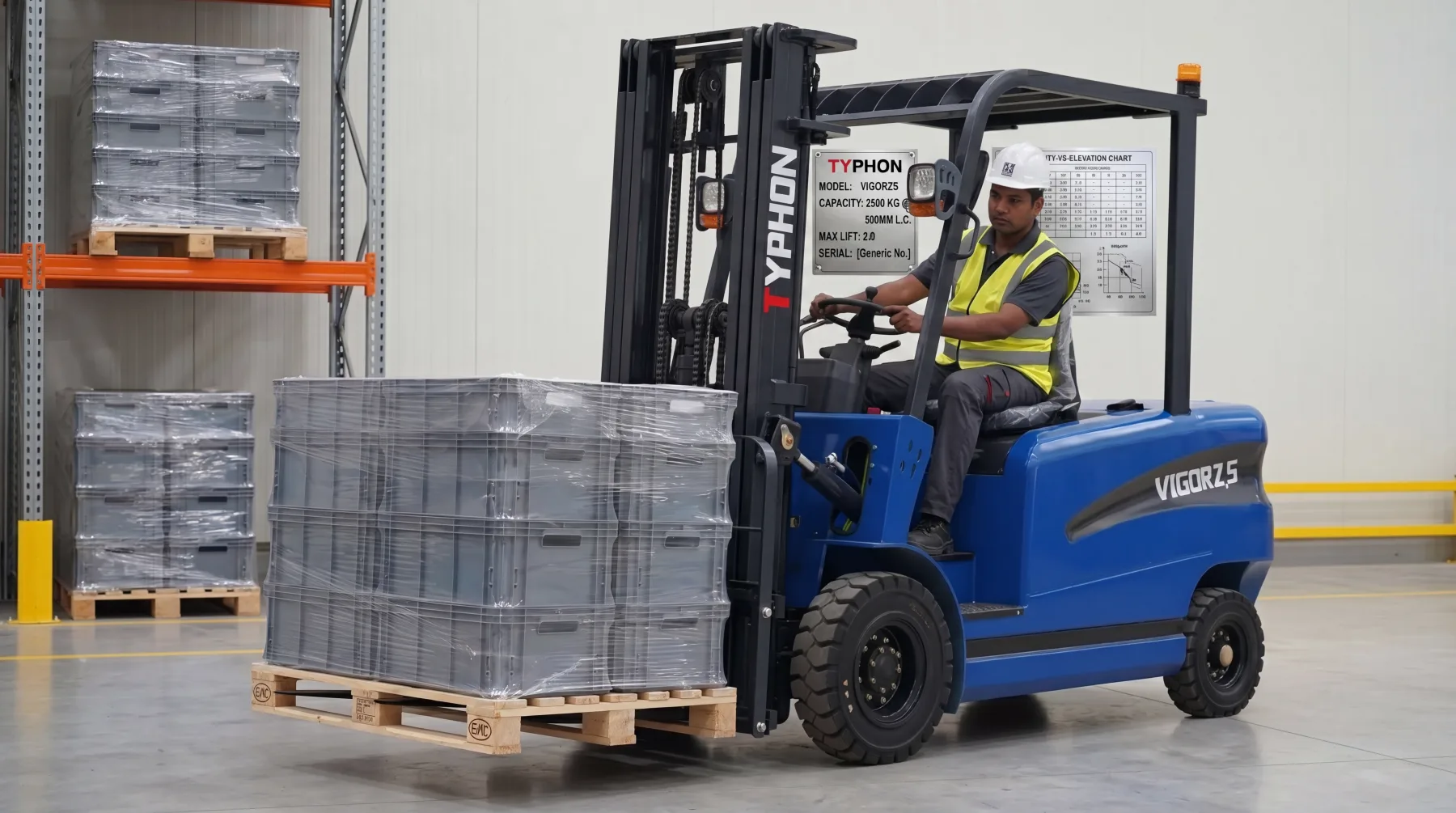
The data plate is one of the most important safety features on a forklift because it provides the information needed to determine whether a lift can be performed safely. Usually mounted near the operator’s seat, the plate lists the forklift’s rated lifting capacity along with the conditions under which that rating applies. Every operator should become familiar with reading the data plate before using the equipment, as relying on assumptions instead of the manufacturer’s specifications can quickly create unsafe working conditions.
Many people believe a forklift has one maximum lifting capacity, but this is not true. The rated capacity changes depending on factors such as mast height, mast tilt, and load center distance. For example, a forklift that can safely lift a heavy pallet while the forks are close to the ground may not be able to lift that same load when the mast is fully extended. As the load is raised higher, the forklift becomes less stable and its safe lifting capacity decreases. Ignoring these changing limits significantly increases the risk of a tip over.
The data plate also contains additional information, including the rated load center, truck weight, fuel or power source, tire specifications, and approved attachments. If an attachment has been installed, the data plate should display an updated capacity rating that reflects the change in weight and balance. Operators should always compare the actual weight and dimensions of the load with the information shown on the plate before lifting. Treating the data plate as the final authority rather than a general guideline helps ensure every lift remains within safe operating limits and greatly reduces the chance of accidents.
The Mechanics of the Stability Triangle
Every counterbalanced forklift operates according to a basic principle known as the stability triangle. Although it cannot be seen physically, this imaginary triangle determines whether the forklift remains balanced during operation. The triangle is formed by connecting the two front wheels with the pivot point at the center of the rear axle. As long as the combined center of gravity of both the forklift and its load stays inside this area, the machine remains stable.
The center of gravity constantly changes whenever the forklift moves or lifts a load. Carrying a heavy pallet shifts the combined center of gravity forward toward the front axle. Raising the forks moves the weight even higher, while tilting the mast forward pushes the center of gravity closer to the edge of the stability triangle. If the center of gravity moves beyond any side of the triangle, the forklift can tip forward or sideways within seconds.
Understanding this concept helps operators recognize why certain operating practices are considered unsafe. Carrying loads too high while traveling, making sharp turns at high speed, or lifting uneven loads all increase the likelihood of moving the center of gravity outside the stable area. Even traveling across uneven ground or driving over potholes can suddenly shift the balance of the machine.
To maintain stability, operators should carry loads as low as practical during transport, avoid unnecessary mast movement while driving, and make smooth steering adjustments. They should also reduce speed when turning or traveling on slopes. By keeping the combined center of gravity safely within the stability triangle throughout every task, operators significantly reduce the possibility of a dangerous tip over accident.
Calculating Load Center Distance
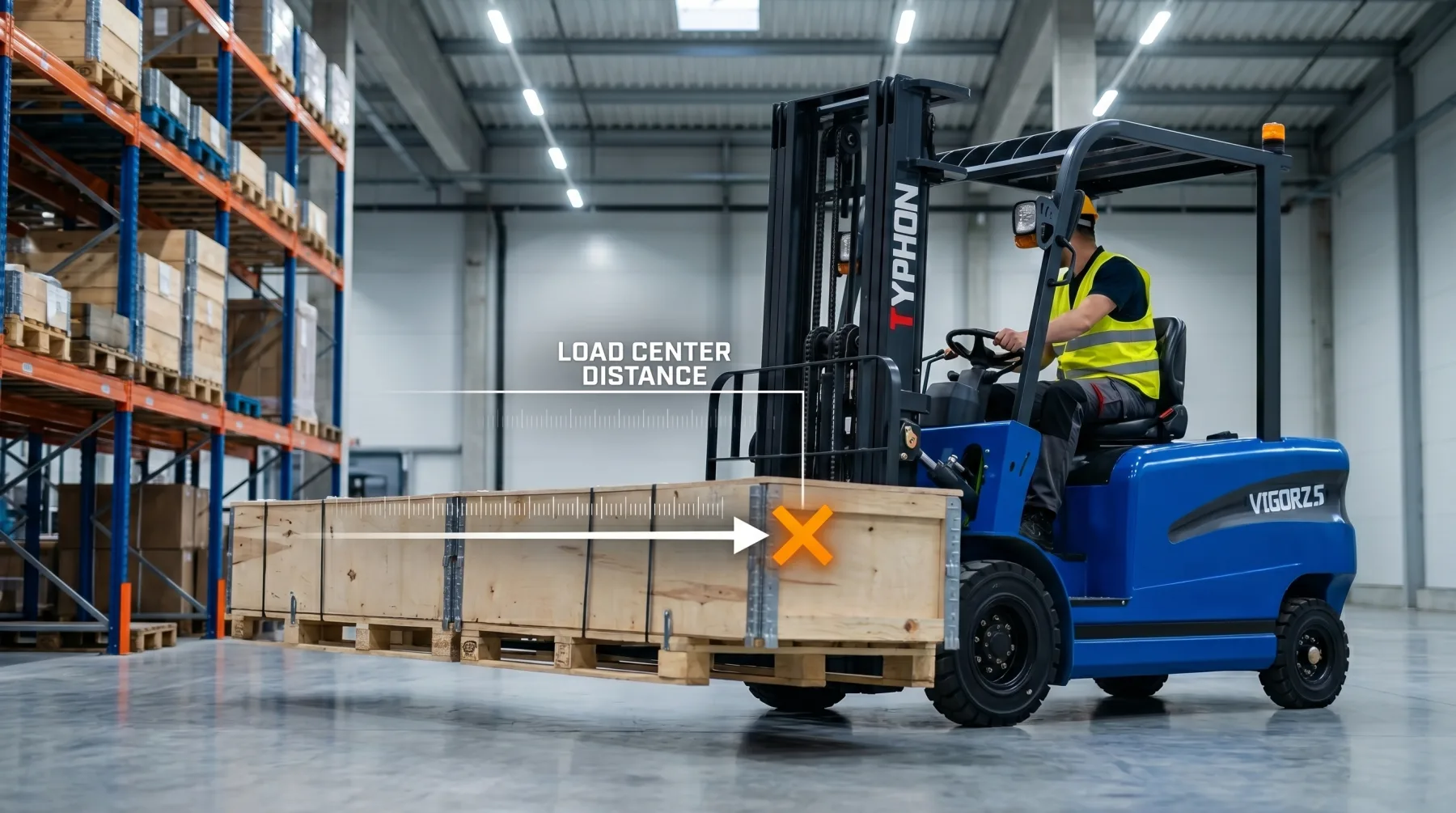
Load center distance is another critical factor that determines whether a forklift can safely handle a load. It refers to the horizontal distance between the front face of the forks and the center of gravity of the load. Most standard forklifts are rated using a load center distance of 24 inches, assuming the weight is evenly distributed across the pallet or container. When the actual load center changes, the forklift’s effective lifting capacity changes as well.
As the load center moves farther away from the mast, the forklift experiences greater leverage. This works much like holding a heavy object close to your body compared to holding it with your arms fully extended. The farther the weight is from the body, the more difficult it becomes to control. The same principle applies to forklifts. A long or oversized load places additional force on the front axle, reducing stability even if the total weight remains within the rated capacity.
Loads with uneven weight distribution require extra attention because the center of gravity may not be located in the middle of the pallet. Operators should inspect loads carefully before lifting and determine whether the weight is balanced. If the load extends beyond the standard load center, its weight may need to be reduced to remain within the forklift’s safe operating limits.
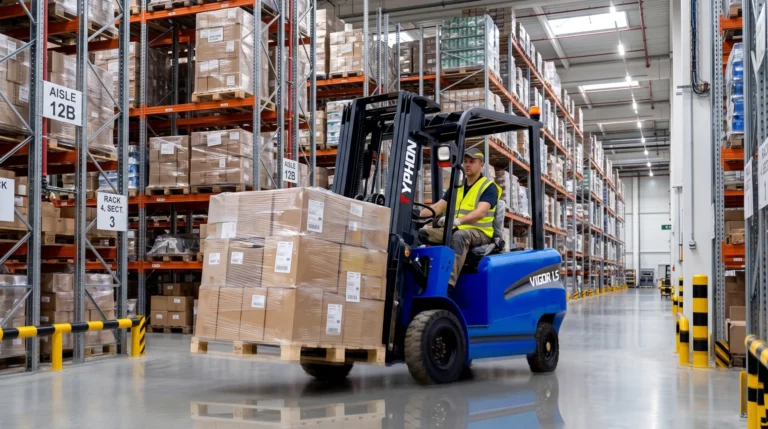
Proper loading techniques also help maintain stability. The forks should be fully inserted beneath the load whenever possible, and the load should rest firmly against the load backrest. Operators should avoid carrying loads that are unstable, poorly stacked, or likely to shift during transport. Taking a few extra moments to verify the load center before lifting can prevent equipment damage, product loss, and serious workplace injuries.
The Dangers of Dynamic Loading
Forklift capacity ratings are established under controlled conditions where movement is smooth and predictable. In actual workplaces, however, forklifts are constantly accelerating, braking, turning, and traveling across different surfaces. These actions create additional forces known as dynamic loading. Even when a load is within the forklift’s rated capacity, these forces can temporarily reduce stability and increase the likelihood of a tip over.
Sudden braking causes the load’s momentum to continue moving forward, placing extra force on the forks and shifting the center of gravity toward the front of the forklift. Rapid acceleration creates the opposite effect by shifting weight toward the rear. Sharp turns generate sideways forces that move the center of gravity toward the outer edge of the stability triangle. If these forces become large enough, the forklift can lose balance even though the load itself is not excessively heavy.
Uneven ground introduces additional hazards. Driving over bumps, potholes, ramps, or loose surfaces can cause loads to bounce or shift unexpectedly. Raising or lowering the mast while the forklift is moving creates another change in weight distribution that reduces stability. Wet or slippery surfaces also increase stopping distance, making sudden corrections even more dangerous.
The best way to minimize dynamic loading is through smooth and controlled operation. Operators should accelerate gradually, brake gently, and make wide, slow turns whenever possible. Loads should be carried low to the ground during travel, especially when moving over uneven surfaces or entering loading docks. Safe driving habits not only improve stability but also reduce wear on the forklift, protect transported materials, and create a safer working environment for everyone nearby.
Managing Attachments and Capacity Derating
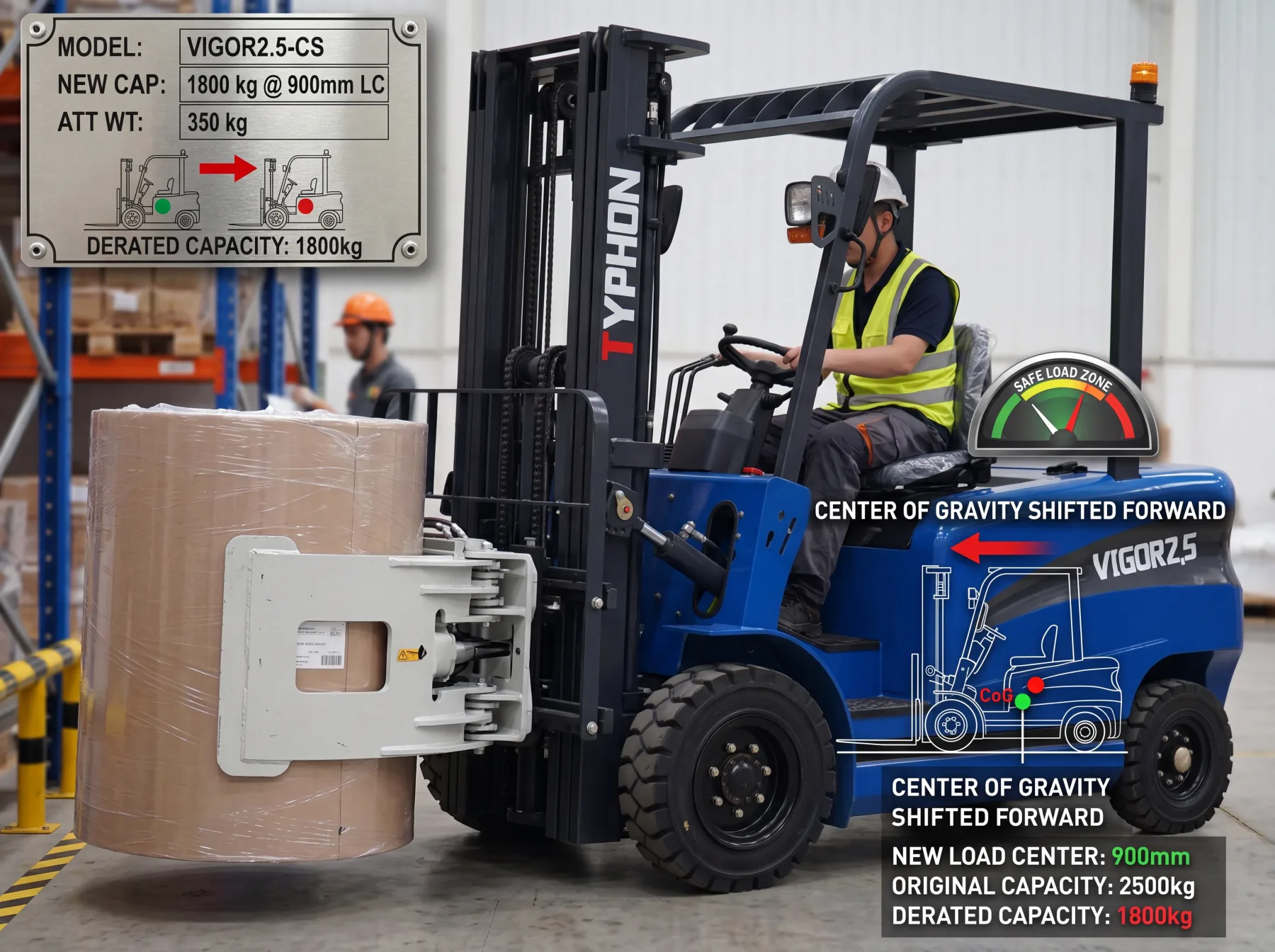
Forklift attachments increase versatility by allowing one machine to perform a wider range of material handling tasks. Common attachments include clamps, rotators, side shifters, drum handlers, and extended forks. Although these tools improve productivity, they also change the weight distribution and operating characteristics of the forklift. Every attachment affects the machine’s original load capacity and must be considered before lifting.
Attachments add extra weight to the front of the forklift and often move the load farther away from the mast. This changes the center of gravity and reduces the amount of weight the forklift can safely carry. As a result, the manufacturer assigns a new reduced lifting capacity, commonly referred to as capacity derating. Operators should never assume that the original capacity shown on the forklift still applies after an attachment has been installed.
Whenever a new attachment is fitted, the forklift should display an updated data plate showing the revised capacity rating. This information allows operators to determine the maximum safe load under the new operating conditions. Using outdated capacity information or failing to recognize the effects of an attachment can lead to overloaded lifts and serious stability problems.
Proper training is equally important because different attachments require different operating techniques. For example, clamps grip loads differently than standard forks, while rotators change the position of the load during operation. Operators should understand both the attachment’s function and its effect on the forklift’s balance before using it. Respecting the revised capacity limits and following the manufacturer’s recommendations helps prevent tip over accidents while allowing the forklift to perform specialized tasks safely and efficiently.
Conclusion
Understanding the machine’s load capacity and following its operational limits is the first step in preventing forklift tip over incidents. Knowing a load’s weight is just one aspect of safe lifting. Additionally, operators need to comprehend the data plate’s contents, the stability triangle’s tenets, the significance of load center distance, the consequences of dynamic loading, and the diminished capacities brought about by attachments. Forklifts become safer and more dependable instruments when these aspects are taken into account prior to each lift. Workers are protected, equipment damage is decreased, and a workplace where productivity and safety are equally vital is created through regular training, meticulous planning, and disciplined working habits.