Choosing the Right Electric Forklift for Your Business
Introduction
Choosing the right electric forklift for your business is a major operational decision that affects productivity, safety, labor efficiency, maintenance costs, and long-term fleet value. A forklift is not just a machine that moves pallets from one place to another. It is a core part of your warehouse flow, dock performance, inventory accuracy, and daily order fulfillment speed. When the machine matches your facility, workload, operators, and charging strategy, your team works faster, safer, and with fewer interruptions.
The challenge is that not every electric forklift is built for the same environment. A model that performs well in a clean indoor distribution center may not be the right fit for a high-throughput loading dock, a narrow-aisle warehouse, or a facility handling oversized materials. Capacity, lift height, battery type, aisle width, attachments, operator comfort, service support, and total cost of ownership all matter. This guide breaks down the most important factors to evaluate before investing in an electric forklift, helping warehouse managers, logistics leaders, operations teams, and equipment buyers make a confident, informed decision.
Match Load Capacity to Your Real Working Conditions
Every electric forklift selection should begin with a clear understanding of what the machine will lift, how often it will lift it, and where that load needs to go. Load capacity is one of the most visible specifications on a forklift, but it is also one of the most misunderstood. Many buyers focus only on the maximum rated capacity listed on the data plate, assuming that a 5,000-pound forklift can safely lift 5,000 pounds in every situation. In actual warehouse conditions, capacity changes based on load center, lift height, attachments, mast configuration, and how the material is positioned on the forks.
The problem with choosing capacity too casually is that it creates both safety and productivity risks. If the forklift is undersized, operators may push the machine beyond its intended limits, increasing the risk of instability, tip-overs, dropped loads, and accelerated wear. If the forklift is oversized, your business may pay more than necessary for equipment, batteries, energy use, tires, and maintenance. Oversized machines can also be harder to maneuver in tight aisles, which slows traffic and increases the chance of rack or product damage.
The solution is to evaluate your true working load profile before comparing models. You need to know the heaviest pallet your team handles, the average load weight, the load dimensions, and the maximum lift height required during normal operation. A wide, uneven, or long load can reduce safe lifting capacity even if the total weight seems manageable. If your operation handles paper rolls, appliances, lumber, beverage pallets, machinery parts, or irregular materials, the load center may extend farther than a standard pallet, which directly affects stability.
Selecting the right capacity improves safety while also protecting operating efficiency. Operators can move confidently without second-guessing whether the forklift can handle the task. Your team avoids the slow, risky workarounds that happen when equipment is not properly matched to the load. Once you understand what the forklift must lift, the next step is confirming whether it can move through your facility without disrupting the flow of work.
Evaluate Lift Height, Aisle Width, and Warehouse Fit
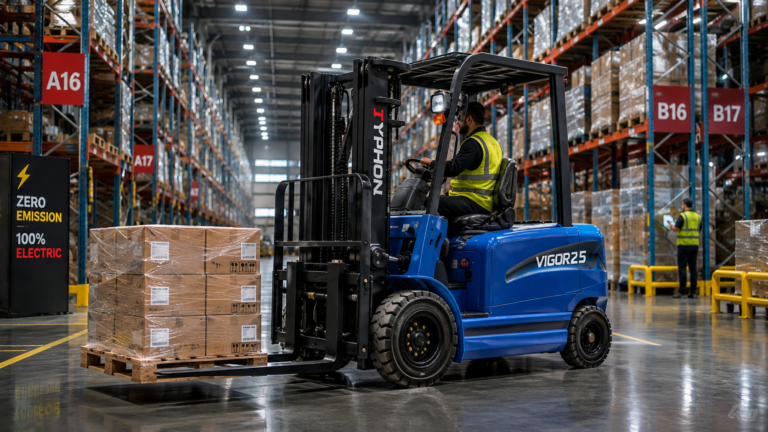
A forklift must fit the physical design of your warehouse just as carefully as it fits your load requirements. Electric forklifts are often chosen for indoor use because they produce no direct emissions, operate quietly, and deliver smooth control in enclosed spaces. However, indoor suitability depends on more than clean power. Your machine must match your aisle width, rack height, dock layout, floor condition, door clearance, trailer access, and turning requirements. A forklift that is too large for your space can reduce productivity every hour it operates.
The limitation many businesses face is that warehouse layouts are rarely designed around one perfect machine. Some areas may have wide travel lanes, while others may include tight rack aisles, narrow staging zones, low overhead doors, or congested dock lanes. If the forklift cannot turn cleanly, reach the top rack level safely, or enter trailers without clearance issues, your operators will spend extra time repositioning loads. Those small delays compound across hundreds of pallet moves per shift.
Choosing the right warehouse fit requires a detailed review of key physical measurements. Aisle width is one of the most important. Standard counterbalance electric forklifts need more room to turn than reach trucks or narrow-aisle equipment, but they are also highly versatile for dock work, staging, and general pallet movement. Lift height also matters. Your selected mast must reach the highest storage level while maintaining enough residual capacity to lift the load safely at that height. At the same time, the collapsed mast height must fit through doors, trailers, mezzanines, and low-clearance zones.
The business impact is significant. A forklift that matches your layout improves traffic flow, reduces operator stress, and minimizes damage to racks, doors, pallets, and building infrastructure. It also supports better space utilization because your team can access storage locations efficiently without relying on multiple machines for basic movement. After confirming that the forklift physically fits your facility, the next major decision is how the machine will be powered throughout the workday.
Choose the Right Battery Type and Charging Strategy
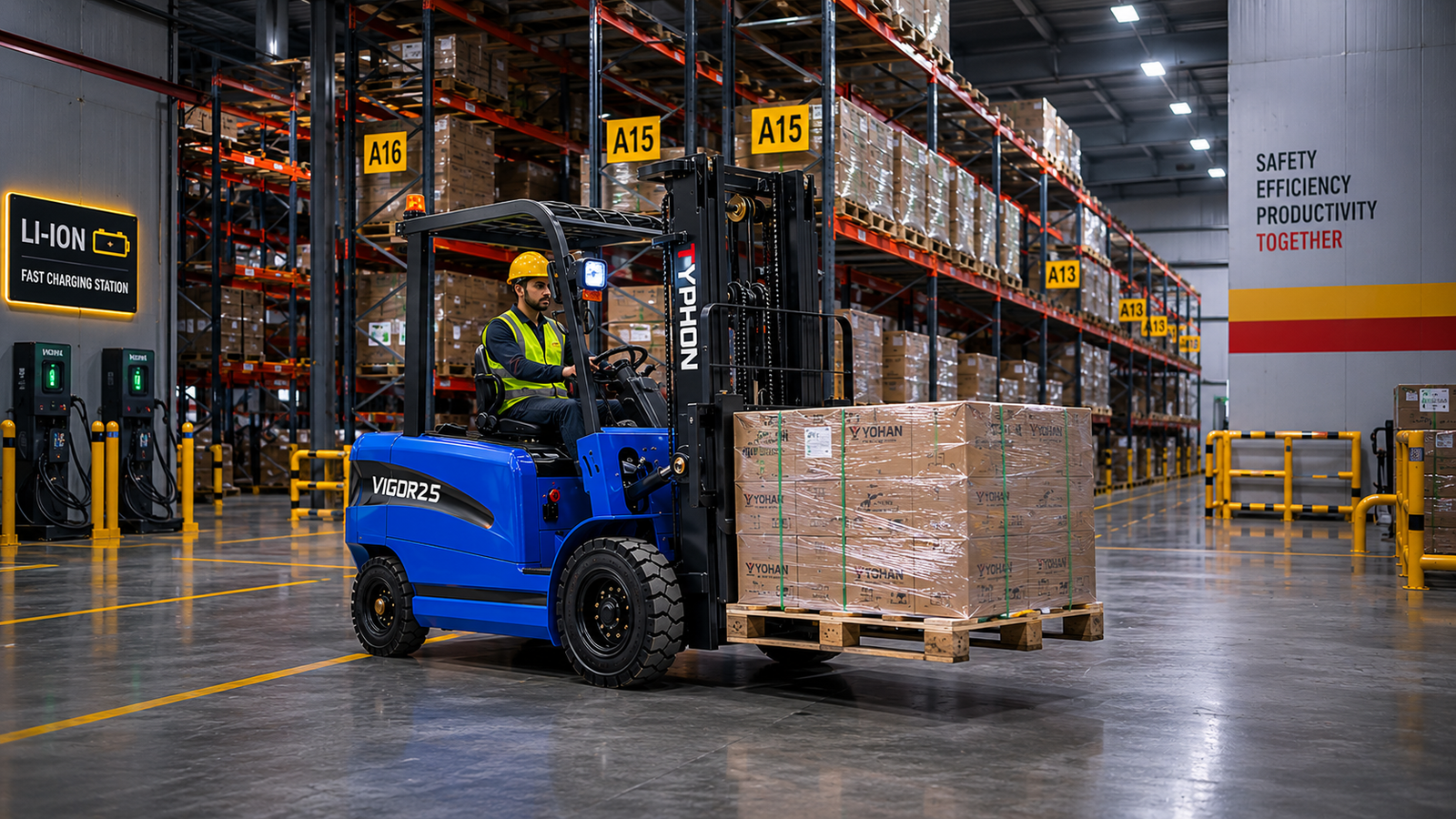
Battery selection is one of the most important parts of choosing the right electric forklift for your business. The battery determines runtime, charging behavior, maintenance requirements, energy efficiency, and long-term operating costs. For many operations, the decision comes down to lead-acid versus lithium-ion technology. Both can be effective, but they serve different business needs and require different charging habits.
The problem is that battery choice is often treated as a secondary detail after lift capacity and price. That approach can create major operational issues. A forklift with the wrong battery setup may run out of power before the shift ends, require excessive charging downtime, or demand more maintenance than your team can consistently provide. In high-throughput warehouses, even one machine waiting on a charger can disrupt dock flow, delay picking, and create pressure on the rest of the fleet.
Lead-acid batteries remain a proven option for many facilities. They typically cost less upfront and can perform well in operations with predictable shift patterns and dedicated charging rooms. However, they require proper watering, ventilation, cooling time, and disciplined charging cycles. They are also heavier and may require battery changing equipment if the forklift is expected to operate across multiple shifts. Lithium-ion batteries, by contrast, usually cost more upfront but offer faster charging, opportunity charging during breaks, lower maintenance needs, and strong energy efficiency. They are well suited for multi-shift operations, facilities with limited battery room space, and businesses focused on reducing daily maintenance tasks.
The right charging strategy should match your workflow. A single-shift operation may perform well with overnight charging. A two-shift or three-shift facility may benefit from lithium-ion opportunity charging, strategically placed chargers, or a planned battery rotation process. The goal is to keep equipment available when the operation needs it most, not to force the warehouse schedule around the charger. When battery selection and charging strategy align, your business gains stronger uptime, more predictable labor planning, and better total cost control. With power strategy in place, it becomes easier to evaluate the tools and operator features that shape daily performance.
Consider Attachments, Ergonomics, and Operator Productivity
An electric forklift becomes far more valuable when it is configured for the specific work your team performs every day. Standard forks may be enough for basic pallet movement, but many warehouses require added functionality. Attachments such as side shifters, fork positioners, clamps, rotators, carpet poles, push-pull systems, or carton clamps can dramatically improve handling speed and reduce manual effort. The key is choosing attachments that solve real operational problems without compromising safety or capacity.
The limitation is that every attachment changes how the forklift performs. Attachments add weight, move the load center forward, and reduce residual lifting capacity. A forklift that can handle a certain pallet weight with standard forks may not be able to handle the same load safely once a clamp or fork positioner is installed. If buyers fail to account for this, they may end up with a machine that looks correct on paper but struggles in actual use.
The solution is to choose the forklift and attachment package together. If operators frequently handle different pallet sizes, a fork positioner can save time and reduce the need for operators to climb on and off the machine. If your team works in tight staging areas, a side shifter can help align loads more precisely without constant repositioning. If your operation handles appliances, boxed goods, paper products, or non-palletized loads, a specialized clamp may increase speed and reduce product damage. Each attachment should be evaluated for how it improves workflow, protects materials, and affects capacity.
Operator ergonomics are just as important as attachments. A comfortable operator is a safer and more productive operator. Features such as an adjustable seat, intuitive controls, low-effort steering, clear display panels, good visibility, easy entry and exit, and reduced vibration all influence daily performance. In a busy facility, operators may spend hours inside the machine. Poor ergonomics can lead to fatigue, slower reaction times, and rougher load handling. The right configuration helps operators stay alert, precise, and consistent across the full shift. Once productivity and comfort are addressed, safety systems become the next essential factor in the buying decision.
Prioritize Safety Features for Indoor Forklift Operation
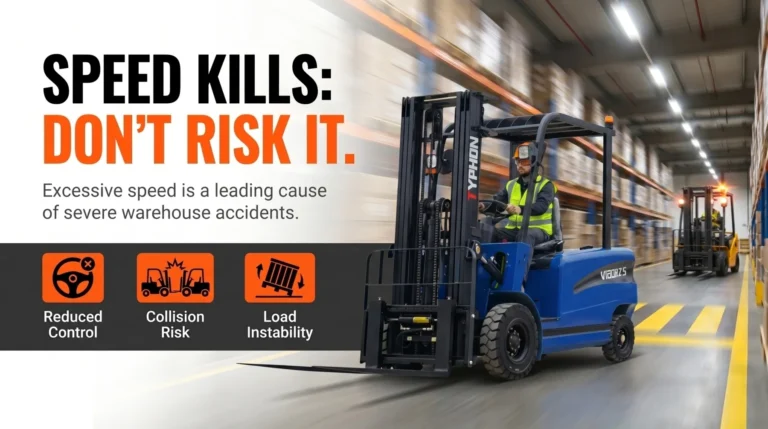
Electric forklifts are well suited for indoor environments, but indoor operation creates its own safety challenges. Warehouses often combine pedestrians, forklifts, pallet jacks, racks, dock doors, conveyors, and staged inventory in a limited footprint. Electric forklifts are also quieter than internal combustion models, which improves working conditions but can make them harder for pedestrians to hear. Without strong safety features, the same machine that improves efficiency can also increase risk in congested areas.
The main limitation is that operators must manage several hazards at once. They need to watch the load, monitor pedestrians, avoid rack uprights, control speed, check overhead clearance, and maintain stability while turning or lifting. Even skilled operators can be placed in difficult situations when visibility is limited or traffic patterns are poorly controlled. For that reason, safety should be evaluated as a core performance feature, not an optional add-on.
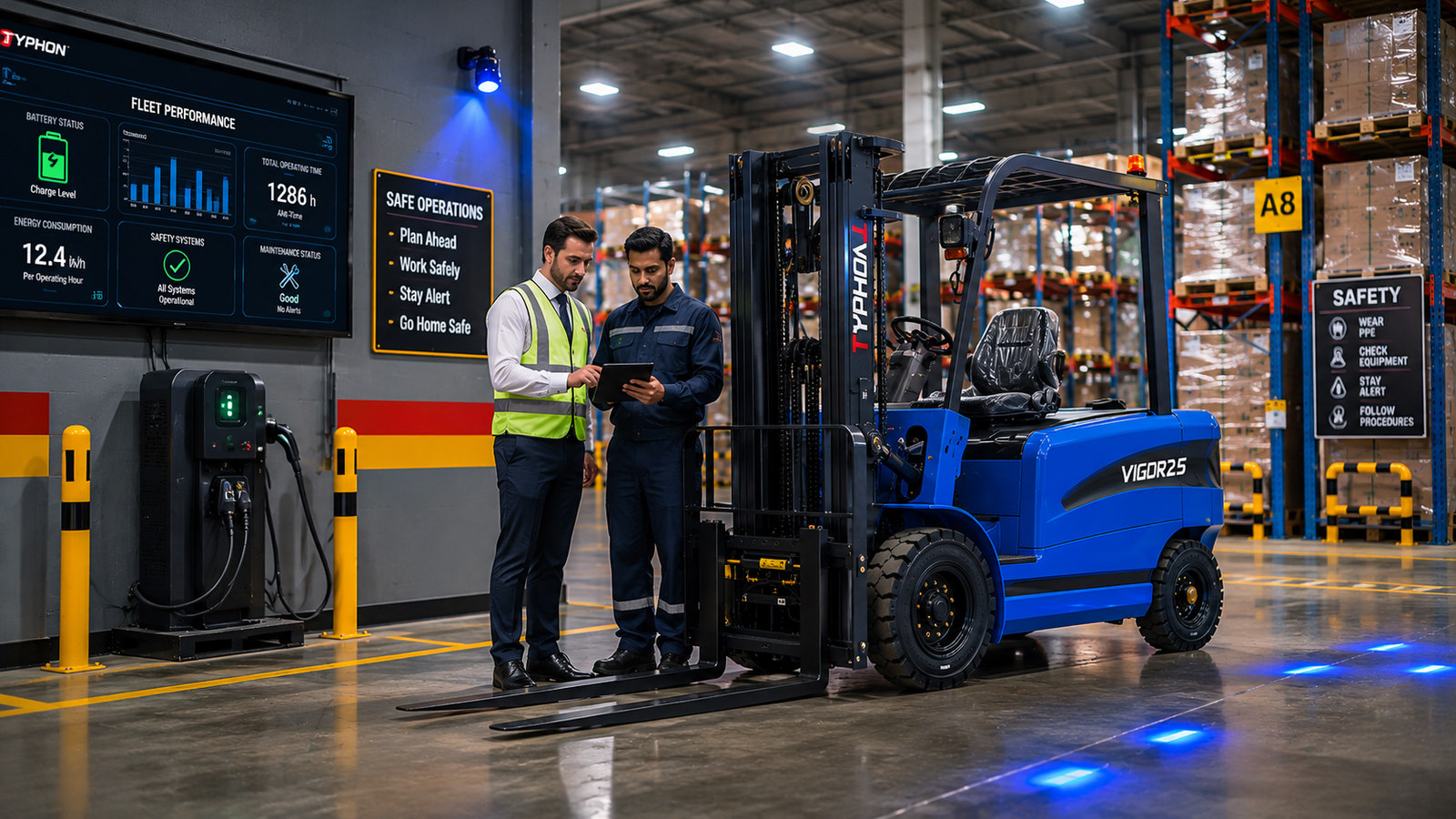
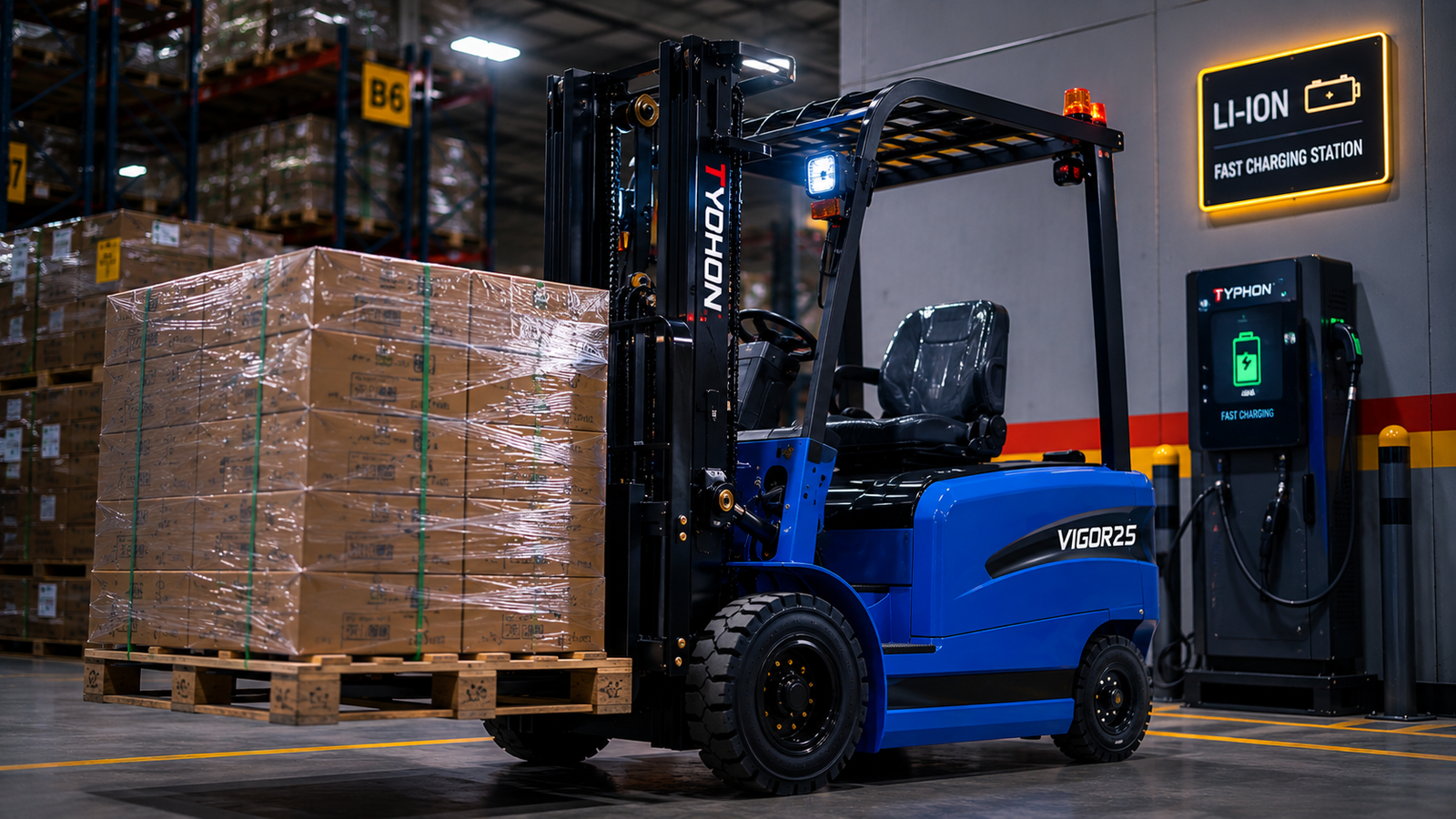
A well-equipped electric forklift should include safety systems that support operator control and warehouse awareness. Operator presence systems help prevent unintended movement when the driver is not properly seated or positioned. Speed control can limit travel speed in tight areas or when the mast is raised. High-quality LED lights, mirrors, backup alarms, blue spotlights, red zone lights, and camera systems improve visibility around blind corners and active pedestrian zones. Stability support systems, load indicators, and controlled acceleration help operators handle materials with greater confidence.
The business impact goes beyond injury prevention. Strong safety features reduce product damage, rack impacts, equipment abuse, and unplanned downtime. They also support a better safety culture because operators feel supported by the machine rather than forced to compensate for its limitations. For warehouse managers and logistics leaders, safer equipment leads to more predictable operations, fewer disruptions, and stronger long-term cost control. After safety features are reviewed, the final decision should account for the full ownership experience, including maintenance and supplier support.
Review Maintenance Expectations, Total Cost, and Supplier Support
The purchase price of an electric forklift is only one part of the investment. A machine that appears affordable upfront may become expensive if it requires frequent repairs, lacks local parts availability, or receives poor service support. Total cost of ownership includes energy use, battery maintenance, tire replacement, planned service, repair frequency, downtime, operator training, attachment costs, and eventual resale value. The best buying decision balances upfront cost with long-term reliability and fleet value.
The limitation many buyers face is that maintenance expectations can be underestimated. Electric forklifts do not need engine oil changes, spark plugs, fuel filters, or exhaust system repairs, but they still require disciplined care. Batteries must be maintained according to their chemistry. Tires must be inspected and replaced at proper wear points. Hydraulic systems, mast chains, brakes, steering components, controllers, cables, and connectors all require routine inspection. Neglecting these systems can quickly erase the savings that made electric equipment attractive in the first place.
The solution is to evaluate the forklift as part of a complete support ecosystem. A reliable supplier should help you assess your application, recommend the right model, explain battery options, confirm capacity requirements, and provide clear service expectations. They should also offer parts availability, technician support, planned maintenance programs, operator training, warranty guidance, and responsive repair service. In many cases, the strength of the supplier relationship determines how well the equipment performs over its lifespan.
The real-world business impact is clear. Strong supplier support protects uptime, reduces emergency repair costs, and extends equipment lifespan. Planned maintenance keeps small issues from becoming major failures. Proper training reduces misuse and improves safety. A well-supported electric forklift fleet holds its value longer and gives your operation the confidence to scale. Once you account for maintenance, ownership cost, and service support, you can make a decision based not only on what the machine can do on day one, but how well it will support your business for years.
Conclusion
Choosing the right electric forklift for your business requires a careful balance of capacity, warehouse fit, battery strategy, attachments, ergonomics, safety, maintenance expectations, and supplier support. The right machine should match your real load requirements, move efficiently through your facility, support your charging schedule, protect your operators, and deliver reliable performance shift after shift. When all of these factors work together, the forklift becomes more than a piece of equipment. It becomes a driver of productivity, safety, and long-term operational value.
Before making a purchase, take time to evaluate your facility, your loads, your operators, and your daily workflow. Confirm the lift height, aisle width, battery type, charging plan, attachment needs, and service resources required to keep the machine productive. A well-chosen electric forklift helps reduce downtime, improve warehouse efficiency, lower ownership costs, and create a safer working environment. For any business serious about building a dependable material handling operation, the right electric forklift is a strategic investment that pays dividends every day.