Electric forklifts have become the backbone of countless warehouses, distribution centers, and manufacturing floors. They run clean, operate quietly, and demand less maintenance than their internal combustion counterparts. Yet for all their advantages, these machines are only as reliable as the people who operate and manage them. The same features that make electric forklifts so capable can also create blind spots, and small operational habits quietly erode safety, performance, and equipment value over time.
The good news is that the most damaging forklift mistakes are also the most preventable. They rarely come from a lack of capability and almost always come from rushed routines, untrained habits, and assumptions that the machine will simply take care of itself. This guide examines the common electric forklift mistakes that cost businesses money, downtime, and safety, then explains exactly how to avoid each one. Whether you manage a fleet, supervise a crew, buy the equipment, or sit in the operator’s seat every day, understanding these pitfalls helps you protect your people, your inventory, and your bottom line.
Skipping the Pre-Operation Inspection
Every safe shift begins long before the first pallet moves, and the pre-operation inspection is where that safety is established. An electric forklift combines high-pressure hydraulics, heavy lifting components, sensitive electronics, and a powerful battery system into a single machine. Confirming that all of these systems are sound before work begins is the single most reliable way to prevent a mid-shift failure. Unfortunately, this is also the step operators skip most often.
The mistake usually comes from misplaced confidence. An operator assumes the machine is fine because it ran perfectly the day before, so they climb in, power up, and get straight to work. This logic falls apart quickly, because a forklift sits idle overnight while hydraulic seals settle, batteries discharge, and small problems wait undetected. A frayed cable, a soft brake, a leaking hydraulic hose, or a low charge can go completely unnoticed until the machine is already under load in a busy aisle, exactly when a failure becomes dangerous and expensive.
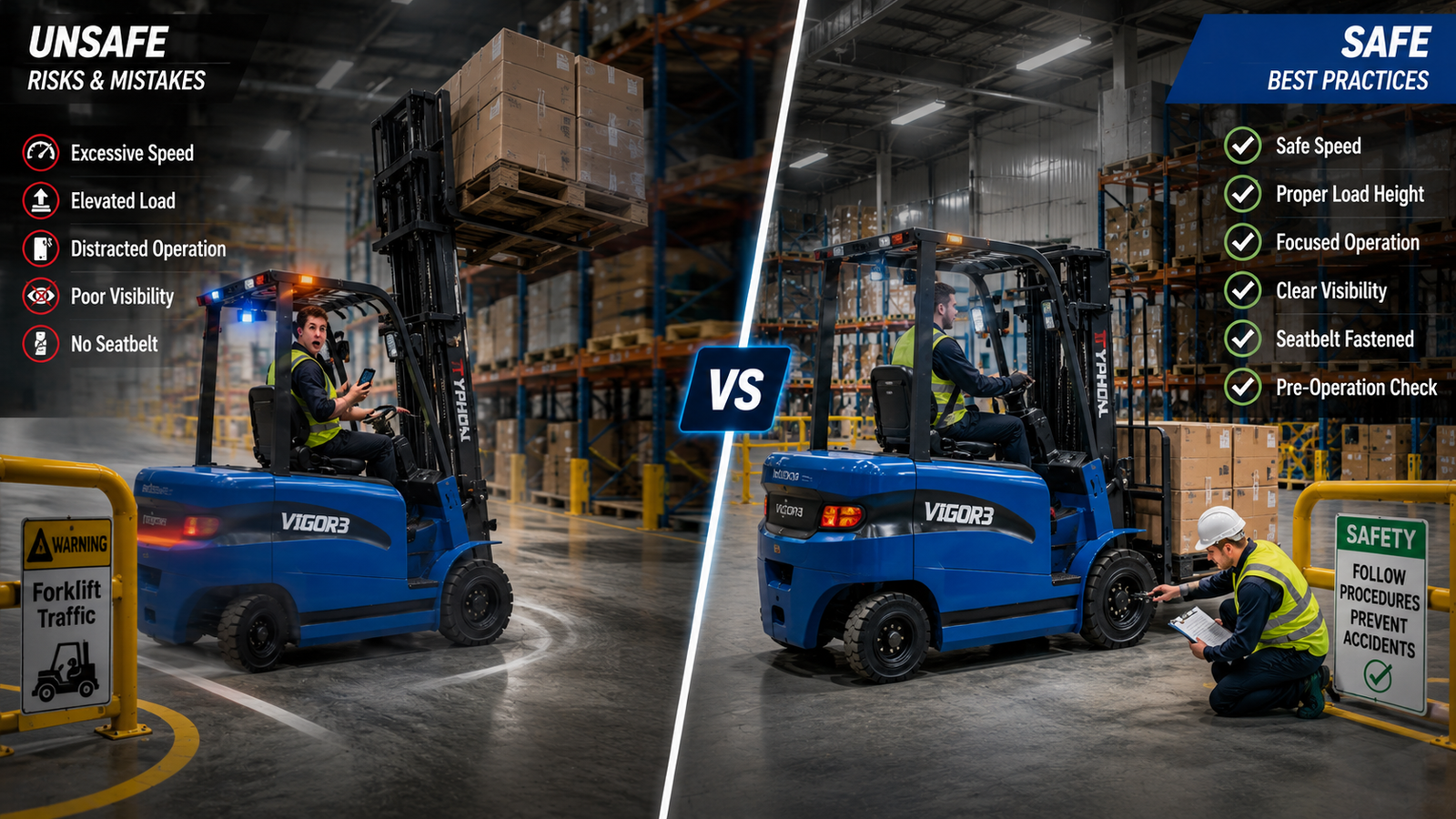
The correct approach is to treat the inspection as a non-negotiable daily ritual rather than a formality. A thorough walk-around covers the tires for wear and damage, the forks and mast for cracks or bends, the hydraulic hoses for leaks, and the battery for secure connections and clean terminals. From the seat, the operator should test the steering, service brakes, parking brake, horn, lights, seatbelt, and the operator presence system that disables functions when the seat is empty. Raising and tilting the mast confirms the hydraulics respond smoothly. If anything looks or feels wrong, the machine should be tagged out of service immediately.
The business impact of this discipline is substantial. Catching a low battery or a worn brake before the shift saves your operation from the costly downtime that disrupts dock schedules and frustrates the entire team. A documented inspection routine also creates accountability across shifts and protects operators from running a machine that might fail under load. With the inspection handled, the next mistake to address is one that quietly drains both performance and budget.
Mishandling Battery Charging and Care
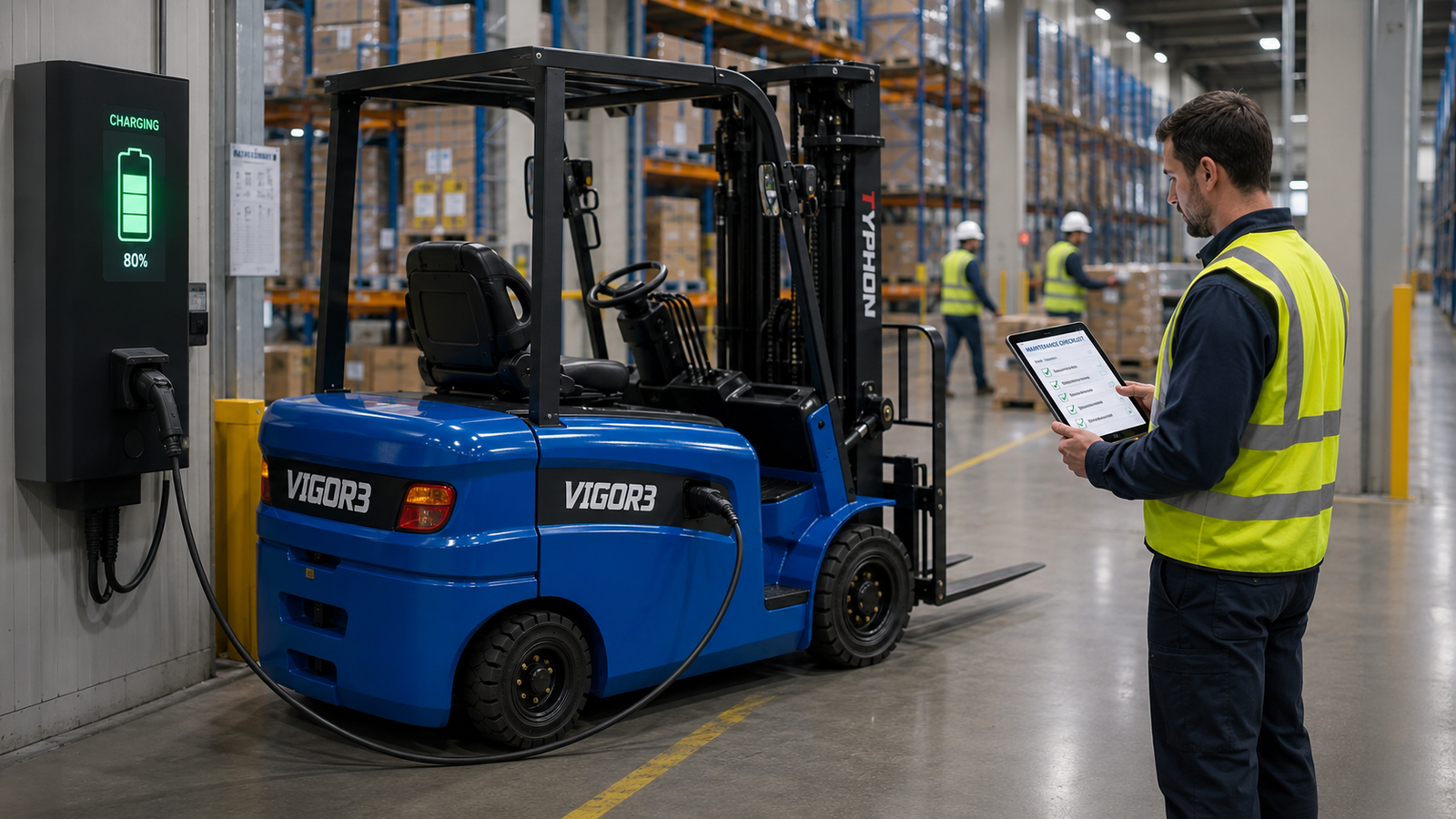
The battery is the heart of an electric forklift, dictating its power, runtime, and long-term value. Because electric machines depend entirely on battery health, charging habits have an outsized effect on daily performance and total cost of ownership. Yet battery care is one of the most frequently neglected aspects of forklift operation, often treated as an afterthought until a machine slows down or dies in the middle of a task.
The mistake takes different forms depending on the battery chemistry, and getting it wrong shortens lifespan dramatically. With traditional lead-acid batteries, operators sometimes interrupt charge cycles, skip the cooling period, or water the cells at the wrong time, causing acid spills or permanent capacity loss. Allowing a lead-acid battery to run completely flat is especially damaging. With lithium-ion systems, the errors look different. Operators may leave batteries improperly managed over long idle stretches or fail to use the convenient opportunity charges that keep these batteries performing at their best.
Avoiding these problems starts with learning your facility’s specific battery type and following its protocol exactly. Lead-acid batteries need full, uninterrupted charge cycles, adequate cooling time, and watering only after a complete charge so the fluid does not overflow. Lithium-ion batteries benefit from short opportunity charges during breaks and meal periods, keeping the machine topped off throughout the day. Regardless of chemistry, operators should never run a forklift while it is plugged in, should keep connectors clean and undamaged, and should monitor the charge display so the battery never reaches total depletion.
Strong battery habits translate directly into reliable performance and lower operating costs. A well-managed battery holds its capacity longer, powers the machine consistently from the first lift to the last, and spares your operation the heavy expense of premature replacement. Predictable runtime also makes labor planning easier and keeps throughput steady. Once power is properly managed, attention naturally turns to how the machine moves through the facility.
Unsafe Travel and Reckless Turning
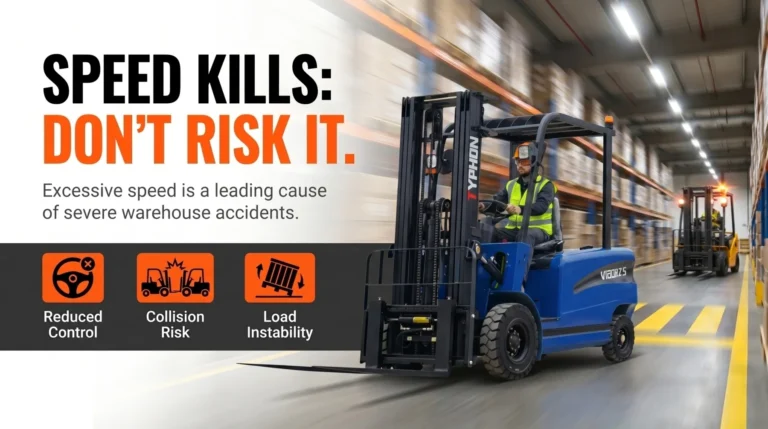
Moving a forklift through a busy warehouse is where operator habits meet real hazards. Facilities combine narrow aisles, pedestrians, blind corners, and dock traffic in a tight footprint, and electric forklifts add a unique challenge: they run so quietly that workers often do not hear them approaching. Travel and turning mistakes are among the most common causes of serious warehouse accidents, and they are almost entirely preventable.
The mistake usually involves a combination of excessive speed, tunnel vision, and a misunderstanding of how the machine handles. Many operators focus only on the path directly ahead, losing track of pedestrians stepping out of side aisles or pallet jacks crossing their route. Others forget that a forklift steers from the rear wheels, which means the back end swings wide during turns while the front pivots tightly. An operator who pictures a forklift turning like a car is often surprised when the tail end clips a rack, a wall, or a coworker. The instant torque of an electric drive compounds these risks, allowing a heavy-footed operator to lurch forward unexpectedly.
The correct approach relies on disciplined awareness. Operators should keep their speed appropriate for the space, slowing well before corners, intersections, and pedestrian zones, and sounding the horn at blind spots. Loads should travel low, roughly four to six inches off the ground, to protect stability and visibility. When a load blocks the forward view, the operator should travel in reverse and turn to watch the direction of movement. Before turning, they must confirm the rear of the machine has clearance and that no one is standing in its swing path.
The payoff is fewer struck-by incidents, fewer collisions with racking, and a smoother flow of material throughout the facility. Controlled travel also reduces the product and equipment damage that drains budgets and triggers downtime for repairs. A confident, aware operator simply gets more done in less time, with far less risk. That same precision becomes essential the moment a load enters the equation.
Improper Load Handling
Lifting, carrying, and placing loads is the entire purpose of a forklift, which makes load handling errors particularly costly. Electric forklifts depend on a careful balance between the load, the forks, the mast position, and the machine’s counterweight. When that balance is disturbed, the consequences range from dropped inventory to a full tip-over, and these incidents happen far faster than most operators expect.
The mistake often comes from disrespecting the machine’s limits. Every forklift carries a rated capacity tied to a specific load center, and exceeding it, or positioning a load too far out on the forks, pushes the center of gravity past its safe boundary. Operators may also misjudge how an uneven, oversized, or poorly stacked pallet affects stability, or they raise and lower loads too quickly and cause the material to shift. Traveling with a raised load is a frequent and dangerous error, because elevating the weight makes the entire machine prone to tipping.
Correct technique follows a clear and repeatable sequence. The operator approaches the pallet squarely and centered, drives the forks fully into the openings so the weight rests close to the mast, then lifts only high enough to clear the rack or floor. Tilting the mast slightly back cradles the load securely against the carriage during travel. When placing the load, the operator approaches slowly, levels the forks, positions the load precisely over its destination, lowers it gently, and withdraws the forks without dragging. The capacity shown on the data plate is a firm limit, not a suggestion, and any load that looks unstable should be secured or restacked before lifting.
Strong load handling protects people, product, and equipment all at once. Stable lifts prevent the tip-overs and falling loads that cause severe injuries and destroy inventory, while smooth placement reduces rack damage and speeds up storage and retrieval. Precise handling also protects the machine itself from the stress of jerky, overloaded lifts. Even with flawless technique, however, a forklift cannot stay healthy if problems go unreported.
Neglecting Maintenance Reporting
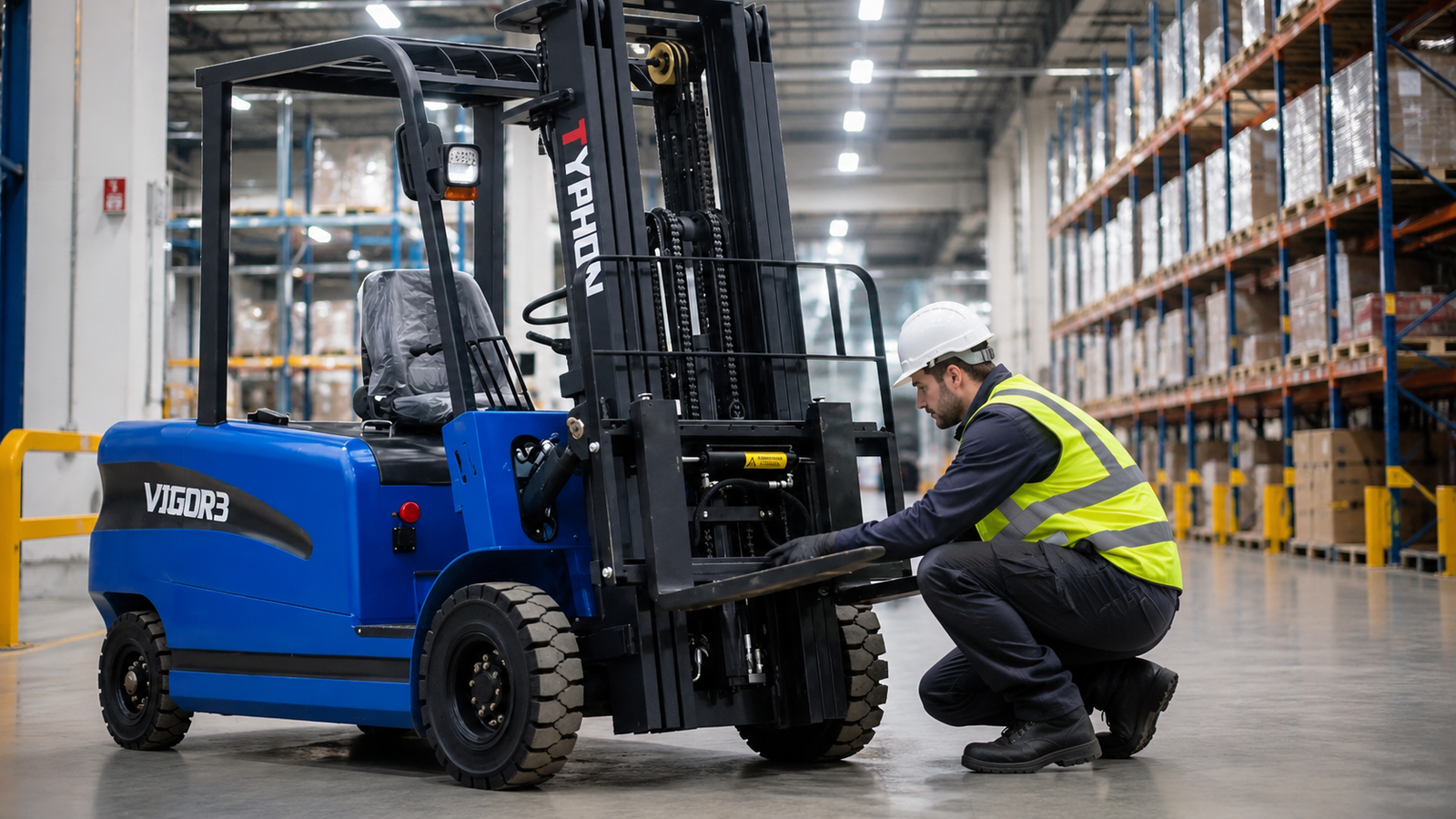
The operator sitting in the seat is the first and most reliable line of defense against mechanical failure. No one understands the specific sounds, handling characteristics, and operational feel of a machine better than the person who runs it every day. When that knowledge is shared promptly, small issues get fixed before they escalate. When it is ignored, minor faults grow into expensive breakdowns that halt production at the worst possible moment.
The mistake is a culture of silence around equipment problems. Operators sometimes notice a sluggish steering response, an unusual grinding noise in the mast, a rapidly draining battery, or a brake that feels soft, yet they keep working rather than reporting the issue. This often happens because they fear slowing down throughput, assume someone else will catch it, or worry that flagging a problem reflects poorly on them. The result is that a compromised machine stays on the active floor, where it threatens both the operator and everyone nearby.
The correct approach is to build a reporting system that is simple, expected, and respected. A mandatory pre-shift inspection checklist gives operators a structured way to document concerns, and management must respond decisively when issues are raised. Removing a machine from service for a quick diagnostic check demonstrates that worker safety matters more than a temporary dip in output. This internal vigilance should be backed by scheduled service intervals performed by certified technicians, because advanced diagnostics and heavy mechanical work require expertise beyond daily inspections.
The business impact of strong reporting is measured in uptime and trust. Catching a failing component early prevents the cascading downtime that disrupts dock schedules and forces the rest of the fleet to absorb extra work. It also protects the long-term value of the equipment and signals to your workforce that their feedback genuinely shapes how the operation runs. Just as the start of the shift sets the tone, so does the way it ends.
Careless Parking and Shutdown Habits
How a shift ends reveals as much about operator discipline as how it begins. A rushed, careless shutdown creates immediate hazards and slowly degrades equipment, yet it is one of the most overlooked aspects of forklift operation. Tired operators eager to clock out often treat parking as an afterthought, leaving the machine in a condition that endangers the next person and undermines the entire operation.
The mistake takes several familiar forms. Forks left elevated can drift down under fading hydraulic pressure and crush whatever sits beneath them. A machine parked in a travel lane, near a dock edge, or blocking an emergency exit becomes an obstacle and a safety violation. Leaving the key in an unattended forklift invites untrained people to move it, and failing to connect the battery for charging means the machine may not be ready for the next shift. Each of these feels minor in the moment but carries serious consequences.
The correct shutdown sequence is simple and worth following every single time. The operator parks on level ground, well away from traffic lanes, ramps, dock edges, and exits. The forks are lowered completely until they rest flat on the floor, and the mast is set to neutral. The operator then applies the parking brake, powers down the machine, and removes the key or logs out of the keypad. If the battery needs charging, it is connected according to the facility’s protocol, and a final quick look identifies any issues to report before walking away.
Disciplined shutdowns protect people, equipment, and continuity. A properly parked machine eliminates the risk of dropped loads and unauthorized movement, while correct battery management ensures the forklift is ready and charged for the next shift. These habits also reinforce a broader culture of professionalism, where operators take ownership of the equipment they rely on. That ownership, ultimately, is what ties every one of these practices together.
Conclusion
The most common electric forklift mistakes share a single root cause: treating a powerful, sophisticated machine as if it requires no discipline. Skipped inspections, poor charging habits, reckless travel, improper load handling, silent maintenance issues, and careless shutdowns each seem small in isolation, yet together they erode safety, drain budgets, and shorten the life of expensive equipment. Every one of them is preventable with the right knowledge and consistent habits.
For warehouse managers, logistics leaders, operations teams, equipment buyers, and operators, avoiding these pitfalls is a direct investment in safety, uptime, and long-term value. Start by making pre-operation inspections mandatory, enforcing the correct charging protocol for your battery type, and training operators to travel, turn, and handle loads with precision. Build a reporting culture where problems surface early, and hold the line on proper parking and shutdown every shift. Pair these standards with formal training, certified service, and steady leadership, and your electric forklifts will deliver exactly what they were designed to: reliable, efficient, and safe performance that strengthens your operation day after day.