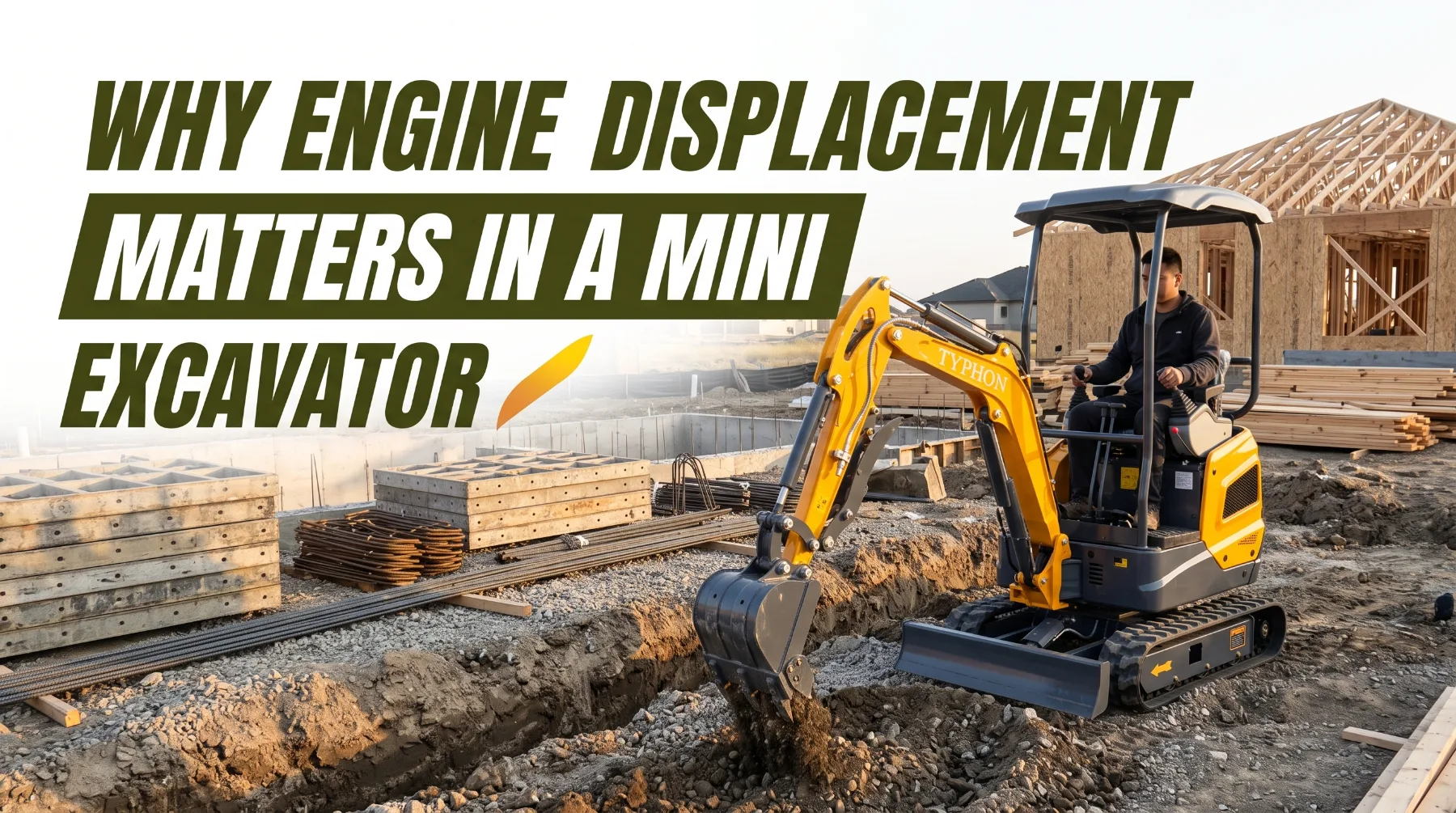
 Mini excavators can share the same operating weight, the same bucket size, and nearly the same price, yet dig at very different paces. The difference often traces back to a number buried in the spec sheet: engine displacement. Measured in liters or cubic centimeters, displacement describes the total volume the engine’s cylinders sweep through with each rotation, and it quietly governs how much power the machine can summon when the ground fights back. Buyers who fixate on horsepower alone frequently miss how displacement shapes torque, hydraulic output, and the machine’s stamina across a long day of trenching or grading. Displacement deserves attention because it sits upstream of nearly every capability you care about. A properly sized engine feeds the hydraulic pumps the flow and pressure they need, holds a steady pace in dense soil, and does it without gulping fuel or running hot. Undersize it, and the machine stalls its own rhythm on tough passes; oversize it for light duty, and you carry needless weight and fuel cost. Grasping what displacement does, and how to weigh it against the work you actually perform, keeps your investment matched to the trench, the site, and the years of service ahead.
What Engine Displacement Actually Measures
Displacement is the combined volume swept by every piston as it travels from top to bottom inside its cylinder, added together across all cylinders. A three-cylinder diesel rated at 1.5 liters, for instance, moves that total volume of air and fuel through its chambers on each full cycle. The larger that swept volume, the more air-fuel mixture the engine can burn per rotation, and burning more mixture is what produces more usable energy. That energy shows up as torque, the rotational muscle the engine delivers to turn the hydraulic pumps. Displacement and torque travel together: a bigger swept volume generally yields more torque at the low and middle engine speeds where excavators spend most of their working life. Horsepower gets the headlines, but on a digging machine, low-end torque is what breaks ground and keeps the arm moving under strain. Key takeaway: Displacement measures the total volume the cylinders sweep per cycle, and a larger volume generally produces more low-end torque, which is the force that actually drives digging work.
How Displacement Feeds Hydraulic Pump Output
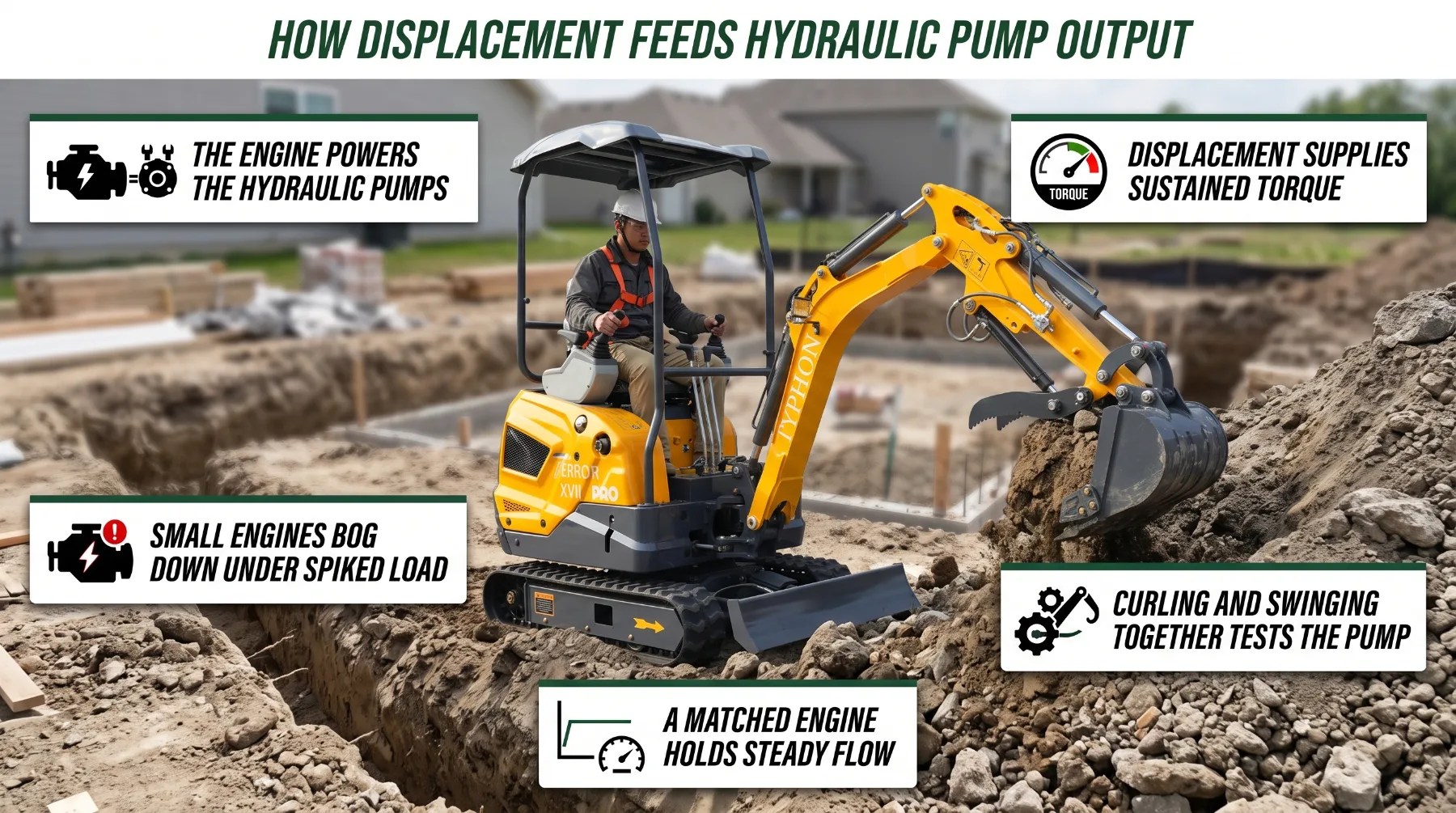 A mini excavator does almost nothing without hydraulics. The engine’s real job is to spin the hydraulic pumps, which pressurize fluid and send it to the cylinders and motors that swing the house, curl the bucket, and crowd the arm into the earth. The energy the engine can supply sets the ceiling on how much hydraulic flow and pressure the machine can generate at once. Here is where displacement earns its keep. Pumping fluid at high pressure against a heavy dig demands sustained torque, and a larger-displacement engine holds that torque without bogging down when the pump load spikes. On a smaller engine, a demanding hydraulic function, say, curling a full bucket while swinging, can pull engine speed down, which drops pump output and slows every motion. A well-matched engine keeps rotational speed steady so the pumps deliver consistent flow through the whole cycle. Key takeaway: The engine exists to drive the hydraulic pumps, and adequate displacement supplies the steady torque those pumps need to hold flow and pressure through demanding digging functions.
How Displacement Translates Into Digging Force
Breakout force, the muscle at the bucket teeth that pries material loose, comes from hydraulic pressure acting on the cylinder pistons. That pressure is only available if the engine can keep the pump spinning against resistance. So while the hydraulics deliver the final punch, displacement determines whether the engine can feed that punch repeatedly without faltering. Think of a machine crowding into compacted clay. The arm meets resistance, hydraulic pressure climbs, and the pump demands more torque from the engine. An engine with ample displacement absorbs that demand and keeps the bucket advancing. An underpowered one loses revolutions, pressure sags, and the bucket stalls partway through the cut, forcing the operator to back off and take a smaller bite. Across hundreds of cuts a day, that difference decides how much dirt actually moves. Key takeaway: Digging force is delivered hydraulically, but sufficient displacement lets the engine sustain the torque that keeps breakout pressure high through every cut.
How Displacement Affects Performance Across Soil and Site Conditions
Ground conditions vary enormously, and displacement determines how gracefully a machine copes with the harder end of that range. Loose topsoil, sand, and loam offer little resistance, so even a modest engine handles them briskly. Dense clay, rocky fill, frozen crust, and root-bound earth push back hard, and that is where a larger swept volume proves its worth. On resistant ground, hydraulic demand climbs and stays elevated. An engine with reserve displacement meets that demand while holding a workable pace, so the operator keeps a rhythm instead of nursing the machine through each pass. Slopes and elevated worksites add another wrinkle: thinner air at altitude reduces the oxygen available for combustion, trimming effective power, and an engine with more displacement carries enough margin to shrug off that loss. Undersized power in these settings turns a routine dig into a slow grind. Key takeaway: Tougher soils, rocky fill, and high-altitude sites raise hydraulic demand, and reserve displacement is what lets a machine hold its working pace where a smaller engine would labor.
How Displacement Shapes Fuel Consumption and Runtime
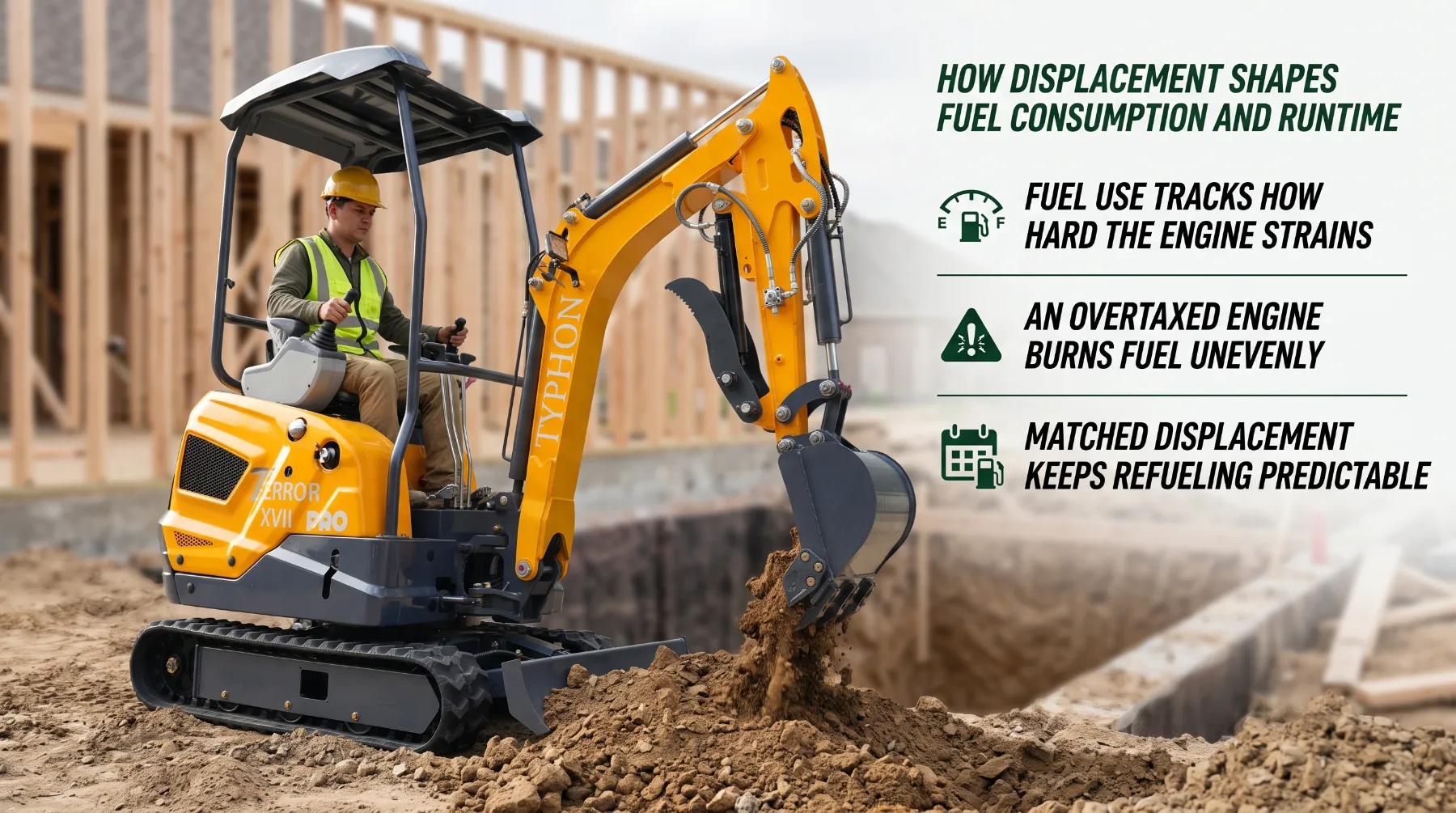 More swept volume can burn more fuel, but the relationship is subtler than “bigger engine, thirstier machine.” Fuel use tracks the work being done and how hard the engine strains to do it. A larger engine loafing at partial load in easy conditions often sips fuel efficiently, because it isn’t fighting for every revolution. A small engine pinned near its limit on hard ground can actually consume more fuel per unit of dirt moved, since it runs at high stress with poor combustion efficiency. Runtime between refuels follows the same logic. An appropriately sized engine working within a comfortable load band delivers predictable hours on a tank, while an overtaxed one burns unevenly and empties its tank sooner than the spec sheet implies. Matching displacement to the typical duty keeps consumption steady and refueling stops predictable, which matters as much to a scheduler as it does to an operator. Key takeaway: Fuel efficiency depends on how hard the engine strains, not raw size alone, so an engine matched to the load often outperforms an overtaxed smaller one on both consumption and runtime.
How Displacement Scales With Machine Size and Attachments
Engine displacement rises in step with a mini excavator’s operating weight and reach, and for good reason. A one-ton machine carries a small engine because its compact arm and light bucket ask little of the hydraulics. Climb into the three-to-eight-ton range, and heavier arms, larger buckets, and greater breakout ambitions demand proportionally more swept volume to keep everything fed. The engine, hydraulics, and structure are engineered as a balanced package. Attachments raise the stakes further. Hydraulic breakers, augers, compaction plates, and mulching heads draw substantial flow and pressure, sometimes more than digging itself. Running a power-hungry breaker off an engine sized only for bucket work leaves the tool starved and the machine straining. If your plans include demanding attachments, the engine’s displacement, and the auxiliary hydraulic circuit it supports, you must have the headroom to power them without robbing the rest of the machine. Key takeaway: Displacement scales with machine weight and reach by design, and demanding attachments like breakers and augers require added hydraulic headroom that only an adequately sized engine can supply.
Conclusion
Engine displacement and mini excavator performance are linked through the hydraulic system, because a larger swept volume generally produces more low-end torque, and that torque is what drives the pumps supplying flow and pressure to the digging circuit. For a given hydraulic configuration, an engine with adequate displacement sustains pump speed under load, holding breakout force and cycle pace where a smaller engine would lose revolutions and stall its own motion. The real relationship depends on cylinder count and bore-stroke geometry, combustion efficiency, pump displacement and pressure settings, ambient conditions such as altitude and temperature, and the duty cycle the machine actually faces, so digging capability should be judged under representative loads rather than from a single horsepower figure. Operating an undersized engine near its ceiling raises thermal and mechanical strain, worsens fuel efficiency per unit of work, and shortens component life, while a well-matched engine works within a comfortable band and holds consistent output over long shifts. Machine selection should therefore weigh rated displacement, peak torque and its engine speed, hydraulic flow and pressure, auxiliary circuit capacity for attachments, operating weight class, fuel and emissions requirements, and the typical and hardest tasks the job demands. Matching engine displacement and hydraulic performance to the expected workload lets a mini excavator maintain steady digging force and cycle times while controlling fuel use and supporting dependable service life.
Frequently Asked Questions
Is a bigger engine displacement always better for a mini excavator?
Not automatically. Displacement should match the work the machine faces, not simply run as large as possible. A bigger engine delivers more torque and holds its pace better in dense clay, rock, or frozen ground, and it powers demanding attachments like breakers without straining. But on light landscaping or soft soil, that extra capacity adds weight and cost you may never use, and it can carry more complex emissions equipment. The right approach is to profile your typical and hardest tasks, then choose an engine with enough reserve to handle the tough days comfortably while staying efficient on the routine ones. A well-matched engine almost always outperforms one chosen purely on size.
How does engine displacement affect digging force if the hydraulics do the actual work?
The bucket’s breakout force comes from hydraulic pressure acting on the cylinders, but that pressure only stays available if the engine can keep the pump spinning against resistance. When you crowd into hard material, hydraulic demand climbs and the pump asks the engine for more torque. An engine with adequate displacement supplies that torque and keeps the bucket advancing through the cut. An undersized one loses engine speed, pump output drops, pressure sags, and the bucket stalls partway through, forcing a smaller bite. So while the hydraulics deliver the final force, displacement determines whether the engine can feed that force repeatedly without faltering across a full shift of digging.
Will a larger-displacement engine burn significantly more fuel?
Not necessarily, because fuel use tracks how hard the engine strains rather than its size alone. A larger engine working at partial load in easy conditions often runs efficiently, since it isn’t fighting for every revolution. A small engine pushed near its limit on hard ground can actually consume more fuel per unit of material moved, because it runs under high stress with poorer combustion efficiency. Runtime between refuels follows the same pattern: a right-sized engine working within a comfortable load band delivers predictable hours on a tank, while an overtaxed one empties sooner than expected. Match displacement to your real duty, and you keep both consumption and refueling stops steady.