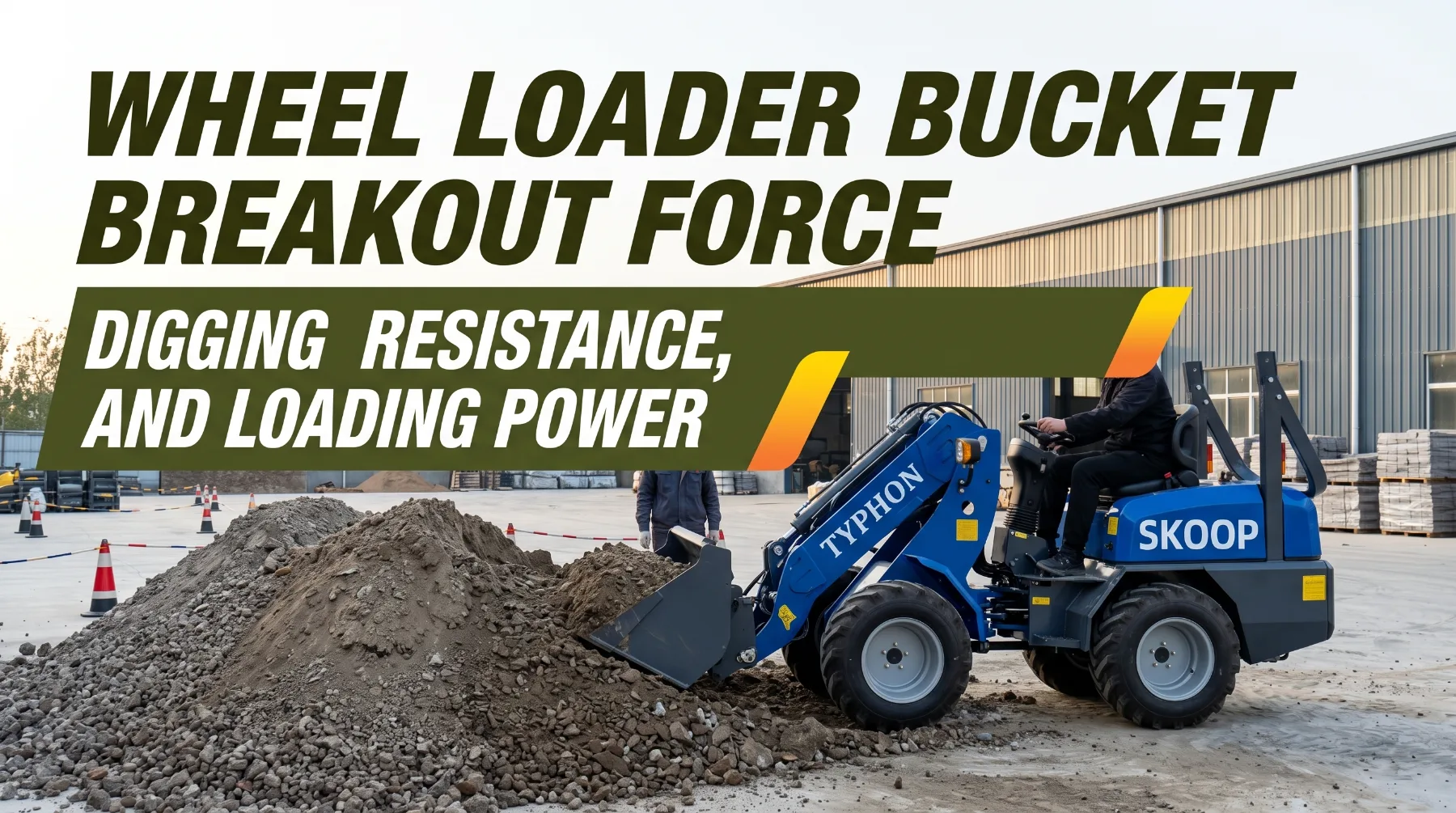
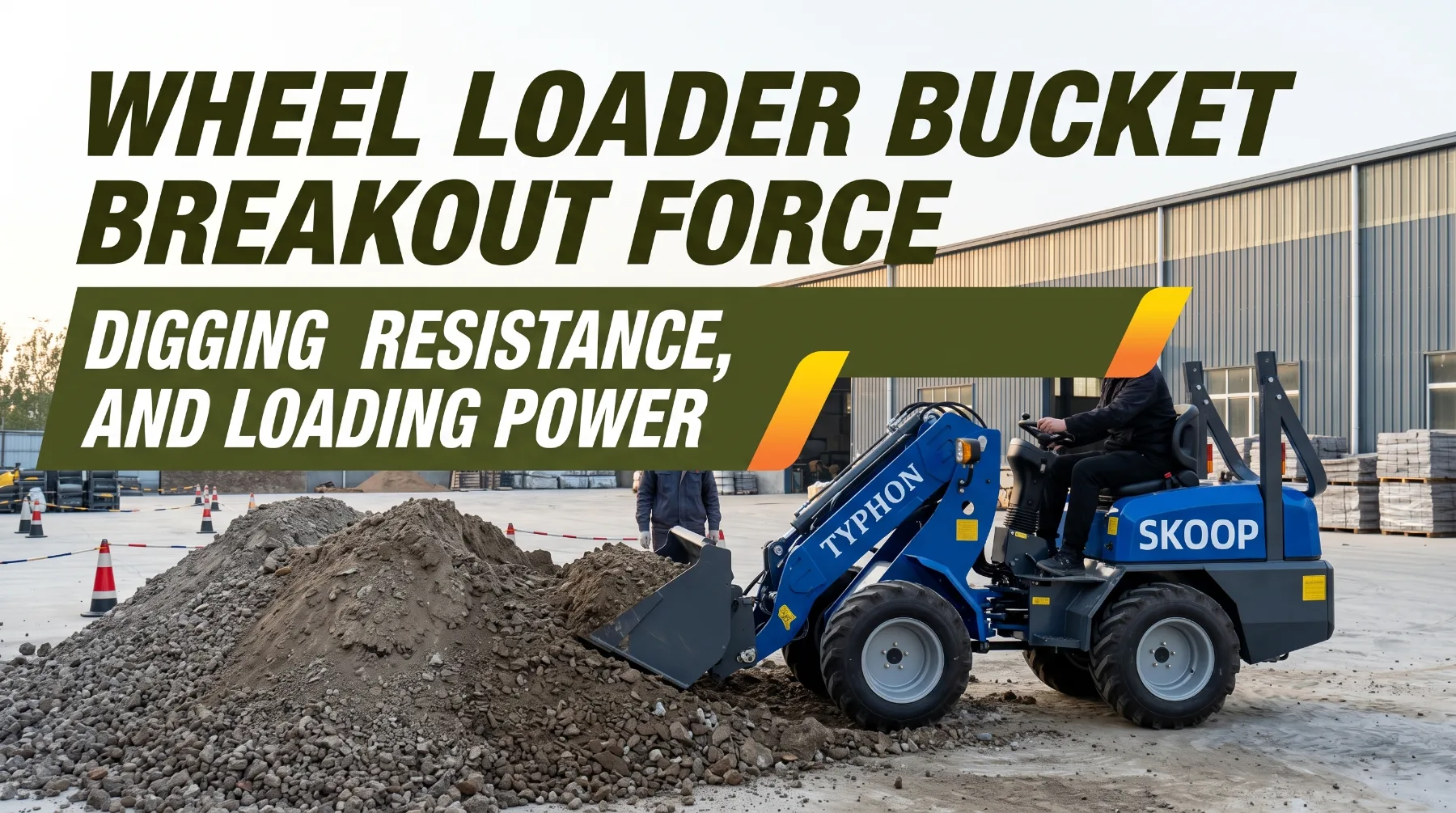
Approaching a dense gravel pile, a wheel loader lowers its bucket and prepares for another loading cycle. As the cutting edge enters the material, the machine must penetrate the pile, curl the bucket around the load, and lift the filled attachment clear of the ground. Loose aggregate may allow these movements to happen easily, but packed gravel, clay, or compacted soil can demand much more force. The loader’s ability to handle that resistance depends on breakout force, hydraulic performance, engine output, and how effectively those systems work together.
Bucket breakout force describes the force available to overcome resistance as the attachment penetrates and curls through difficult material. Hydraulic cylinders generate the movement, while the hydraulic system supplies the pressure and flow needed to produce that force. Engine power supports the hydraulic system and other machine functions, making the relationship between these components important when the loader faces demanding digging conditions.
Material density is only one part of the equation. Bucket shape, cutting-edge position, hydraulic pressure, tire traction, and operator technique can all influence how effectively the loader enters a pile and fills the bucket. Understanding these factors makes it easier to match the machine to the material and maintain efficient loading cycles without placing unnecessary strain on the equipment.
What Bucket Breakout Force Does
Bucket breakout force is the force available at the bucket during the initial penetration and curling movement of the loading cycle. In plain terms, it’s the muscle the machine applies to cut into a pile and roll the bucket back through the material. Strong breakout performance is what lets the cutting edge bite into compacted soil, packed gravel, aggregate, and other materials that resist penetration.
That force doesn’t come from a single part. The hydraulic cylinders and the bucket linkage work together, with the cylinders supplying the power and the linkage transferring it to the bucket at the right point. When both are in good shape and matched to the work, the bucket penetrates cleanly and fills in a single, controlled pass rather than skidding across the surface of a tough pile.
Key takeaway: Bucket breakout force is the force available at the bucket for penetrating and curling, produced by the hydraulic cylinders and bucket linkage working together.
How Material Resistance Changes Digging
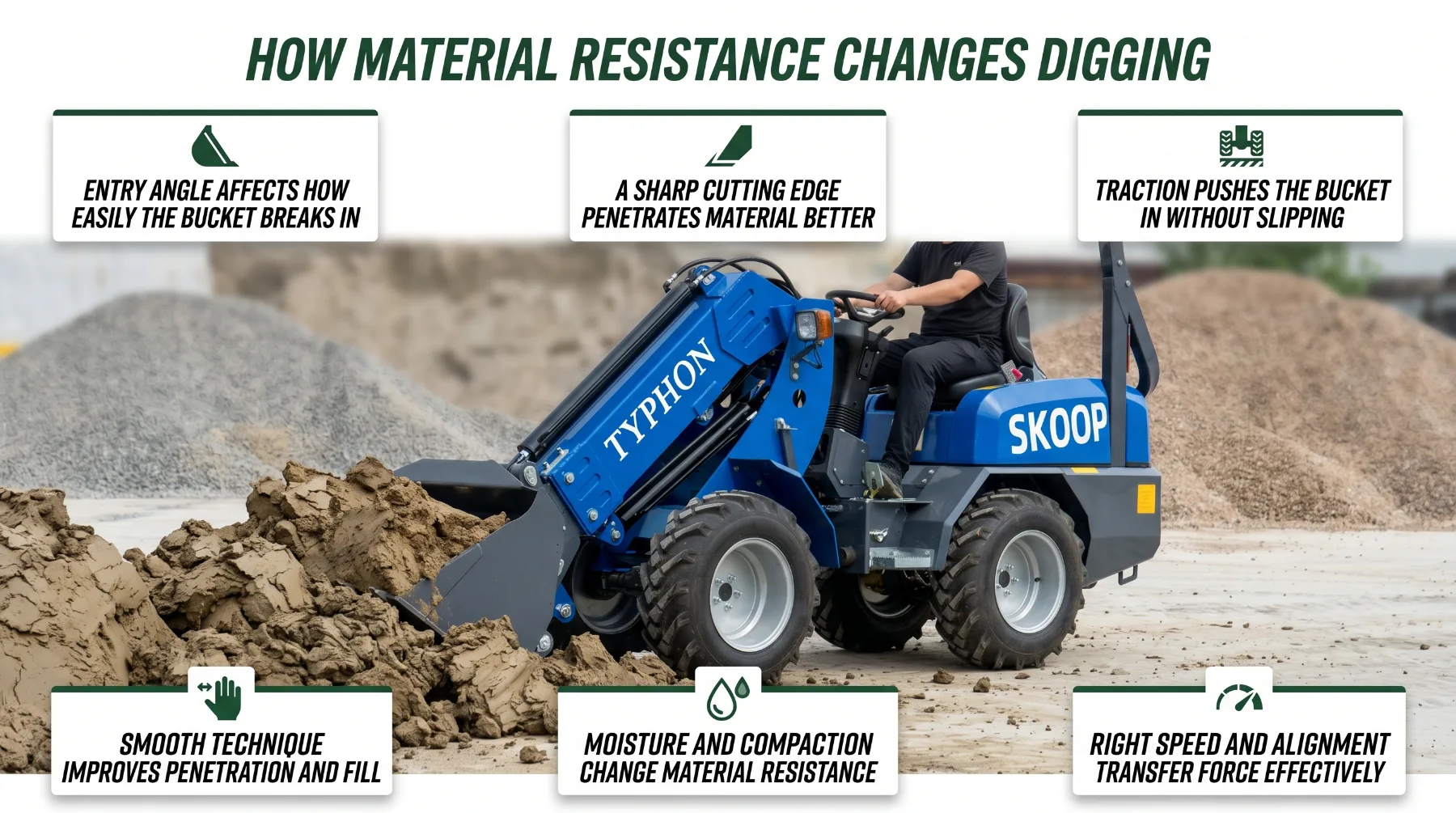
Not all materials resist excavation in the same way. Loose material usually flows into a bucket with relatively little effort, while dense, compacted, or wet material can resist penetration and require significantly more force. Clay, packed gravel, wet soil, and rocky ground can all increase digging resistance, turning a simple loading cycle into a more demanding operation. Understanding the material before digging helps the operator anticipate resistance and choose a more effective approach.
Resistance is not determined by the material alone. Several operating factors also affect how smoothly the bucket can penetrate and fill:
- Bucket Angle: The entry angle of the cutting edge affects how easily the bucket breaks into the material.
- Cutting-Edge Condition: A sharp, properly maintained cutting edge penetrates material more effectively than a worn edge.
- Traction: Sufficient traction allows the machine to push into resistant material without unnecessary wheel or track slip.
- Operator Technique: A controlled approach, proper positioning, and smooth bucket curl can improve penetration and filling.
- Material Condition: Moisture, compaction, and density can change how much resistance the bucket encounters.
- Machine Approach: Entering the pile with the right speed and alignment helps transfer the machine’s available force more effectively.
When these factors work together, the bucket can enter difficult material more cleanly and fill more efficiently. Poor bucket positioning, limited traction, or an unsuitable approach can increase resistance and make the machine work harder than necessary. Understanding both the material and the digging conditions helps create smoother cycles and more controlled operation.
Key takeaway: Dense materials like clay, packed gravel, wet soil, and rock raise digging resistance, and bucket angle, cutting-edge condition, traction, and technique all affect penetration.
Hydraulic Pressure Behind the Bucket
The force at the bucket ultimately comes from the hydraulic system, and two properties do different jobs there. Hydraulic pressure provides the force available under load, which is what the bucket cylinders convert into breakout force against the material. Hydraulic flow, by contrast, supports the speed of cylinder movement, governing how quickly the bucket curls and the arms lift. Both matter, but pressure is what pushes through resistance.
Because so much depends on the hydraulic system, keeping it properly maintained is essential to consistent bucket performance. Leaks, contaminated fluid, worn seals, or low fluid levels all rob the system of the pressure it needs to dig hard. A well-maintained system delivers the same reliable force cycle after cycle, while a neglected one loses power gradually and unpredictably.
Key takeaway: Hydraulic pressure supplies the force for digging and curling while flow controls cylinder speed, so keeping the hydraulic system maintained supports consistent bucket performance.
Bucket Design and Cutting Edge
The bucket itself decides how efficiently the machine’s force actually reaches the material. Two loaders with identical power can perform very differently depending on the bucket bolted to them, because design determines how cleanly force transfers into the pile. The right bucket reduces wasted effort; the wrong one makes even a capable machine struggle.
Several design elements drive that difference:
- Cutting-edge shape, which affects how the edge slices in
- Bucket profile, influencing how material fills and flows
- Teeth, which concentrate force to break into tough material
- Capacity, matching the load size to the machine
A bucket chosen for the material being handled cuts unnecessary resistance and improves the whole loading cycle. A general-purpose bucket may fill fine in loose gravel but fight you in rock or heavy clay, where a bucket suited to that material earns its keep.
Key takeaway: Cutting-edge shape, bucket profile, teeth, and capacity all affect penetration and filling, so a bucket matched to the material reduces resistance and improves the loading cycle.
Engine Power During Heavy Loading
Behind both the hydraulics and the wheels sits the engine, and its power feeds both. Engine horsepower drives the hydraulic functions that generate breakout force and the machine movement that pushes the bucket into the pile. When a loader crowds a heavy pile, it needs enough power to hold traction while the hydraulic system works against digging resistance at the same time. Those two demands compete for the engine’s output.
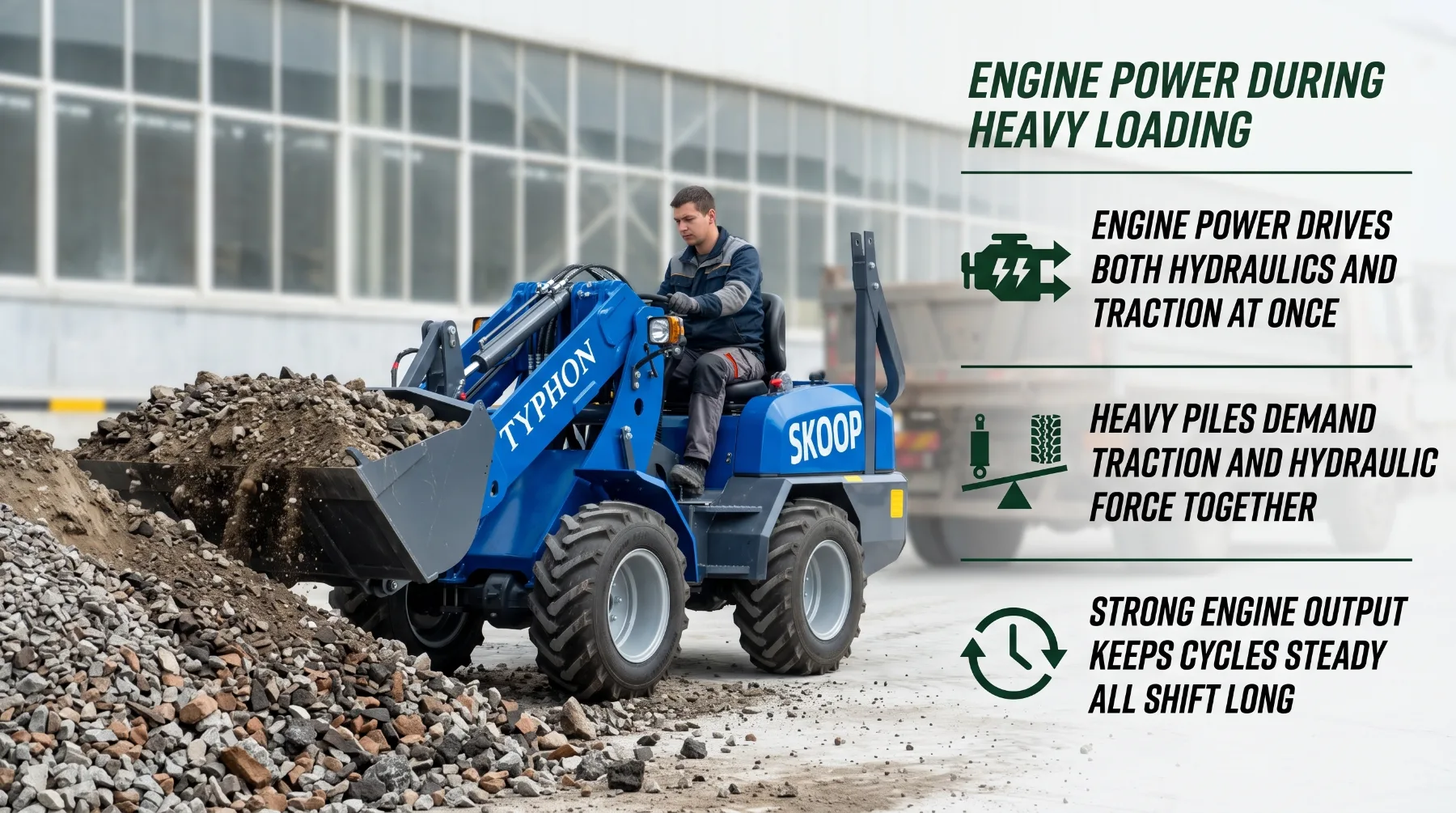
That’s why adequate engine power matters most during repeated, demanding cycles. A machine short on power may manage a single dig but fade over a full shift of heavy loading, losing traction, slowing its hydraulics, or both. Sufficient engine output keeps the loader digging, curling, and moving consistently from the first cycle to the last, which is what steady production actually requires.
Key takeaway: Engine horsepower powers both hydraulic functions and machine movement, so sufficient output helps the loader maintain traction and consistent performance through repeated loading cycles.
Matching Machine Power to the Material
No single specification tells the whole story. Breakout force alone doesn’t determine loading performance, because traction, hydraulic pressure, engine power, operating weight, and bucket design all contribute to how a machine actually performs. A loader with strong breakout force but poor traction, or the wrong bucket, still underdelivers. The factors work as a system, and the weakest one tends to set the limit.
The practical goal is to match the machine to the whole job: the type of material, the bucket size, the working conditions, and the expected production rate. A loader ideal for loose stockpiling may not suit heavy digging in packed clay, and vice versa. Weighing these factors together, rather than fixating on one headline number, gives a far clearer picture of how the loader will handle your material on your site.
Key takeaway: Breakout force alone doesn’t define performance, so weigh traction, hydraulic pressure, engine power, operating weight, and bucket design together against the material and production rate.
Conclusion
Wheel loader loading performance depends on how hydraulic breakout force, engine power, bucket design, traction, and material resistance work together during each loading cycle. Breakout force is generated by the hydraulic cylinders and bucket linkage, while hydraulic pressure determines the force available at the cylinders and hydraulic flow influences cylinder movement speed. Dense or compacted materials increase penetration resistance, making cutting-edge profile, teeth condition, bucket angle, traction, and operator technique important to effective bucket filling. Bucket capacity and geometry also determine how efficiently the available hydraulic force is transferred into the material and how much material can be carried through each cycle. Engine power supplies the hydraulic pump and drivetrain, allowing the loader to maintain digging, curling, lifting, and travel performance under repeated loads. Evaluating hydraulic pressure and flow, cylinder and linkage geometry, engine power, traction, bucket configuration, material properties, and expected production cycle together provides a more accurate basis for matching a wheel loader to the application than relying on a single performance specification.
Frequently Asked Questions
What is the wheel loader bucket breakout force?
Bucket breakout force is the force available at the bucket for penetrating material and curling it during digging. Hydraulic cylinders and the bucket linkage work together to transfer this force to the cutting edge. Strong breakout force helps the loader penetrate compacted soil, gravel, aggregate, and other resistant materials for more effective bucket filling.
What increases digging resistance?
Dense materials such as clay, packed gravel, wet soil, and rock create greater digging resistance than loose material. Bucket angle, cutting-edge condition, traction, and operator technique also affect penetration. Maintaining the cutting edge and using the correct approach angle can help the bucket enter difficult material more effectively.
Does hydraulic pressure affect bucket force?
Yes. Hydraulic pressure determines the force the bucket cylinders can generate, directly affecting breakout performance. Hydraulic flow mainly affects cylinder speed rather than force. Low fluid, leaks, contaminated oil, or worn seals can reduce hydraulic performance, so proper system maintenance is important for consistent bucket force.
Does engine horsepower affect loading performance?
Yes. Engine power supports both hydraulic operation and machine movement during loading. When digging into dense material, the loader needs enough power to maintain traction while the hydraulics penetrate and curl the bucket. Insufficient horsepower can reduce traction and hydraulic performance during repeated heavy cycles, lowering overall productivity.