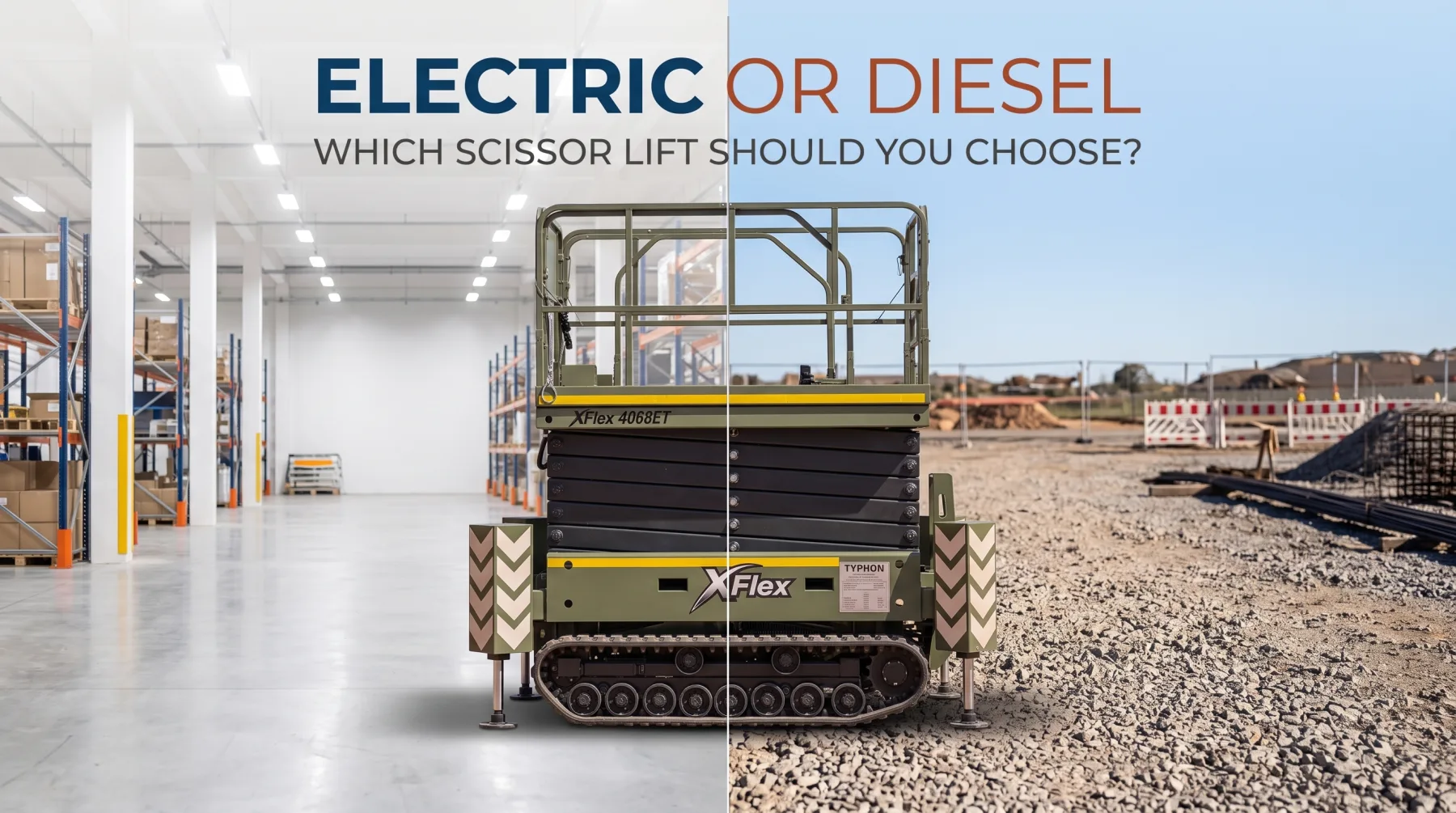
A facilities crew rents a diesel scissor lift for a week of overhead work, figuring one machine can cover it all. The first three days go fine out in the loading yard, repairing lights and signage in the open air. Then the schedule moves indoors, into a packed distribution center where the same machine fills the aisles with exhaust and a low rumble that has workers coughing and a supervisor pulling the crew off the floor by noon. Now they need a second machine, a clean electric one, and the week’s budget is blown on a mismatch that a single question up front would have prevented: where is this lift actually going to work?
That choice between electric and diesel power trips up more buyers and renters than platform height or capacity ever does. Both machines raise a crew straight up on a sturdy platform and reach comparable working heights, so on paper they look interchangeable. The real divide is how they run and where they belong. One is quiet and emission-free, built for finished floors and enclosed spaces. The other is powerful and rugged, built for open outdoor sites and rough ground. Pick the wrong power source and you either stall a crew where the machine can’t breathe or strand one on terrain it can’t handle.
The right decision comes down to four things: where the lift will spend most of its hours, the surface and conditions it faces, the runtime and refueling your workflow allows, and the total cost of owning or renting it over time. Sort those out honestly and the answer usually becomes obvious. This post breaks down how the two power sources differ, when electric is the smarter pick, when diesel earns its keep, and how to weigh the practical factors that decide which one belongs to your job.
How Electric and Diesel Power Actually Differ
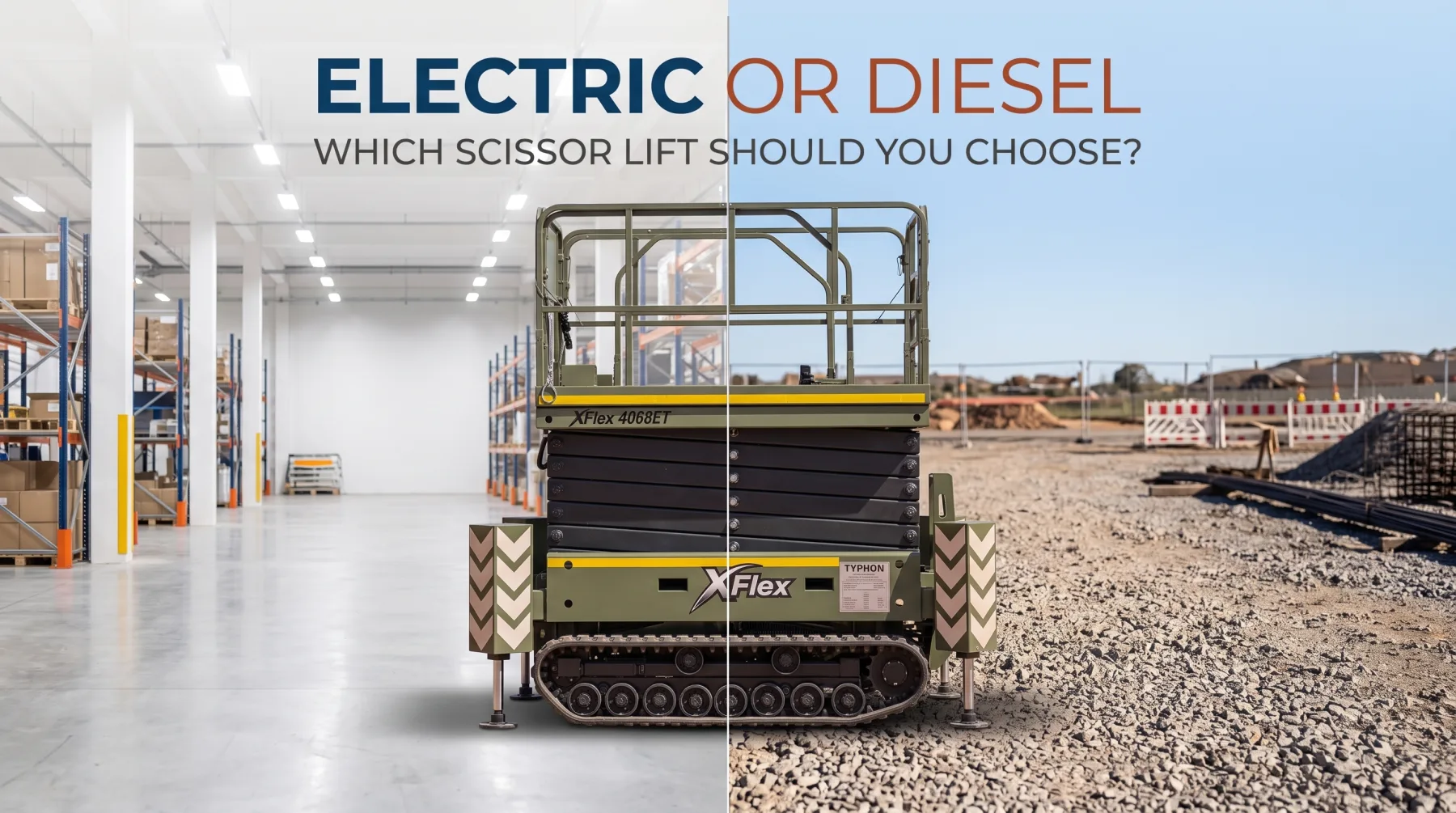
Both machines share a scissor mechanism and a vertical job, yet the power source shapes nearly everything practical about them. That single difference decides where each one can run safely and how it behaves on the job. Knowing what separates them mechanically is the first step toward choosing right.
Emissions, Noise, and Air Quality
The clearest divide is what comes out of the machine. An electric scissor lift runs on rechargeable batteries and produces zero exhaust, keeping the surrounding air clean even in a sealed room. It also runs quietly, so a crew can work near people without disruption.
A diesel scissor lift burns fuel to generate power, which means exhaust and a steady engine noise wherever it operates. That’s a non-issue on an open site, but it becomes a serious problem indoors. Checking your scissor lift emission requirements for any enclosed or occupied space usually settles the electric-versus-diesel question before you look at anything else.
Frame Build, Tires, and Footprint
Electric models are built lighter and more compact, riding on smooth, non-marking tires that roll cleanly across finished floors without leaving scuffs. Their tidy footprint slips through standard doorways and down narrow aisles, which suits interior work perfectly.
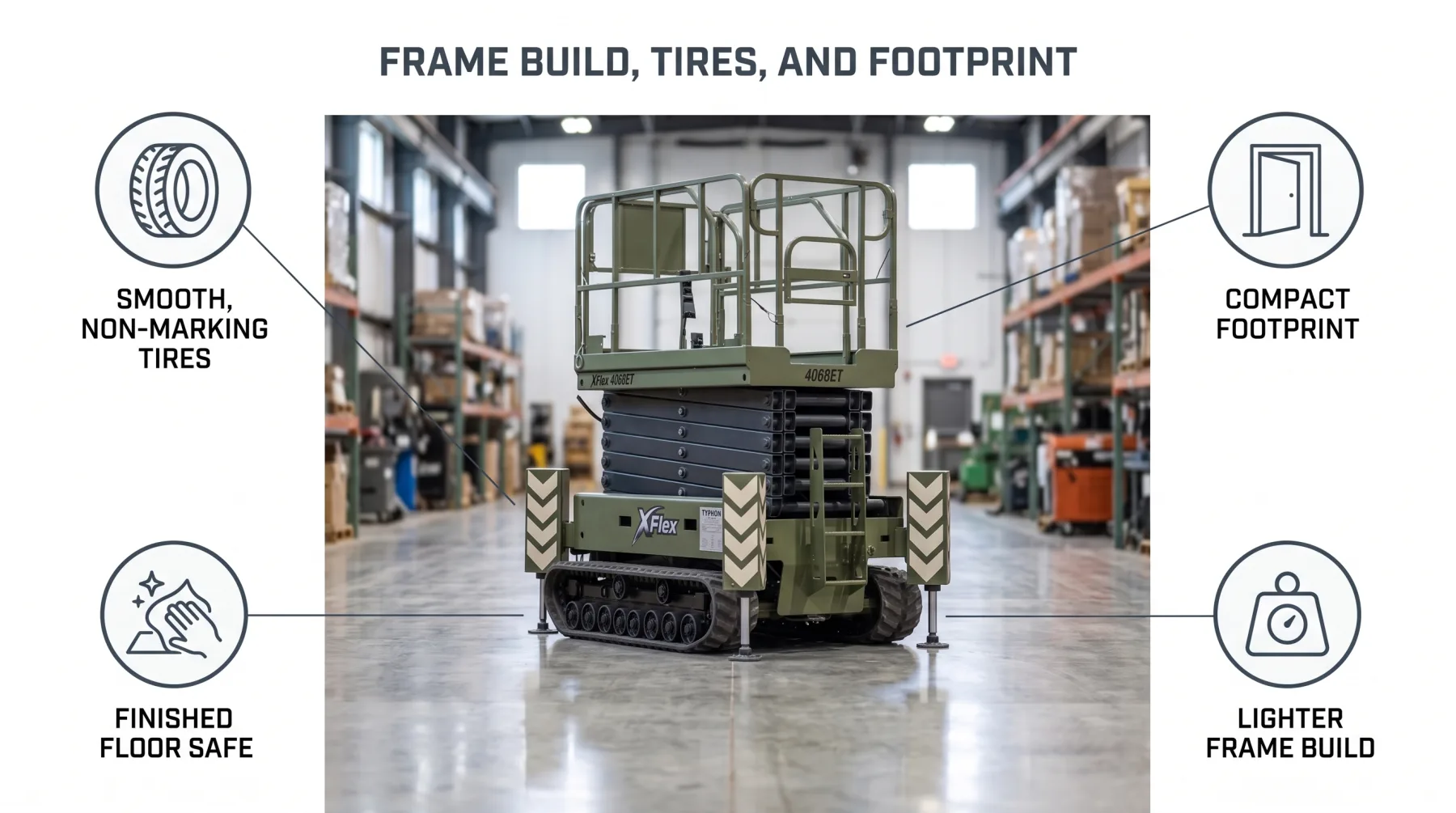
Diesel machines carry more mass, higher ground clearance, and aggressive treaded tires meant to stay planted on dirt, gravel, and grade. That rugged build delivers stability outdoors but makes the machine too bulky and heavy for tight interior work.
Takeaway: electric scissor lifts are built clean, quiet, and compact for indoor finished-floor work, while diesel models are built powerful, rugged, and rough-terrain ready for outdoor sites, so the power source tells you where each one belongs before you check a single spec.
When an Electric Scissor Lift Is the Smarter Pick
Some jobs reward a machine that’s clean, quiet, and nimble, and forcing a diesel lift into them creates more problems than it solves. The signals are consistent: enclosed spaces, finished floors, and noise-sensitive settings. When you spot that pattern, electric is the clear call.
Indoor and Enclosed Work
Electric scissor lifts belong indoors. With no exhaust and low noise, they keep the air breathable and the space calm in enclosed environments where an engine-powered machine would be unsafe or outright banned. That clean operation makes them the default for interior elevated work.
Warehouses, retail floors, hospitals, schools, arenas, and manufacturing plants are their natural home. Whenever the work happens inside a building people occupy, the emission-free design isn’t just convenient, it’s often the only option local safety rules and site managers will allow.
Finished Floors and Surface-Sensitive Sites
The electric lift’s non-marking tires and lighter weight let it work on surfaces a client expects to stay pristine. Polished concrete, tile, sealed warehouse floors, and similar finishes handle an electric machine without the scuffing or gouging a heavy treaded lift would leave behind.
That surface protection carries real value. Repairing a damaged finished floor can wipe out any savings from choosing the cheaper machine, so on surface-sensitive work the electric lift guards both the site and the budget. It fits jobs where cleanliness and care are non-negotiable.
Quiet Operation and Lower Running Cost
Compact and low-noise, electric lifts let work continue in occupied buildings, during business hours, or in noise-restricted areas without complaints or shutdowns. In an active store or a working office, that quiet is worth as much as the clean air.
Running costs stay low, too. Battery power is cheaper than diesel, and with fewer moving parts, electric machines need less routine maintenance. A quick look at your electric lift runtime per charge against a typical shift usually confirms the machine covers a full day and recharges overnight.
Takeaway: choose an electric scissor lift for indoor and enclosed work, finished or surface-sensitive floors, and quiet, cost-sensitive operation, because its clean, compact, low-maintenance design fits interior jobs a diesel machine would only complicate.
When a Diesel Scissor Lift Earns Its Keep
Other jobs demand a machine that won’t flinch on rough ground or run out of power far from an outlet, and here a diesel lift is the capable answer. The pattern points outdoors: open sites, unfinished surfaces, and long stretches away from charging. When you see it, diesel wins.
Outdoor and Construction Sites
Diesel scissor lifts thrive on active outdoor sites where the ground is rarely smooth and conditions keep changing. Dirt, gravel, mud, and graded lots are exactly what these machines were built to cross, so they stay productive where an electric lift would lose traction in the first few feet.
That capability opens up a wide range of exterior work: building maintenance, steel and framing tasks, exterior finishing, and elevated jobs on sites that haven’t been paved. When the work lives outdoors on raw ground, a diesel machine is the scissor lift that reliably gets a crew up to the task.
Rough, Uneven, or Sloped Terrain
The defining strength of a diesel lift is holding steady where the surface fights back. On soft soil, loose gravel, or a graded slope, its heavier frame, treaded tires, and often four-wheel drive keep it planted while the platform rises.
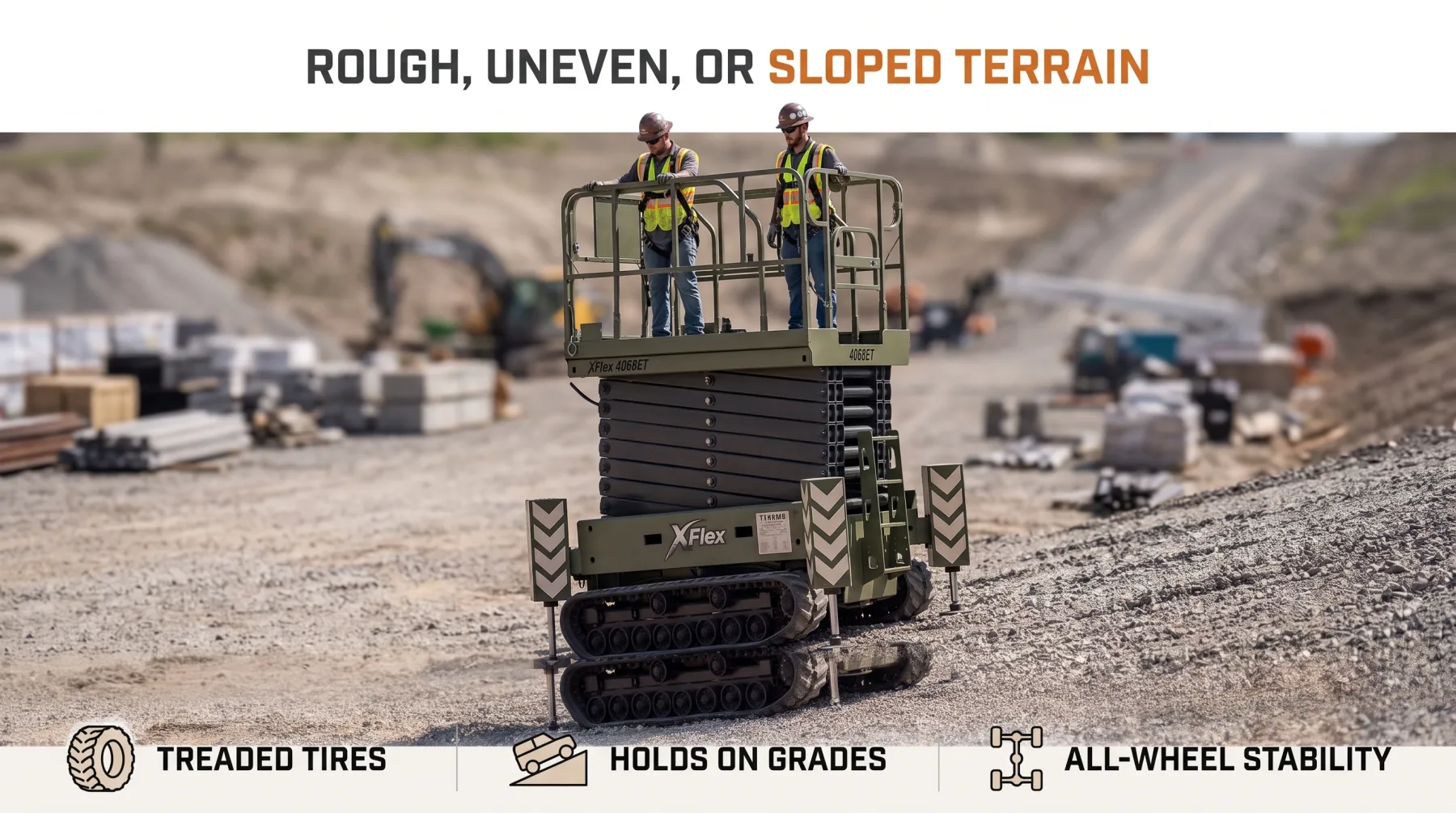
An electric lift on the same ground is a liability rather than a tool. It slips, struggles to move, and risks instability at height because its lighter frame and smooth tires were never meant for an uneven base. Whenever the surface is anything but firm and level, diesel is the safe and capable choice.
Sustained Power for Remote and Heavy Use
Diesel machines deliver long, uninterrupted runtime, which matters on remote sites with no easy access to power. Instead of waiting on a recharge, a crew simply refuels and keeps working, making diesel practical for long shifts far from an outlet.
That endurance suits heavy, continuous use, too. On big projects where the lift runs hard all day, checking your diesel lift fuel endurance against the shift length confirms the machine sustains the pace without downtime.
Takeaway: choose a diesel scissor lift for outdoor and construction sites, rough or sloped terrain, and remote or heavy-duty work, because it delivers the traction, stability, and sustained power that a battery-driven machine can’t match in the open.
How to Weigh the Practical Factors and Decide
With the differences clear, the decision narrows to a few honest questions about the work in front of you. Answer them accurately and the right machine practically names itself. Guess, and you risk a stalled crew, a damaged floor, or a wasted rental.
Run the Key Questions
Before you rent or buy, walk through these in order:
Is the work indoors or outdoors? Enclosed or occupied spaces point to electricity. Open-air sites point to diesel.
What’s the surface like? Firm, finished floors favor electric. Dirt, gravel, soft, or sloped ground calls for diesel.
Does the floor need protecting? Surface-sensitive work rules out heavy treaded tires and favors non-marking electric models.
Is power easy to reach? Reliable outlets for overnight charging suit electric. Remote sites with no power reward diesel’s refuel-and-go endurance.
Match Power, Runtime, and Access to the Job
The setting matters as much as the task. In a sealed or occupied building, emissions and noise make electricity the obvious choice, while an open site with no charging access rewards a diesel machine that runs independently all day.
Access seals the decision. Measure your doorways, aisles, and the path to the work, because a bulky diesel machine that can’t fit inside is useless indoors, just as an electric lift that can’t cross a gravel lot is useless out back. Match the machine’s footprint and power to how the site actually flows.
Weigh Total Cost, Not Just Price
Look past the daily rate or sticker price to the full cost of use. Electric machines cost less to run and maintain thanks to cheaper power and fewer moving parts, which adds up over steady indoor work. Diesel machines carry higher fuel and maintenance costs but deliver capability electric can’t on rough outdoor ground.
The two expensive mistakes mirror each other. Running an electric lift on rough outdoor ground strands a crew on a surface it can’t handle, while running a diesel lift indoors risks exhaust hazards, floor damage, and noise complaints that shut the work down. Both errors cost the same thing: a second machine, lost time, and possibly a repair bill.
Takeaway: ask where the lift works, assess the surface and floor sensitivity, confirm power access and runtime, and judge total cost rather than price alone, so you pick the right power source the first time instead of paying to correct it.
Frequently Asked Questions
Can an electric scissor lift be used outdoors?
Only in limited conditions. An electric scissor lift can work outdoors on firm, level, paved surfaces like finished lots, but it isn’t built for soft, uneven, or sloped ground. Its lighter frame and smooth tires lose traction and stability on loose or graded surfaces. For genuine outdoor rough terrain, a diesel machine is the safe and capable choice.
Why can’t a diesel scissor lift be used indoors?
Diesel engines produce exhaust and noise, which make them unsafe or outright prohibited in enclosed and occupied spaces. Their heavier frames and treaded tires can also damage finished floors, and their larger footprint struggles to fit through standard doorways and aisles. For indoor work, an emission-free, floor-friendly electric scissor lift is almost always the correct machine.
Which is cheaper to operate, electric or diesel?
Electric scissor lifts are generally cheaper to run. Battery power costs less than diesel fuel, and with fewer moving parts, electric machines need less routine maintenance. Diesel lifts carry higher fuel and service costs but provide power and endurance that electricity can’t match outdoors. Weigh the lower running cost of electric against the outdoor capability of diesel based on where the machine will actually work.
Conclusion
Choosing between an electric and a diesel scissor lift ultimately comes down to matching the power source to where and how the machine will actually work, since the electric model runs clean, quiet, and compact on batteries with non-marking tires that make it ideal for indoor spaces, finished floors, and occupied or noise-sensitive settings, while the diesel model delivers rugged power and long refuel-and-go endurance on treaded tires that keep it stable across dirt, gravel, and slopes on open outdoor sites, so rather than treating the two as interchangeable because they reach similar heights, look honestly at whether the job is indoors or out, how firm and sensitive the surface is, whether you have easy access to charging or need sustained runtime far from power, and what the machine truly costs to run over time, and let those real conditions steer the decision so you avoid stranding a crew on ground a machine can’t handle or filling an enclosed space with exhaust and noise, because getting that match right keeps the lift working quietly in the background of the job instead of becoming the problem, and when you’re ready to pair the right machine with your project, reach out to a trusted equipment specialist who can match dependable equipment with the results your work depends on.