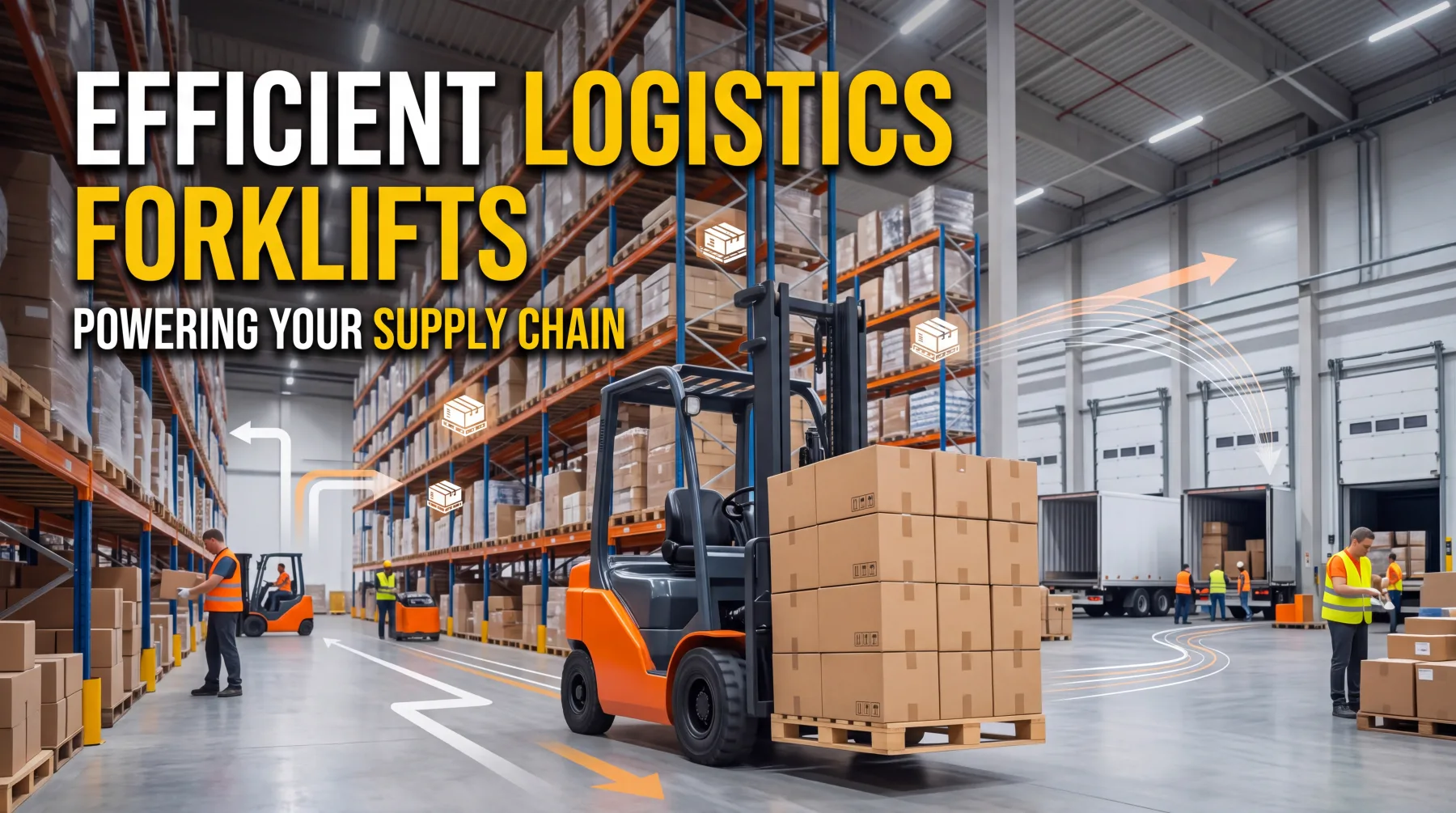
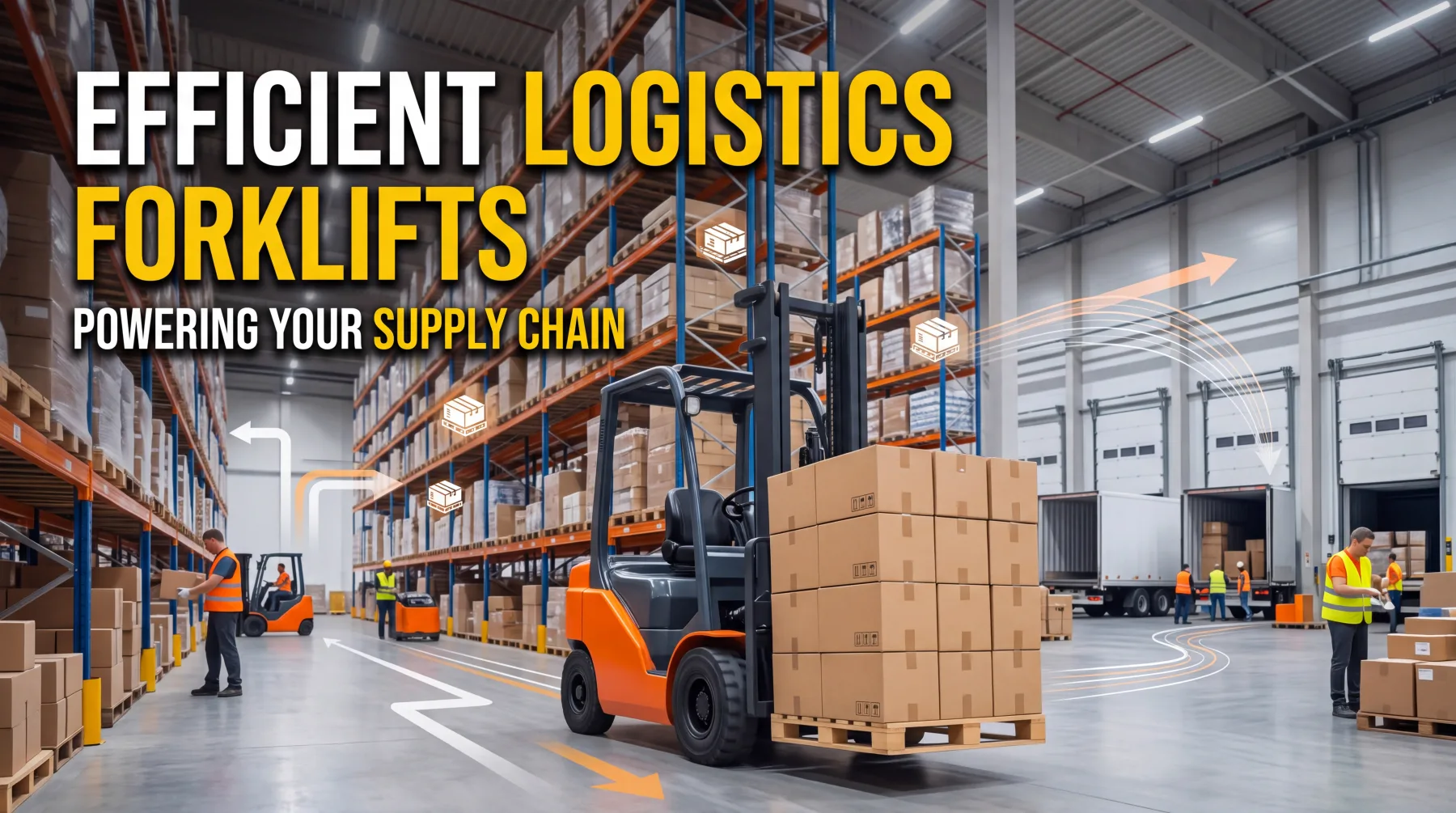
Behind every smooth-running warehouse and every on-time delivery sits a machine that rarely gets the credit it deserves: the forklift. These workhorses move the goods that keep commerce flowing, lifting, carrying, and stacking materials that would otherwise slow an operation to a crawl. From the moment a shipment arrives to the instant an order leaves the dock, forklifts touch nearly every stage of the journey. Their speed, strength, and versatility make them indispensable to logistics and supply chain operations of every size. This guide explains how forklifts streamline material movement, improve loading and unloading, maximize storage, support diverse applications, and enhance the productivity and reliability that a dependable supply chain demands.
Streamlining Warehouse Material Movement
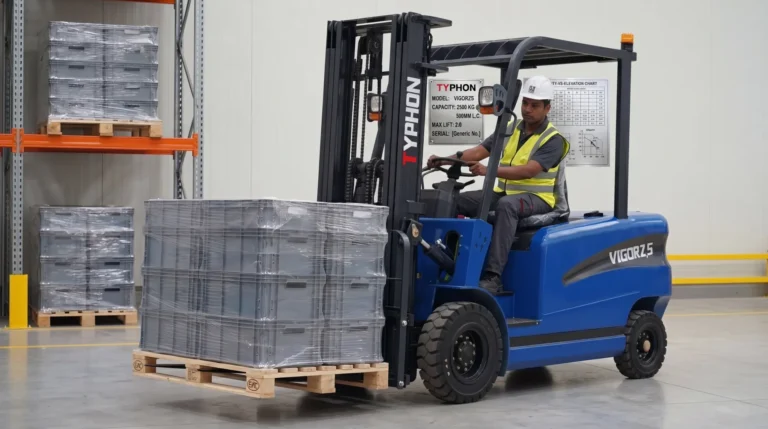
Inside a busy warehouse, materials never stop moving, and forklifts are the machines that keep that movement efficient. They make it easy to transport pallets, inventory, and bulk materials from one end of a facility to the other, carrying heavy loads that no team of workers could handle by hand. A single operator can move a fully loaded pallet in seconds, freeing staff for tasks that add more value and sparing them the strain and risk of manual lifting. This simple capability sits at the foundation of nearly everything a warehouse accomplishes.
Speed and maneuverability are what make forklifts so effective at keeping goods flowing. A capable machine navigates aisles, rounds corners, and repositions quickly, moving inventory smoothly between storage, packing, and shipping areas without creating bottlenecks. When materials arrive where they are needed at the right moment, every downstream task stays on schedule, and the whole operation keeps pace with demand.
The efficiency forklifts bring to internal movement shows up across several everyday tasks:
**Pallet transport** between receiving, storage, and dispatch areas. **Inventory relocation** as stock is organized, replenished, or picked. **Bulk material handling** for heavy or high-volume goods. **Cross-facility flow** that connects storage, packing, and shipping seamlessly.
By handling this constant internal movement reliably, forklifts allow a warehouse to function as a coordinated system rather than a collection of disconnected steps. Goods travel where they need to go quickly and safely, staff stay focused on productive work, and the facility maintains the steady rhythm that efficient logistics requires. For any operation that depends on moving inventory day after day, dependable forklift support is what keeps the entire floor working in sync.
Improving Loading and Unloading Efficiency
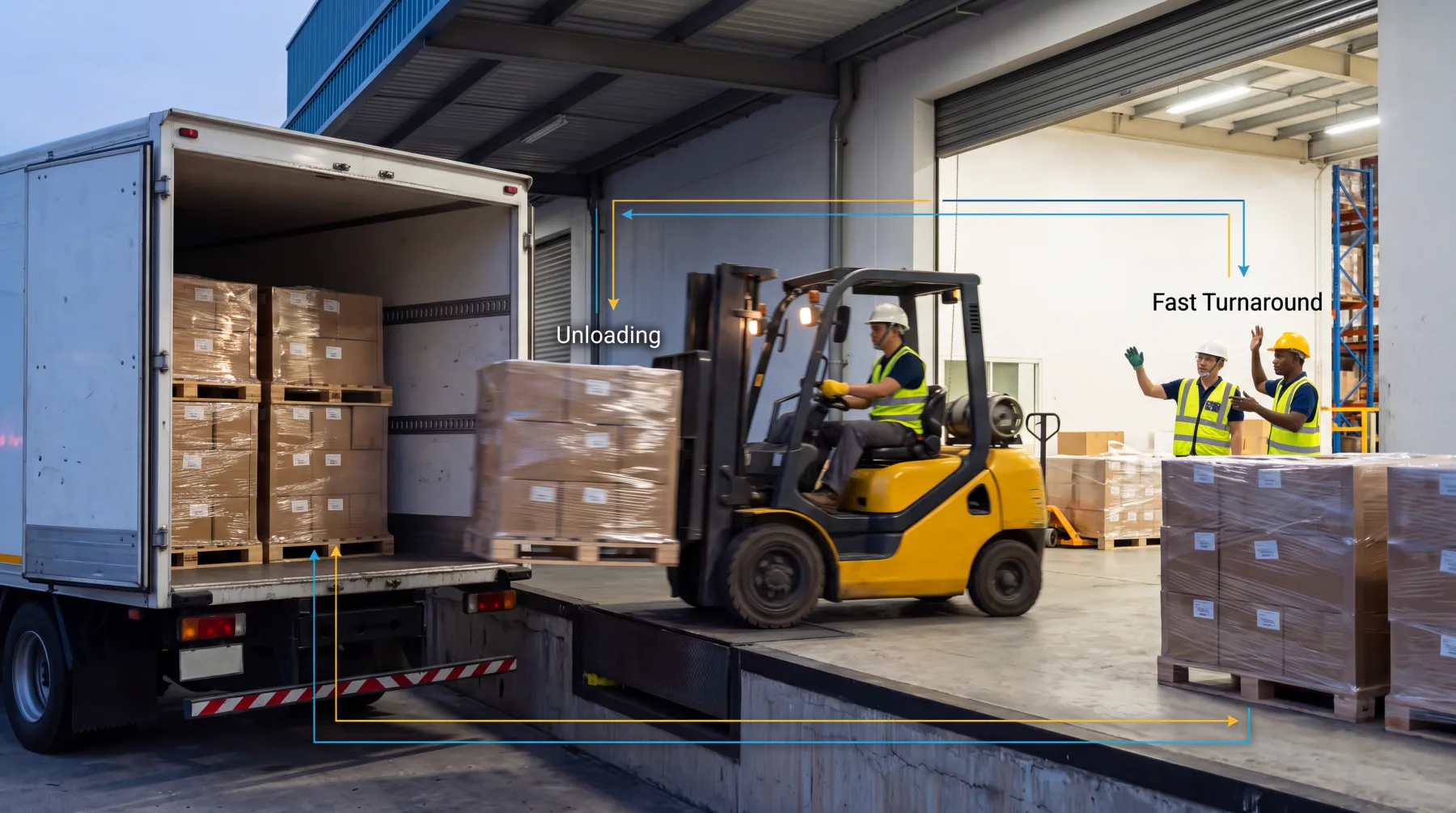
The loading dock is where the supply chain meets the open road, and it is one of the busiest, most time-sensitive areas in any facility. Forklifts are central to keeping that activity moving, quickly transferring products between trucks and storage. Rather than unloading a trailer piece by piece, an operator can move entire pallets in a single motion, clearing a truck in a fraction of the time manual handling would demand. That speed matters enormously, because every minute a vehicle spends waiting at the dock is a minute lost across the wider operation.
Faster loading and unloading translate directly into shorter turnaround times, and those savings ripple through the entire supply chain. When trucks are loaded and dispatched promptly, drivers stay on schedule, delivery windows are met, and the flow of goods continues without interruption. A dock that moves efficiently keeps the whole network on time, while a slow one creates delays that compound at every stage that follows.
Reliable dock operations depend on forklifts handling several key functions smoothly:
**Rapid unloading** of incoming shipments to clear trucks quickly. **Efficient loading** of outbound orders for timely dispatch. **Reduced dwell time** that keeps vehicles and drivers on schedule. **Steady throughput** that prevents backlogs at the dock.
Beyond speed, forklifts bring consistency and safety to work that would otherwise be physically punishing and prone to error. Handling heavy freight by hand invites injury and mistakes, but a forklift moves those loads securely and predictably, protecting both workers and goods. When loading and unloading run smoothly, the dock becomes a point of momentum rather than a chokepoint. For businesses that measure success by their ability to keep the supply chain on schedule, that efficiency is exactly what dependable forklift operations deliver.
Maximizing Storage Capacity
Warehouse space is expensive, and the smartest operations make the most of every square foot they have. Forklifts play a decisive role in this by enabling businesses to take full advantage of vertical storage. Rather than spreading inventory across the floor, a forklift can safely stack goods on high racks, lifting pallets to heights well beyond human reach. This ability to build upward instead of outward transforms how a facility uses its available space, turning tall, empty air into productive storage capacity.
The benefits reach beyond raw capacity into better organization and cost control. When goods are stored neatly on high racking, aisles stay clear, inventory becomes easier to locate, and the entire warehouse operates in a more orderly fashion. Just as importantly, making full use of vertical space increases available storage without expanding the facility, sparing businesses the considerable cost of leasing or building additional square footage. A single machine, used well, can effectively add capacity that would otherwise require a much larger footprint.
Different lift capabilities suit different storage strategies, and matching the machine to the racking is essential. High-reach forklifts are built to service tall racking systems, while machines designed for narrow aisles let a facility pack racks closer together and store even more. Whatever the configuration, the goal is the same: use the full height and layout of the building to store more, safely and efficiently.
This vertical approach to storage has become a cornerstone of modern warehouse design, and forklifts make it possible. By lifting goods high, placing them precisely, and retrieving them reliably, they let businesses maximize capacity, maintain order, and control costs all at once. For any operation working to store more without expanding, capable forklift support is the practical solution that makes dense, well-organized storage achievable.
Supporting Diverse Logistics Applications
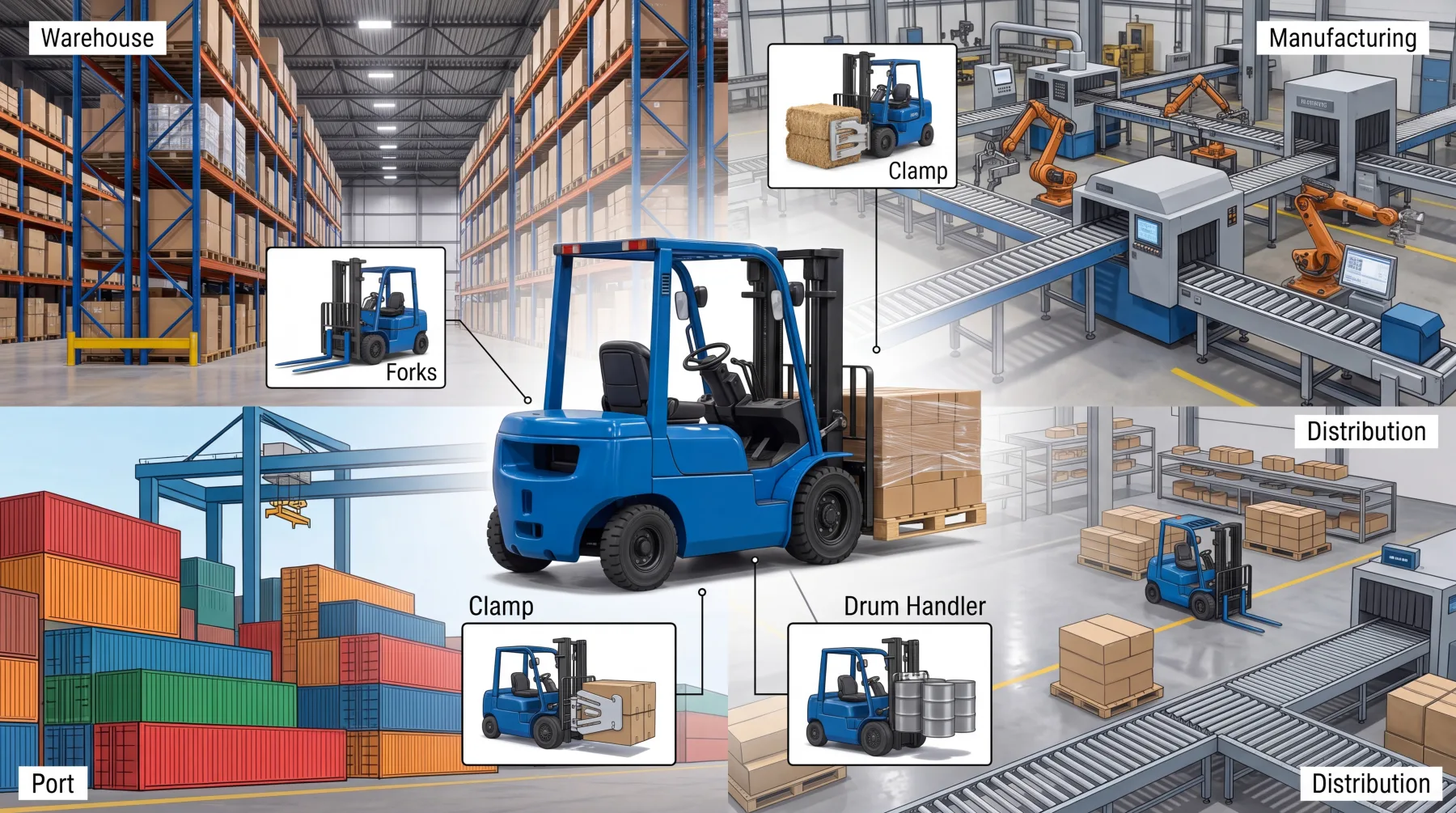
One of the greatest strengths of the forklift is how well it adapts to entirely different environments. The same class of machine that keeps a distribution center humming also serves manufacturing plants, retail warehouses, and busy ports, handling a wide variety of materials and operational demands. Each setting brings its own challenges, yet forklifts prove capable across all of them, which is precisely why they have become such a universal fixture throughout the supply chain.
The range of environments where forklifts earn their place is remarkable:
**Distribution centers**, where high-volume, fast-paced material movement is constant. **Manufacturing plants**, supplying production lines and moving finished goods. **Retail warehouses**, organizing stock and preparing shipments to stores. **Ports and terminals**, handling heavy freight and containerized cargo.
What makes this versatility even greater is the forklift's compatibility with different attachments. Beyond standard forks, operators can fit specialized tools that transform the machine for particular tasks, extending its usefulness well past simple pallet handling. Clamps grip boxed or bundled goods, rotators tip and empty containers, and specialized attachments handle drums, rolls, and other awkward loads. With the right attachment, a single forklift adapts to work it could never manage with forks alone.
This adaptability delivers real value to any operation. A business can rely on one machine to serve multiple roles, reducing the need for separate specialized equipment and keeping the forklift productive across changing demands. Whether the task is feeding a production line, stacking retail inventory, or moving heavy cargo at a port, a well-equipped forklift rises to meet it. That flexibility across environments and applications is a key reason forklifts remain so essential to logistics, giving businesses a dependable, adaptable tool for the full spread of material handling work the supply chain requires.
Enhancing Productivity and Supply Chain Reliability
Every advantage forklifts bring ultimately converges on two outcomes that matter most to any logistics operation: greater productivity and a more reliable supply chain. Efficient forklift operations minimize delays by keeping materials moving steadily through the facility, so work never stalls waiting for goods to arrive at the next station. They also reduce manual handling, sparing workers from heavy, repetitive lifting while cutting the errors and injuries that slow an operation down. The result is a warehouse that moves faster, works more safely, and wastes less time at every stage.
That efficiency shows up clearly in order fulfillment, the point where a supply chain proves whether it can deliver on its promises. When forklifts keep inventory organized, accessible, and flowing, orders are picked, packed, and shipped more quickly and accurately. Customers receive what they ordered, when they expect it, and that dependability builds the trust on which lasting business relationships are made.
The reliability forklifts contribute rests on a few consistent strengths:
**Fewer delays**, as materials move without interruption through the facility. **Less manual handling**, reducing errors, injuries, and wasted effort. **Better order fulfillment**, with faster, more accurate picking and shipping. **Consistent flow**, keeping the entire supply chain moving on schedule.
By keeping materials moving consistently, forklifts help maintain a supply chain that is both reliable and cost-effective. A steady, dependable flow of goods lets businesses meet their commitments, control their expenses, and respond confidently to demand. When a facility can count on its forklifts to keep everything moving day after day, it gains the operational stability that separates a strong supply chain from a struggling one. That reliability, built on efficient and consistent forklift operations, is what allows a business to serve its customers well and keep its logistics running smoothly.
Conclusion
Forklifts are far more than simple lifting machines; they are the driving force that keeps logistics and supply chain operations moving. They streamline material movement across the warehouse floor, transporting pallets, inventory, and bulk goods with speed and precision. At the loading dock, they cut turnaround times and keep trucks on schedule, while their ability to stack goods on high racking maximizes storage capacity without costly expansion. Their versatility across distribution centers, manufacturing plants, retail warehouses, and ports, aided by a wide range of attachments, makes them adaptable to nearly any material handling task. Above all, efficient and consistent forklift operations reduce delays, minimize manual handling, and improve order fulfillment, sustaining a supply chain that is both reliable and cost-effective. For any business that depends on moving goods dependably, capable forklift support remains a foundation worth investing in.