 A warehouse owner finds a clean used forklift listed a few states away at a price that beats every local dealer, clicks buy, and feels sharp about the deal until the freight invoice lands. The machine's price was fair, but the shipping quote tacks on a lift-gate fee, a limited-access surcharge, and a residential delivery charge nobody mentioned at checkout, dragging the total past what a dealer down the road would have charged delivered. Worse, the carrier drops the forklift at the end of his driveway on a flatbed with no way to unload it, and he scrambles to rent equipment just to get his own purchase off the truck. Nothing about the forklift disappointed him. The shipping simply blindsided a buyer who focused on the sticker and ignored the freight, and understanding delivery costs upfront would have kept the whole deal in his favor. Buying a forklift online without overpaying on freight comes down to reading the full cost, not just the listing price, and knowing what delivery actually involves before you commit. Shipping heavy equipment carries surcharges, access rules, and unloading demands that a two-line quote rarely spells out, and a buyer who plans for them keeps the total honest. This guide walks through the freight traps and the smart moves that protect your money:
- Why shipping catches heavy-equipment buyers off guard
- How to read and compare freight quotes line by line
- What "free shipping" on a forklift really covers
- How to ready your site for delivery day
- What to inspect the moment the machine arrives
- How to find sellers who build delivery into the price
Here's how to buy smart and keep the freight from eating your savings.
Why the Freight Bill Surprises So Many Buyers
Weight is the root of every shipping surprise on a forklift, since a machine running several thousand pounds ships as freight rather than a parcel, and freight pricing follows rules most online buyers never see. A forklift can't move by standard carrier, so it rides a flatbed or an enclosed trailer priced by distance, weight, and the hassle of the pickup and drop-off. That reality turns shipping into a real line item, not a rounding error on the purchase. Distance and fuel drive the base rate, but the extras are where totals balloon. A quote that looks reasonable at first can climb once a carrier adds a lift-gate fee for a truck without a dock, a residential or limited-access surcharge, or a charge for a specific delivery appointment. Buyers who read only the headline shipping number get blindsided when those add-ons surface later. Underestimating freight wrecks the math that made the deal look good. A machine priced $2,000 below a local option loses its edge fast once shipping across the country and its surcharges stack up, so the cheapest listing isn't always the cheapest buy. Key takeaway: forklifts ship as heavy freight with rules and surcharges a listing rarely shows, so factor the full delivered cost, not the sticker, before you decide a distant machine is the better deal.
Reading a Freight Quote Line by Line
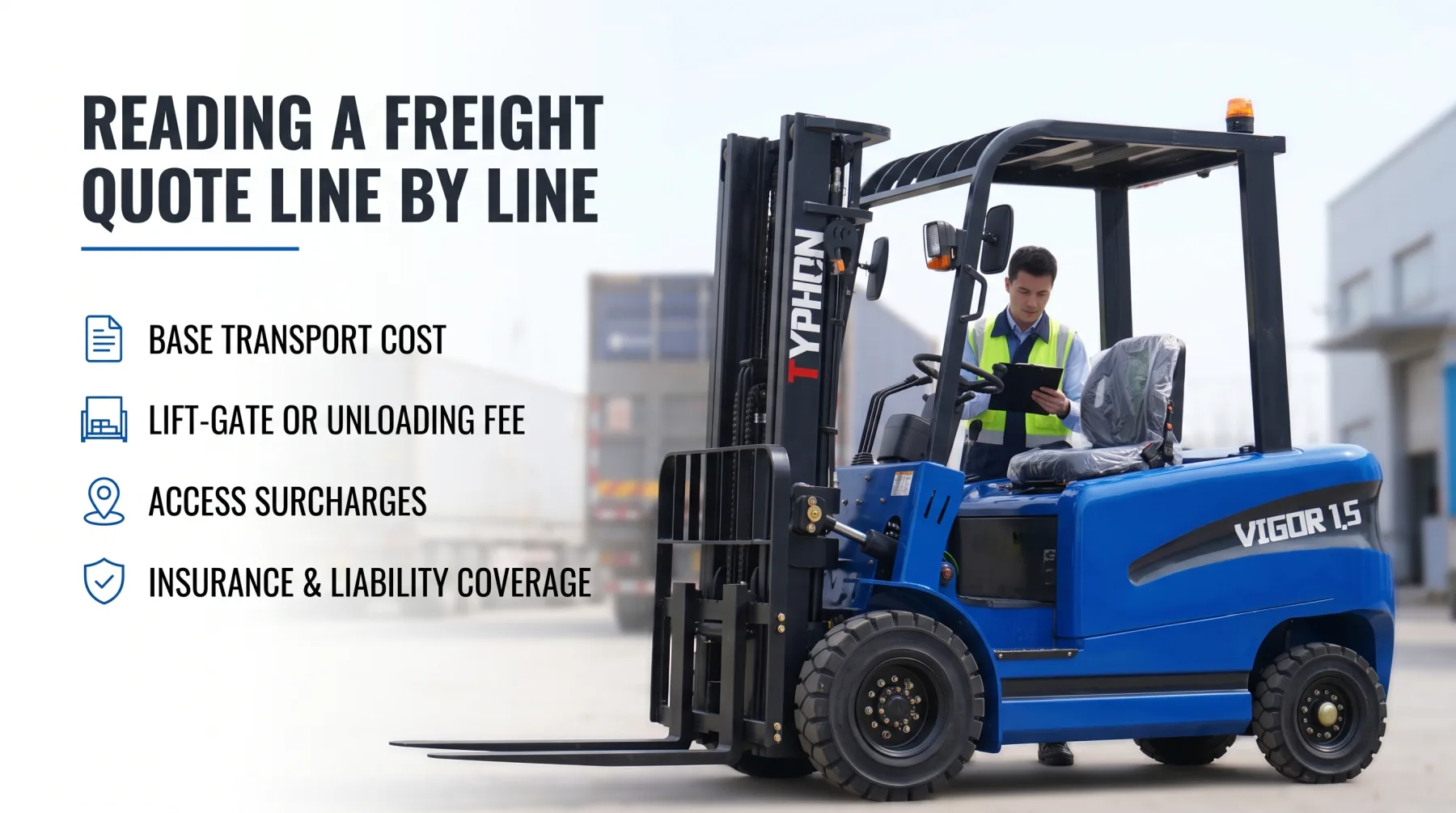 Detail is your best defense against an inflated shipping bill, so demand an itemized quote rather than a single lump sum. A proper freight quote breaks out the base transport, the fees, and any surcharges, which lets you see exactly what you're paying for and spot a charge that doesn't belong. A one-number quote hides the very add-ons you need to question. Comparing quotes fairly means lining up what each one includes, not just the totals. One carrier's low headline rate may exclude the lift gate and appointment fee that another bundles in, so the pricier-looking quote can turn out cheaper once both cover the same service. Reading each quote against the same checklist keeps the comparison honest:
- Base transport: the core cost by distance and weight
- Lift-gate or unloading service: whether the truck can lower the machine to the ground
- Access surcharges: residential, limited-access, or narrow-road fees
- Appointment or notification: charges for a scheduled window or a call-ahead
- Insurance and liability: what coverage applies if the machine is damaged in transit
Questions close the gaps a quote leaves open. Ask the seller or broker whether the price is guaranteed or an estimate that can climb, and confirm who handles a claim if the forklift arrives dented. What this means: insist on an itemized freight quote, compare quotes on identical service rather than headline price, and ask directly about guarantees and damage coverage before you approve the shipment.
What "Free Shipping" Actually Buys You
Marketing language deserves a hard look when a forklift listing promises free shipping, because the phrase covers far less than buyers assume. Free shipping on heavy equipment almost always means terminal-to-terminal or curbside drop-off with no unloading, so the seller covers the truck's mileage while you handle getting the machine off it. The word "free" rarely stretches to the part that trips buyers up most. Terminal delivery is a common catch hidden inside a free-shipping offer. Some carriers ship to a freight terminal rather than your address, leaving you to arrange the final leg and pick up the machine yourself, which adds cost and effort the listing never mentioned. Confirming whether "free" means to your gate or to a depot an hour away changes the real value of the offer. Unloading is the expense free shipping almost never includes. A forklift arriving on a flatbed needs a dock, a ramp, or another machine to unload it, and without a lift gate you're renting equipment or scrambling on delivery day. Key takeaway: treat "free shipping" as a starting point, not a complete deal, and confirm exactly where the machine lands and who unloads it before you assume the freight costs you nothing.
Getting Your Site Ready for Delivery Day
Preparation on your end prevents the delays and extra fees that a rushed delivery invites, so plan the drop-off before the truck rolls out. Confirm the delivery address, the access route, and whether a full-size flatbed can even reach your gate, since a truck that can't turn in or back up triggers rescheduling charges and wasted time. Scouting the approach beats discovering a low branch or a tight corner with the driver idling out front. Unloading demands a plan settled well ahead of arrival. Decide whether you have a dock, a loading ramp, another forklift, or a lift-gate truck to bring the machine to the ground, and arrange that equipment before the delivery window rather than the morning of. A buyer caught without an unloading method pays for standby time or sends the truck away entirely. Space and timing round out a smooth handoff. Clear a level, firm spot to receive and stage the forklift, keep the delivery paperwork handy, and make sure someone authorized is on site during the window to accept and inspect the machine. What this means: confirm truck access, arrange your unloading method in advance, and clear a receiving spot with someone on hand, so delivery day runs clean instead of racking up standby and rescheduling fees.
Checking the Machine Before You Sign
Inspection at the moment of delivery is the last point where damage becomes the carrier's problem rather than yours, so never sign the delivery receipt until you've looked the forklift over. Signing without checking tells the carrier the machine arrived in good order, and it forfeits your grounds for a freight-damage claim later. A few minutes with the machine protects a purchase worth thousands.
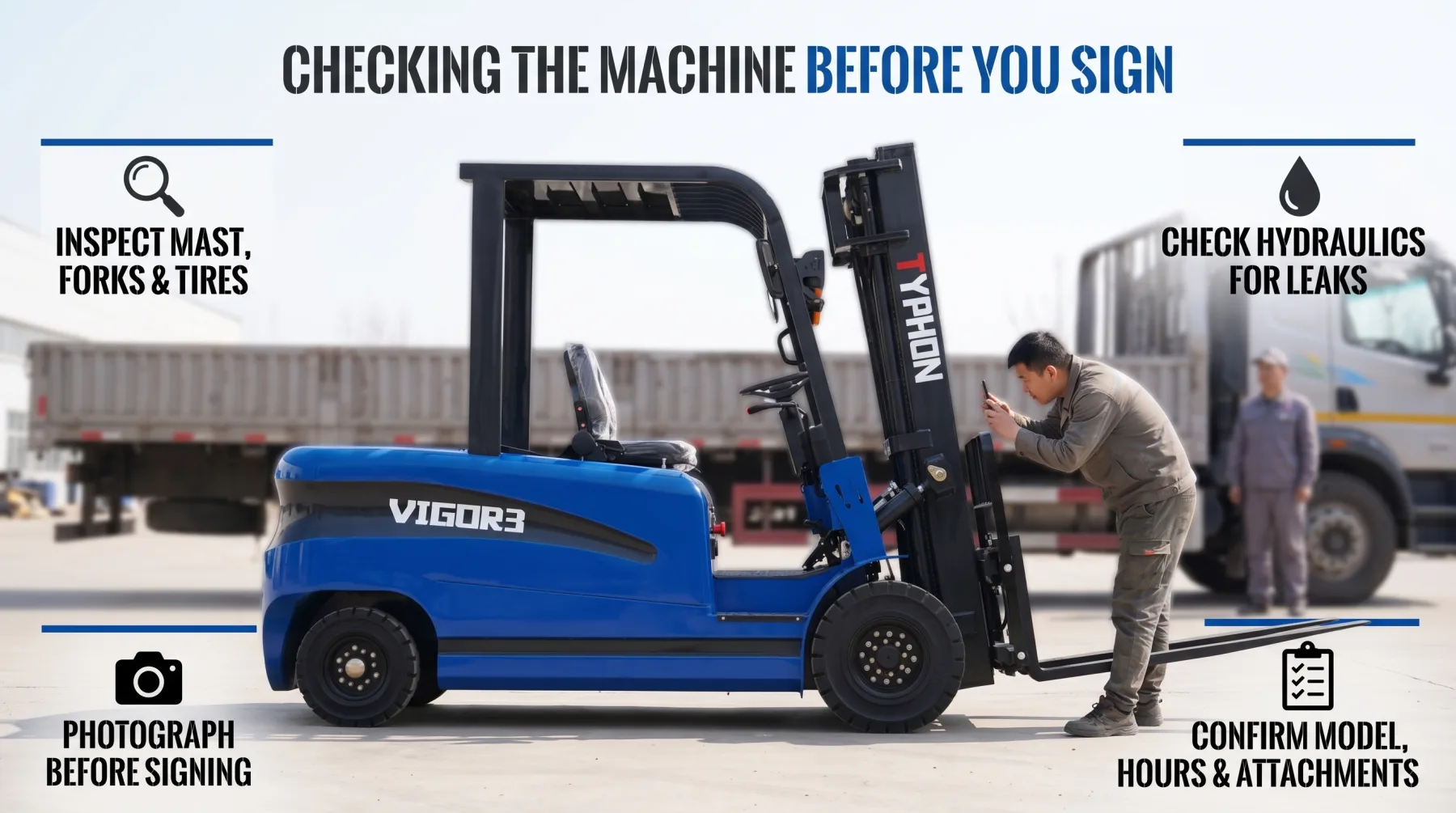 Walking the forklift methodically catches the trouble a quick glance misses. Look over the mast, forks, tires, and body for dents, bends, cracks, or fresh scrapes from transit, check the hydraulics and hoses for leaks, and confirm the machine matches the listing in model, hours, and included attachments. Photographing the forklift as it sits on the truck and again on the ground documents its condition the instant it arrives. Documentation is what turns a problem into a resolved claim. Note any damage directly on the delivery receipt before you sign, keep your photos and paperwork, and contact the seller or carrier right away if something's wrong rather than days later. Key takeaway: inspect the forklift thoroughly, note any damage on the receipt, and photograph everything before you sign, since your signature closes the window to hold the carrier accountable for freight damage.
Finding Sellers Who Build Delivery Into the Price
Transparency separates a seller worth buying from one whose low price hides a freight ambush, so favor sellers who quote a clear, all-in delivered cost. A seller who states plainly that the price includes shipping and unloading to your address spares you the surprise surcharges that pile onto a bare listing. Straight pricing up front is itself a sign of a seller you can trust with a big purchase. Bundled delivery often beats a low sticker once you run the real numbers. A listing priced a little higher with genuine free freight and unloading included can total less than a cheaper machine that adds a lift gate, an access fee, and terminal handling at checkout, so compare the delivered total rather than the headline price. Sellers who advertise free shipping honestly, covering the machine all the way to your site, make that comparison easy. Reputation confirms the delivery promise holds up. Read reviews for mentions of how shipping actually went, ask the seller directly what their delivered price covers and who handles unloading, and confirm they've shipped machines your way before. What this means: choose sellers who quote an honest, all-in delivered price, compare the full delivered total rather than the sticker, and verify their shipping reputation before you buy, so delivery arrives as promised instead of as a surprise.
Conclusion
Buying a forklift online without overpaying on shipping comes down to reading the full delivered cost rather than the listing price alone. Recognize that heavy equipment ships as freight with real surcharges, insist on an itemized quote you can compare service-for-service, and treat "free shipping" as a starting point that rarely covers unloading or door-to-door delivery. Prepare your site so the truck reaches you and you can unload it, inspect the machine and note any damage before you sign, and favor sellers who quote an honest, all-in price with delivery built in. Run the delivered total, not the sticker, and you keep a distant deal genuinely cheaper instead of watching freight erase your savings. When you're ready to buy a forklift with straightforward pricing and dependable delivery, reach out to a trusted equipment specialist who can pair a reliable machine with shipping you can count on.
Frequently Asked Questions
How much does it cost to ship a forklift? It varies with distance, weight, and the services the delivery requires. The base rate covers mileage and the machine's weight on a flatbed or enclosed trailer, but the total climbs with extras like a lift-gate fee for unloading, residential or limited-access surcharges, and charges for a scheduled delivery window. Two shipments over the same distance can cost very differently depending on those add-ons. Always ask for an itemized quote so you can see the base transport separately from the fees, and confirm whether the price is guaranteed or an estimate that can rise. What does "free shipping" on a forklift usually include? Less than most buyers expect. Free shipping on heavy equipment typically means terminal-to-terminal or curbside drop-off, so the seller covers the truck's mileage while you handle unloading and any final leg to your address. It rarely includes a lift gate to lower the machine to the ground, and some offers deliver only to a freight terminal you must reach yourself. Before you treat "free" as the full deal, confirm exactly where the machine lands and who is responsible for getting it off the truck. What should I check before signing for a forklift delivery? Inspect the machine fully before your signature goes on the delivery receipt, since signing confirms it arrived in good order and closes your window for a freight-damage claim. Walk the forklift for dents, bends, cracks, or scrapes on the mast, forks, tires, and body, check the hydraulics and hoses for leaks, and confirm the model, hours, and attachments match the listing. Photograph the machine on the truck and on the ground, and write any damage directly on the receipt before you sign. If something's wrong, contact the seller or carrier right away rather than days later.