Why Electric Forklifts Are Taking Over Modern Warehouses
The landscape of global logistics is undergoing a massive transformation. As consumer demand reaches unprecedented heights, material handling facilities must process extraordinary volumes of inventory without a single moment of hesitation. Relying on outdated, inefficient machinery creates devastating operational bottlenecks that erode your profit margins and damage your professional reputation. To keep pace with this surging demand, industry leaders are completely rethinking their approach to fleet management.
Electric forklifts are rapidly becoming the preferred choice in modern warehouses, actively replacing traditional internal combustion models across the supply chain. This shift represents a calculated financial strategy to secure superior warehouse forklift efficiency, lower operational costs, and maximize daily output. This comprehensive guide explores the powerful engineering and economic advantages driving this transition. By understanding the core benefits of advanced battery systems, reduced maintenance demands, and zero-emission operations, you will discover exactly how to optimize your facility for the future of material handling.
Meeting the Demands of High-Volume Logistics
The exponential rise of e-commerce has fundamentally rewritten the rules of inventory management and order fulfillment. The immediate problem facility managers face is a logistical environment that absolutely punishes slow, unreliable movement. When your business processes thousands of complex orders daily, relying on sluggish or unpredictable machinery severely damages your fulfillment timelines. If your material handling equipment fails to match the aggressive pace of incoming freight and outgoing shipments, your entire operation suffers from catastrophic delays.
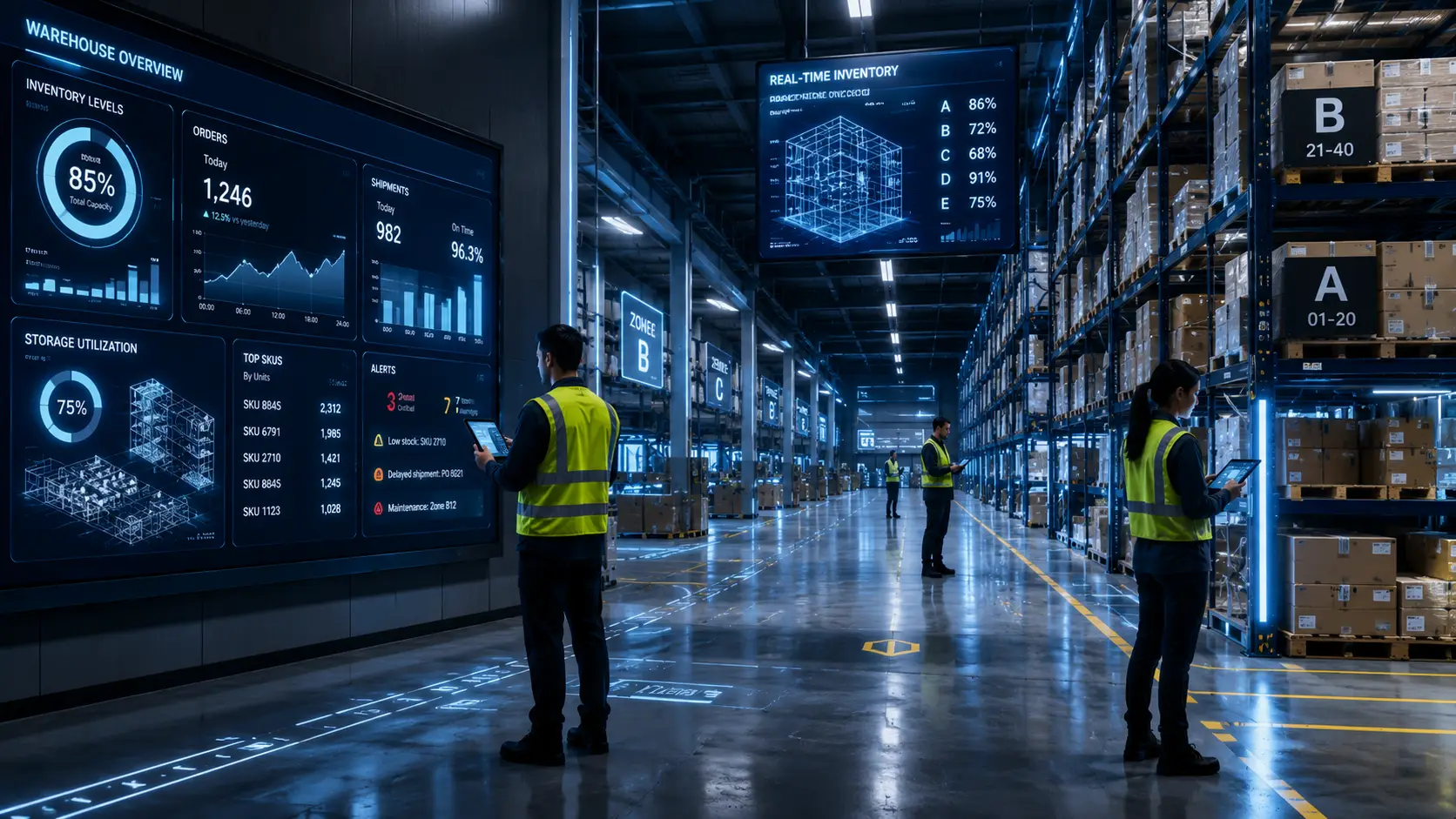
Modern electric forklifts provide the definitive operational solution to this high-volume pressure. These highly advanced machines are specifically engineered to handle the relentless, fast-paced environment of contemporary logistics centers. Manufacturers design these units to deliver instant torque and incredibly smooth acceleration, allowing your operators to navigate congested aisles and load transport vehicles with remarkable speed. This seamless flow of power ensures that every movement actively contributes to the fulfillment process without unnecessary hesitation.
The real-world financial impact of deploying this modern warehouse equipment is a drastically streamlined operational footprint. Your business processes massive volumes of inventory faster, accurately moving vital products from the receiving dock to the shipping bay. You build a fiercely reliable operation that consistently meets the punishing deadlines of modern retail. Executing these flawless logistics, however, requires a massive shift in how these machines generate and sustain their lifting power.
Eliminating Emissions for a Cleaner, Safer Environment
Historically, heavy lifting inside massive distribution centers was dominated by internal combustion engines fueled by diesel or liquid propane. The persistent operational limitation of traditional combustion machines is the intense localized emissions they generate within enclosed spaces. Forcing your employees to work long shifts inside a warehouse filled with exhaust fumes creates severe respiratory hazards and requires the installation of incredibly expensive external ventilation systems. Furthermore, heavily polluting machinery actively disqualifies your company from securing contracts with environmentally conscious corporate partners.
Electric forklifts lead the modern revolution as the definitive, highly profitable alternative to fossil fuels. Operations leaders are aggressively replacing their internal combustion equipment with battery-powered alternatives to instantly eliminate toxic emissions and dramatically improve indoor air quality. Because electric motors produce zero localized exhaust, you effectively eliminate the harsh fumes and dangerous particulate matter that typically disrupt a busy facility.
Deploying these highly capable electric machines instantly protects the respiratory health of your workforce and eliminates the need for costly ventilation upgrades. You keep your company fully compliant with strict environmental mandates and deeply support your corporate sustainability goals. You build a powerful reputation as a responsible, forward-thinking enterprise that genuinely respects the environment. Maximizing the financial return on these machines, however, heavily relies on mastering the chemistry of their primary power source.
Powering Operations with Lithium-Ion Technology
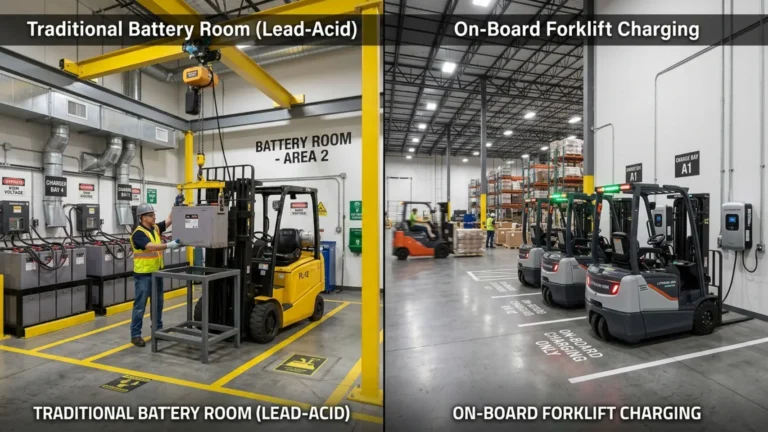
Early generations of electric material handling equipment relied entirely on massive, incredibly heavy lead-acid battery banks. The devastating operational flaw with traditional lead-acid technology is the significant downtime required to keep the machines moving. When a battery depleted mid-shift, operators were forced to utilize dangerous heavy hoists to extract the multi-ton battery and swap it for a fresh unit in a dedicated charging room. This exhaustive, highly hazardous process completely destroyed daily productivity and demanded massive, expensive battery inventories.
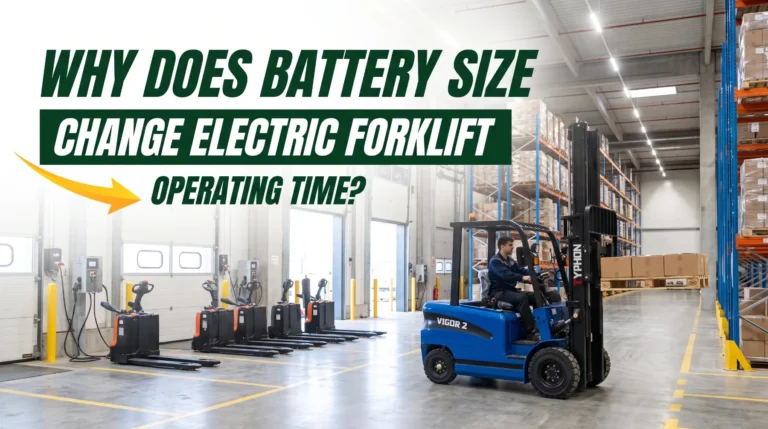
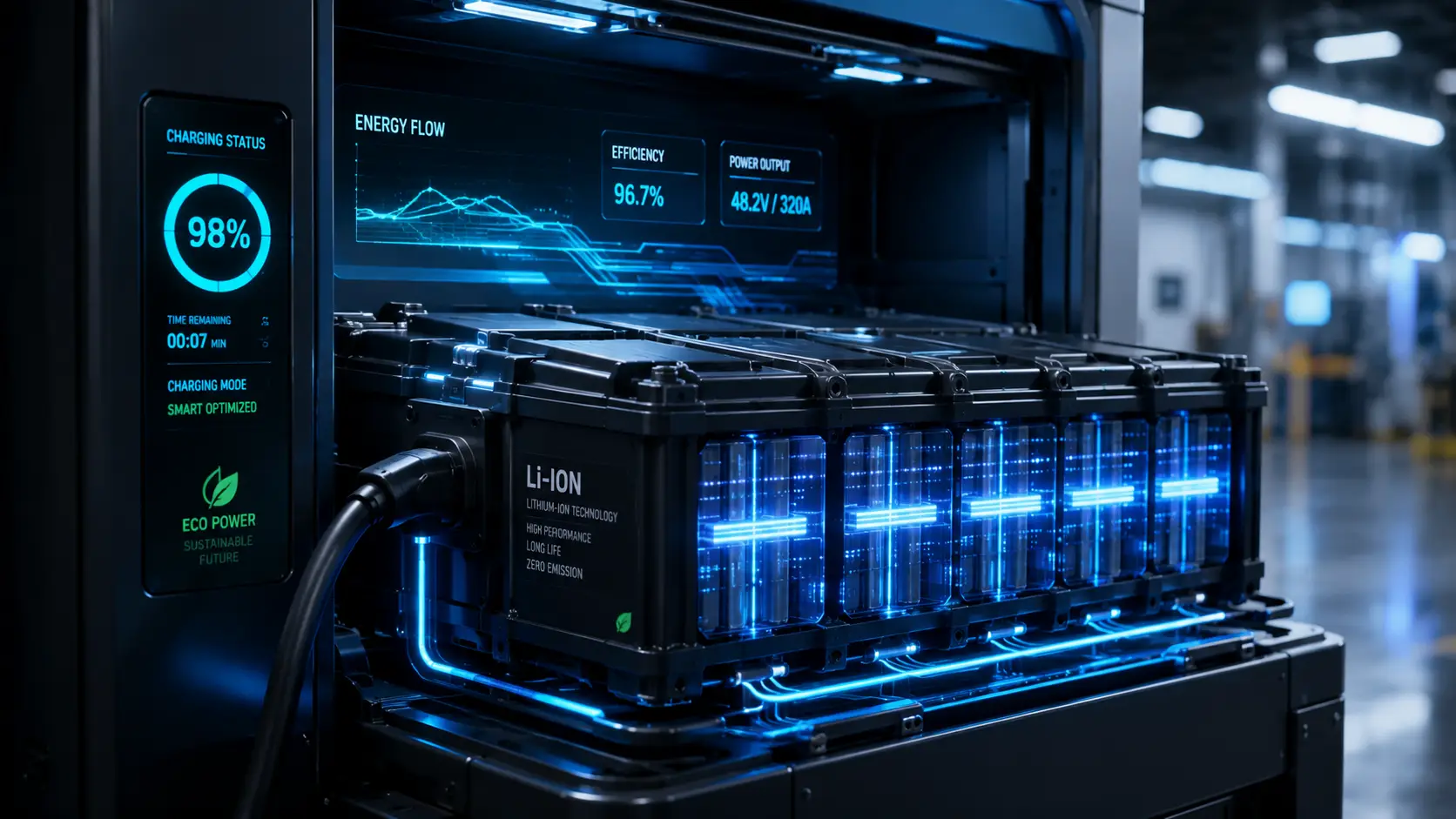
The material handling industry has solved this severe limitation by widely adopting advanced lithium-ion battery systems. This superior chemical technology completely eliminates the need for mid-shift battery swapping and hazardous charging rooms. Lithium-ion batteries seamlessly accept rapid opportunity charging, meaning operators can plug the machine directly into a fast charger during a brief break or standard lunch hour. This advanced capability enables faster charging, significantly longer run times, and heavily reduced downtime across your entire fleet.
The immediate operational advantage is vastly superior machine uptime and continuous productivity. Your operators spend their valuable time actively moving revenue-generating inventory rather than wrestling with heavy battery hoists in a maintenance bay. You reclaim massive amounts of physical warehouse space previously dedicated to battery storage, allowing you to expand your profitable racking footprint. While continuous power ensures the machine stays moving, keeping your overall operating costs low requires examining what happens under the hood.
Slashing Total Cost of Ownership Through Maintenance Savings
Heavy machinery inherently demands regular mechanical care, but internal combustion engines represent a massive ongoing financial liability. The severe reality for modern logistics operators is that diesel and propane engines possess hundreds of moving parts that constantly grind, vibrate, and eventually fail. Attempting to run outdated combustion equipment means you are constantly funding expensive oil changes, replacing worn spark plugs, and fixing complex transmission issues. This relentless maintenance burden heavily drains your working capital and forces machines out of rotation.
Electric forklift benefits directly combat these rising operational costs by offering a brilliantly simplified mechanical architecture. An electric drive motor contains only a fraction of the moving components found in an internal combustion engine. There are no engine oil reserves to drain, no fuel filters to replace, and no complex exhaust systems to maintain. The alternating current (AC) motors used in modern electric forklifts are virtually maintenance-free, completely eliminating the deep engine overhauls that traditionally plague warehouse fleets.
This relentless focus on simplified engineering yields immediate, highly measurable cost savings for your business. Fewer engine-related maintenance needs help reduce your total cost of ownership significantly over the lifespan of the equipment. You drastically lower your daily operating overhead while keeping your heavy equipment consistently active on the facility floor. Maintaining this high level of profitability extends directly to the human beings operating the control.
Enhancing Operator Comfort and Workplace Communication
The logistics industry consistently battles a severe shortage of skilled operators, making employee retention and workplace safety absolute priorities. The hidden problem sapping daily productivity on the warehouse floor is severe physical fatigue caused by violently vibrating, deafeningly loud machinery. Forcing an operator to sit on a rigid seat over a roaring combustion engine guarantees rapid physical exhaustion and a high probability of spatial miscalculations. Furthermore, extreme engine noise makes it nearly impossible for ground crews and forklift operators to communicate safely.
Manufacturers aggressively combat this issue by leveraging the inherently smooth, quiet operation of electric drive systems. Reduced noise levels drastically improve operator comfort and completely transform workplace communication. Because electric forklifts operate with a quiet hum rather than a deafening roar, pedestrians and operators can easily hear spoken warnings, approaching traffic, and facility alarms. The elimination of heavy engine vibration also isolates the operator from physical shockwaves, drastically reducing spinal fatigue during grueling ten-hour shifts.
Investing in these premium ergonomic advantages drastically reduces daily operator fatigue and actively prevents highly expensive job site accidents. Your crew remains physically comfortable, deeply focused, and incredibly productive throughout their longest shifts. You demonstrate a tangible commitment to operator well-being, transforming your business into a premier destination for elite logistics talent. Keeping your operators comfortable is vital, but they also require a machine capable of executing heavy demands.
Uncompromising Power and Precise Maneuverability
A historical misconception haunting the material handling market is the assumption that electric equipment inherently lacks raw lifting power. In the past, facility managers often hesitated to deploy electric models on demanding, high-capacity jobs, fearing the machines would stall when lifting heavy pallets of industrial materials. Attempting to move massive commercial goods with an underpowered machine actively hinders your daily production schedule and creates severe safety hazards.
Modern engineering has completely shattered this perceived power limitation. Today’s electric models offer incredibly strong lifting performance that rivals or exceeds their internal combustion counterparts. Advanced hydraulic systems provide precise, unyielding lifting capabilities without sacrificing battery life. Furthermore, electric forklifts offer dramatically improved maneuverability. Their compact chassis design and lower center of gravity—anchored by the heavy battery bank—allow operators to navigate highly restrictive, narrow-aisle racking systems with absolute precision and stability.
This reliable surge of mechanical power allows your logistics team to complete demanding jobs faster and with supreme confidence. Your operators experience rapid cycle times when loading high-capacity transport trucks, drastically accelerating your total daily material movement. You provide your workforce with a fiercely reliable tool that easily tackles the heavy lifting, securing maximum profitability on every single shift.
Command the Future of Smart Warehouse Operations
The complex reality of modern inventory management requires an equally advanced, highly strategic mechanical approach. Relying exclusively on loud, expensive, and heavily polluting internal combustion machinery is no longer a financially sustainable business model. Electric forklifts are perfectly positioned to play a central role in the future of smart warehouse operations, offering the ultimate blend of site agility, financial efficiency, and uncompromising power.
Take a highly critical look at your current equipment fleet and honestly evaluate how much money you are losing to operational inefficiency, fuel waste, and excessive maintenance. Embrace the immense value of modern electric machinery and invest in the advanced lithium-ion systems that multiply your daily output. Partner with a trusted equipment provider to upgrade your capabilities today, and build a fiercely capable logistics business that delivers unyielding reliability to every single customer.