Why Even Density Decides Whether a Surface Lasts
Uniformity is the quiet difference between a surface that holds for years and one that fails within weeks, since a base compacted evenly carries its load the same everywhere it’s driven. When one section reaches full density while another stays soft, the weak spot rusts, cracks, and drags the surface above it down with it, so the whole job is only as strong as its loosest patch. Consistent compaction protects every inch of the work, not just the parts that look finished. Rework is where uneven density hits a contractor’s wallet hardest. Tearing out and recompicking a failed strip, then relaying the surface on top, costs far more than rolling it right the first time, and it arrives weeks later when the crew has moved on to other jobs. A machine that delivers steady density up front spares you that expensive callback. Reputation rides on the results a crew leaves behind, especially for a company living on referrals. Surfaces that stay flat and solid keep clients satisfied and bring the next contract, while a job that fails in soft spots costs future work no advertising can win back. Key takeaway: consistent density decides whether a surface lasts, protects you from costly rework, and guards the reputation your business depends on. Roll it right once, and you skip the failures that a patchy job invites.
Vibratory Force That Packs Every Pass the Same
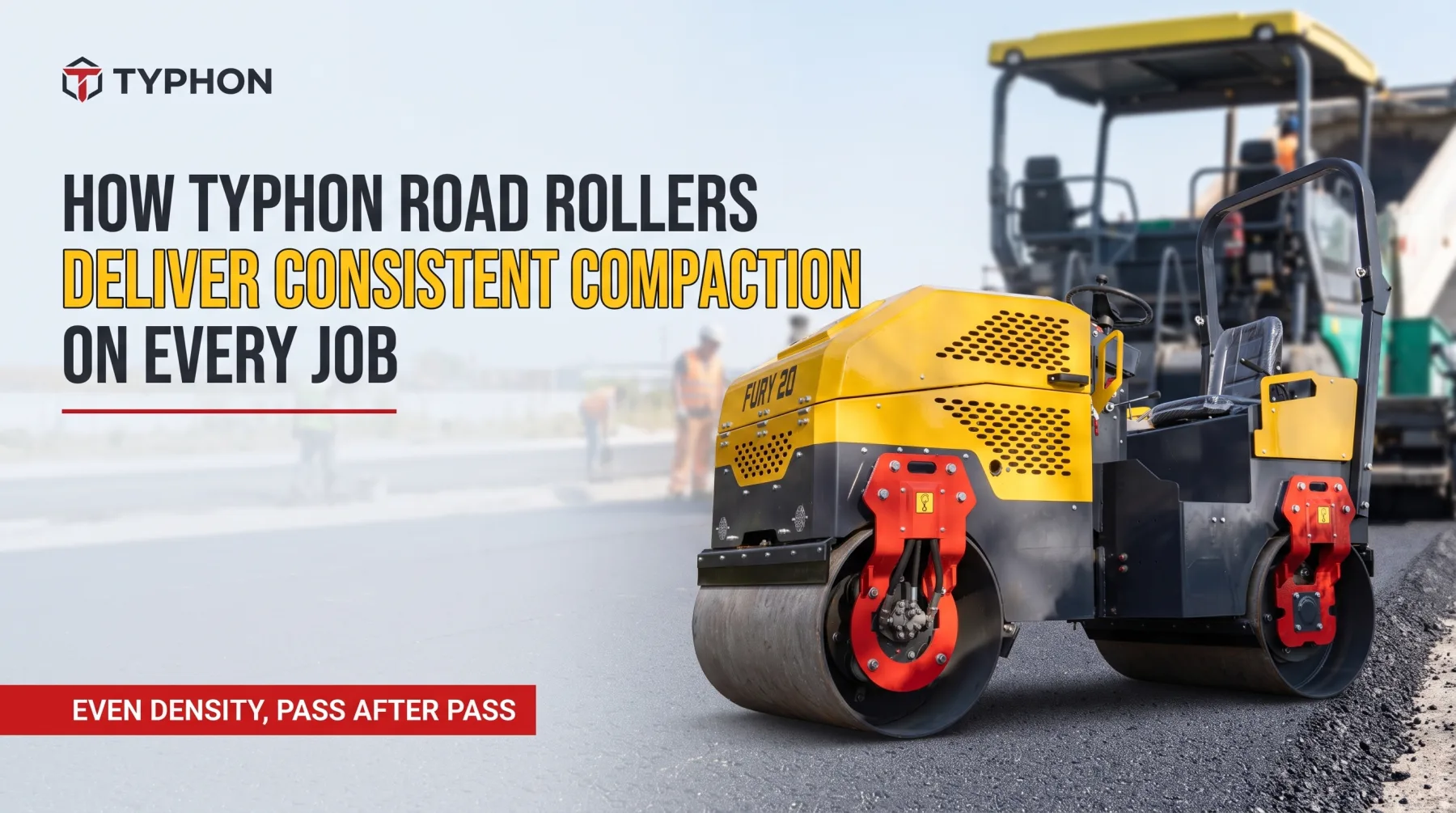
Steady compaction force is where a TYPHON roller separates itself, because the drum’s vibration adds dynamic energy that packs material tighter and more evenly than weight alone. Rather than relying only on static mass, the vibrating drum drives its force deeper into the layer and treats each pass with the same intensity, so density builds uniformly across the surface instead of swinging spot to spot. That controlled energy is the engine behind even results.
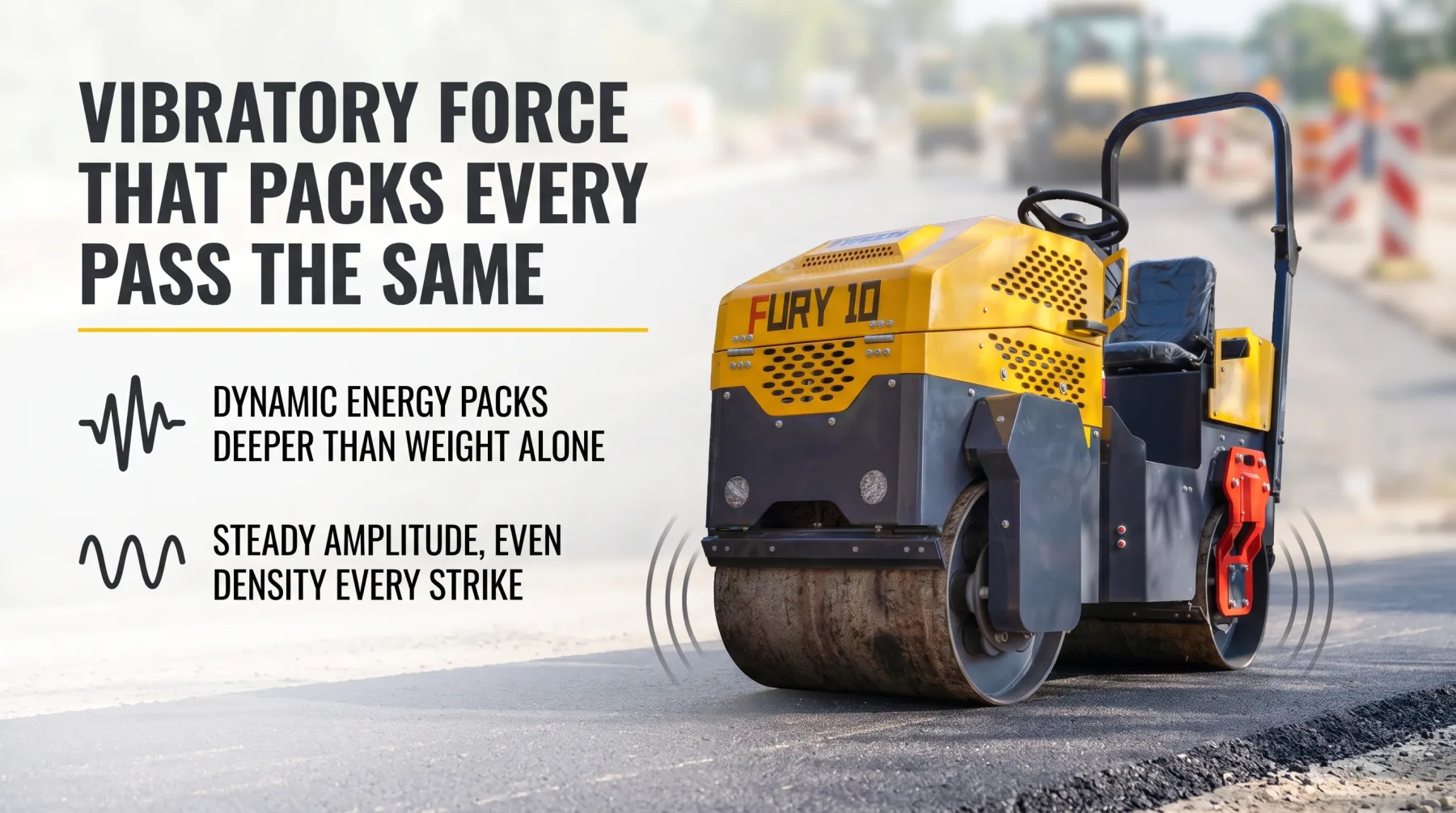 Consistent amplitude and frequency keep every strike delivering the same punch. A drum that vibrates at a steady rate spaces its impacts evenly across the mat, which prevents the alternating dense and loose ripples that an inconsistent machine leaves behind, so the material reaches the same density from one end of a pass to the other. Predictable vibration turns raw machine hours into reliably compacted ground. Depth of compaction rounds out the drum’s advantage on thicker lifts. Because vibratory force reaches further into a layer than static weight, the roller compacts the material fully rather than skinning a hard shell over a soft core, so density holds from the bottom of the lift to the top. What this means: a TYPHON’s vibratory drum delivers the same force on every pass and drives it through the full layer, so density stays even across the surface and deep through the material instead of varying where it can’t be seen.
Controls Built to Take Guesswork Out of the Operator’s Hands
Simple, responsive controls do more for consistency than most crews realize, since a machine that’s easy to run leaves less room for the human error that creates uneven density. TYPHON rollers keep their layout intuitive, so an operator holds a steady speed, manages the vibration cleanly, and tracks a straight line without wrestling the machine. When the controls cooperate, the operator focuses on coverage rather than fighting the equipment. Steady speed and clean starts protect density in ways a jerky machine can’t. Controls that let an operator hold a consistent walking pace keep the drum’s force even across every foot, while smooth acceleration and gentle stops avoid pressing dips into a fresh mat, so the surface stays uniform rather than marked by the machine’s own missteps. Predictable handling translates straight into predictable results. Clear sightlines and manageable handling help an operator lap each pass correctly. A machine that’s easy to position lets the crew overlap the previous track by the right margin every time, closing the seams that would otherwise stay loose, so coverage stays even from lane to lane. Key takeaway: operator-friendly controls keep speed, overlap, and stops consistent, which removes the human error that causes uneven density. An easy machine to run is a machine that compacts the same way every pass.
A Kubota Engine That Keeps the Job Moving
Dependability underpins consistent compaction, because a machine that stalls mid-job leaves half a surface compacted while the rest waits, and material rarely holds its ideal condition through a delay. TYPHON rollers pair a Kubota engine with a rugged build, so the machine runs steadily from the first pass to the last without the breakdowns that split a job into uneven stages. Equipment that finishes what it starts is what lets density stay uniform across the whole surface. Kubota’s proven track record carries real weight behind that reliability. Known for longevity and steady output, these engines hold their power under the constant load compaction demands, so the drum keeps delivering the same force through a long shift rather than fading as the machine tires. Consistent power at the engine means consistent force at the drum. Timing depends on a machine that runs when the material is ready, especially on asphalt that cools by the minute. A roller that starts every morning and works without interruption lets the crew compact the mat within its temperature window and finish the base before conditions shift, so the whole surface gets rolled under the same conditions. What this means: a Kubota-powered TYPHON runs reliably from start to finish, so the job gets compacted in one steady stretch under uniform conditions instead of stalling into uneven, poorly timed sections.
Handling the Full Spread of Materials and Site Types
Versatility matters for consistency because a contractor rarely rolls the same material twice in a week, and a machine that handles the whole range delivers even density across all of it. TYPHON rollers compact soil, granular base, and asphalt alike, so a crew reaches uniform strength whether the job is a gravel driveway on Monday or an asphalt patch on Thursday. One machine that adapts across materials keeps quality steady no matter the task.
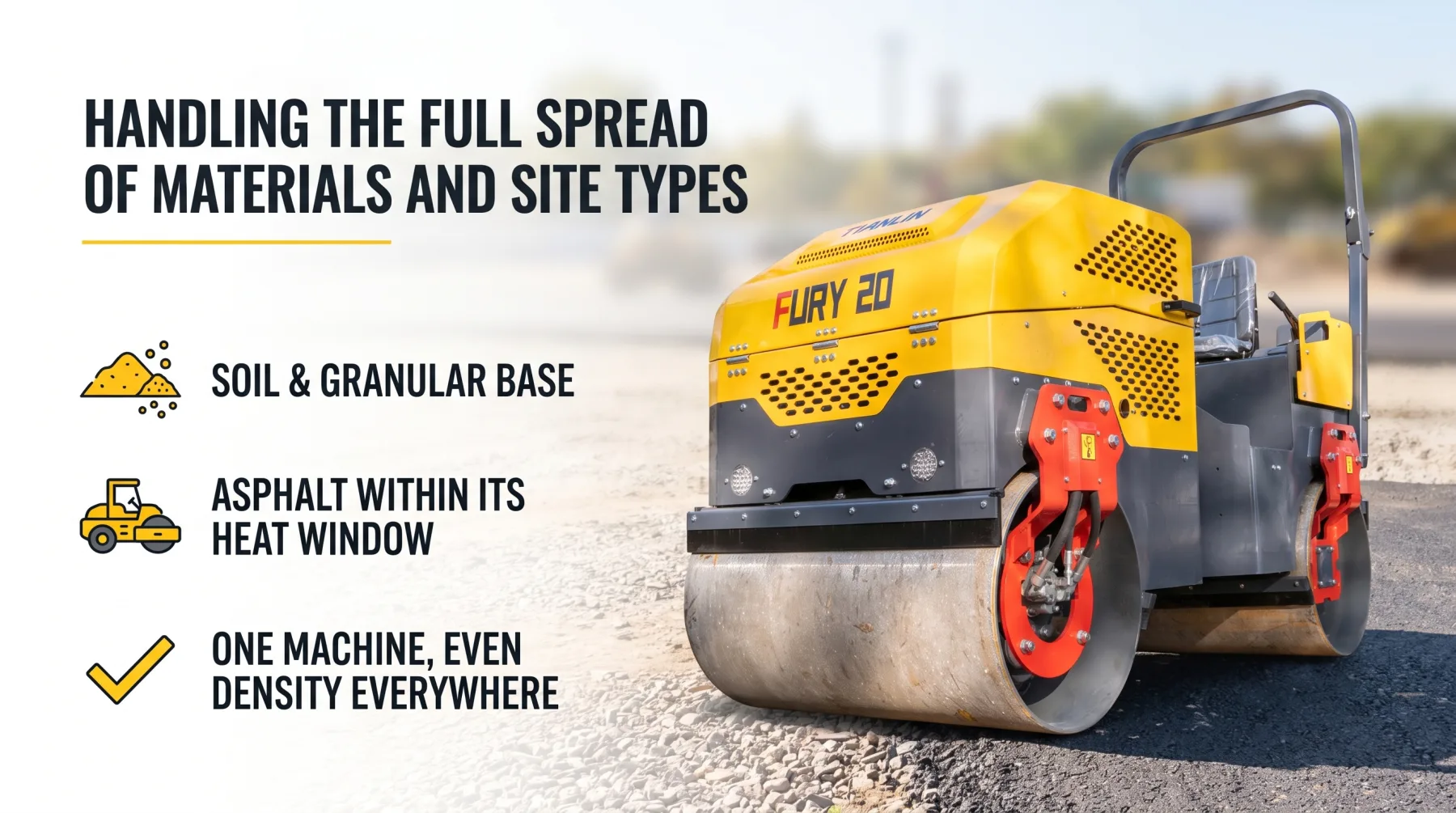 Different materials respond to the drum in their own way, and a capable roller adjusts to each. Cohesive soils and granular base pack down under the drum’s weight and vibration, while asphalt calls for prompt rolling within its heat window, and a TYPHON manages both when the operator matches his approach to the material. Flexibility like that means the same machine delivers even density on jobs that each demand something different. Job scale shifts as often as material does, from tight residential pads to longer roadway sections, and the right roller covers that spread. A machine sized to work efficiently across small and mid-size jobs keeps a crew from renting a specialized unit for every task, so consistent results follow the company from one project to the next. Key takeaway: a TYPHON roller adapts across soil, base, and asphalt and across job sizes, so a crew delivers even density on every material and site type instead of settling for uneven results outside a machine’s narrow range.
Picking the TYPHON Model That Matches Your Work
Job type points toward the right roller faster than any spec sheet, so picture the surfaces you compact most before you choose. Light driveways, patios, and small patches suit a compact unit, while regular residential roadwork and larger lots call for a wider drum that covers ground faster and reaches density in fewer passes. Naming your typical work first narrows the field to models that genuinely fit it. Drum width and machine weight settle the size question next. A wider drum treats more surface per pass and suits bigger jobs, while a heavier machine drives more force into demanding material, so match both to the scale and material you work most often. Reading these numbers against your real projects keeps you from buying more roller than you need or less than the job demands. Vibration and drum type tie the decision to your material. Confirm the model offers the vibratory capability the base and asphalt you compact require, and weigh whether a smooth drum or a padfoot suits your typical ground, since cohesive soils often reward a padfoot’s kneading action. What this means: match the TYPHON model to your work by weighing drum width, machine weight, vibration, and drum type against the surfaces and materials you handle most, and let those realities steer the choice rather than the largest option on the lot.
Conclusion
Delivering the same density across every job comes down to a machine engineered for even force, easy to run, and dependable enough to finish without a stall. TYPHON road rollers bring that combination together: a vibratory drum that packs each pass with the same energy and drives it through the full lift, operator-friendly controls that strip out the human error behind uneven results, and a proven Kubota engine that keeps a crew rolling from the first pass to the last. Because these machines handle soil, base, and asphalt across job sizes, one roller delivers consistent strength on nearly every surface a contractor tackles. Start by picturing the work you repeat most, then match the drum width, weight, vibration, and drum type to those materials and scales before you commit. Roll every job with a machine built for uniform density, and you trade costly callbacks for surfaces that hold their shape and protect your reputation. When you’re ready to put a dependable, well-matched TYPHON road roller to work, reach out to a trusted equipment specialist who can pair a reliable machine with the results your projects depend on.
Frequently Asked Questions
How do TYPHON road rollers produce consistent compaction? They combine a vibratory drum that adds dynamic force to the machine’s weight, delivering the same energy on every pass and driving it deep through the full lift rather than skinning the surface. Steady amplitude and frequency space the drum’s impacts evenly, which prevents the dense-and-loose ripples an inconsistent machine leaves behind. Paired with easy controls that help an operator hold a steady speed and correct overlap, and a reliable Kubota engine that finishes the job without stalling, the roller reaches uniform density across the whole surface. Why does consistent compaction matter so much on a job? Because a surface is only as strong as its weakest, loosest spot. When density varies, the soft areas rut, crack, and pull the surface above them down, often weeks after the job looks finished. Fixing a failed section means tearing it out and recompacting it, which costs far more than rolling it right the first time and arrives long after the crew has moved on. Even density up front protects the surface, your budget, and the reputation that brings your next contract. Which TYPHON road roller model should I choose for consistent results? Start with the surfaces you compact most. Light driveways, patios, and small patches suit a compact unit, while regular residential roadwork and larger lots call for a wider drum that covers ground faster and reaches density in fewer passes. Confirm the drum width and machine weight match your scale and material, and check that the model offers the vibratory capability your base and asphalt require. A smooth drum suits granular and asphalt work, while a padfoot helps knead cohesive soils to even density.