How Electric Forklifts Boost Warehouse Productivity
Productivity is the metric that quietly defines the success or failure of every warehouse operation. Behind the order volumes, shipping deadlines, and customer expectations sits a simple truth: the speed and reliability of your material handling equipment shape the entire rhythm of your facility. When forklifts move smoothly, recharge predictably, and stay in service shift after shift, the whole operation flows. When they stall, sputter, or sit idle waiting on repairs, every downstream process slows with them. For warehouse managers and logistics leaders working to squeeze more output from the same square footage, the equipment powering your floor deserves serious attention.
Electric forklifts have emerged as a powerful answer to the productivity challenges modern facilities face. Once viewed as a cleaner but weaker alternative to internal combustion machines, today’s electric models deliver strong lifting performance, exceptional maneuverability, and operating characteristics that directly support faster, more consistent work. This guide examines exactly how electric forklifts boost warehouse productivity. We will explore indoor handling, energy-efficient battery power, reduced maintenance demands, quieter operation, operator ergonomics, smart charging strategies, and the cumulative effect these advantages have on your total operational output. By understanding where the real gains come from, you can make equipment decisions that strengthen your facility for years to come.
Superior Indoor Maneuverability for Faster Material Flow
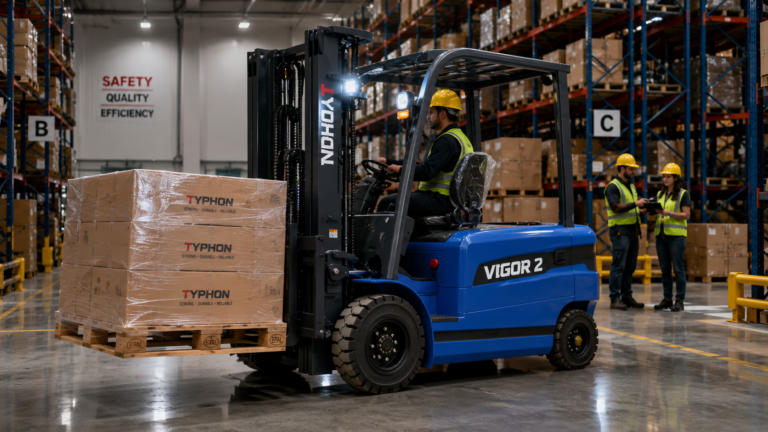
Warehouses are rarely spacious, open environments. Most facilities are designed to maximize storage density, which means narrow aisles, tight staging areas, congested dock zones, and constant traffic between picking lanes and loading bays. Within this confined footprint, every wasted second of repositioning, backing up, or three-point turning compounds across thousands of pallet moves each shift. The way a forklift handles in tight spaces directly determines how quickly your team can complete each task.
The limitation many operations encounter is that bulky, hard-to-turn equipment forces operators into slow, cautious movements that drag down throughput. A machine that requires extra room to turn or repeatedly stalls in tight corners creates bottlenecks at exactly the points where speed matters most. Operators spend more time maneuvering than moving product, and that lost time quietly erodes daily output without anyone noticing a single dramatic failure.
Electric forklifts are engineered with a compact, balanced design that excels in confined indoor environments. The battery sits low within the chassis, lowering the center of gravity and creating a tight, stable turning radius. Many models offer responsive electric steering and smooth, instant torque that lets operators position loads precisely without the lag or jerkiness common to older equipment. This precision allows operators to navigate narrow aisles, slip into tight rack openings, and reverse out of staging zones with confidence and speed.
The business impact shows up immediately in material flow. When operators move fluidly through the facility, pallet cycles shorten, dock turnaround improves, and the entire floor maintains a faster, steadier pace. This enhanced maneuverability reduces rack and product damage caused by tight, awkward maneuvers, which in turn lowers downtime and replacement costs. With movement through the building optimized, the next factor shaping productivity is the power source that keeps these machines running.
Battery-Powered Efficiency That Sustains Continuous Output
The power system behind a forklift determines far more than how long it runs. It influences acceleration, lifting speed, consistency of performance, and how predictably the machine performs throughout a demanding shift. In a high-throughput warehouse, even small inconsistencies in power delivery add up to meaningful differences in how much work gets done between sunrise and shipment.
A common problem with traditional power systems is that performance often fades as fuel burns or conditions change, and operators must account for refueling interruptions that pull machines off the floor. These interruptions create gaps in availability that ripple through the schedule, forcing teams to juggle equipment and adjust workflows around the limitations of the power source rather than the needs of the operation.
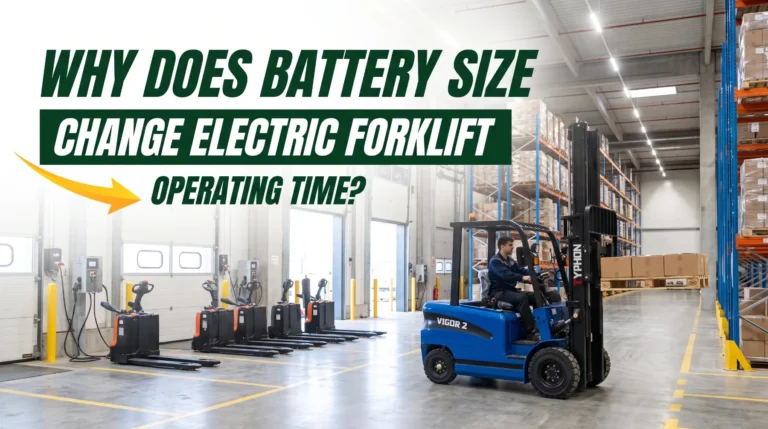
Electric forklifts deliver clean, consistent power from the first lift of the morning to the last pallet of the day. Electric drive systems provide immediate torque, allowing operators to accelerate smoothly and lift loads without waiting for an engine to build power. Performance remains stable across the charge cycle, so the machine handles the same at hour eight as it did at hour one. Modern battery technology, particularly lithium-ion, supports opportunity charging during breaks, which keeps machines topped off and ready without lengthy downtime. This steady, dependable power profile means operators can maintain a productive rhythm without compensating for a weakening machine.
The real-world result is sustained output across the entire shift. When equipment performs reliably hour after hour, throughput becomes predictable, scheduling becomes easier, and managers can plan labor and shipments with greater confidence. Consistent energy delivery also protects components from the stress of erratic performance, supporting longer equipment life. That reliability connects directly to another major productivity advantage: dramatically reduced maintenance demands.
Lower Maintenance Compared to Internal Combustion Machines
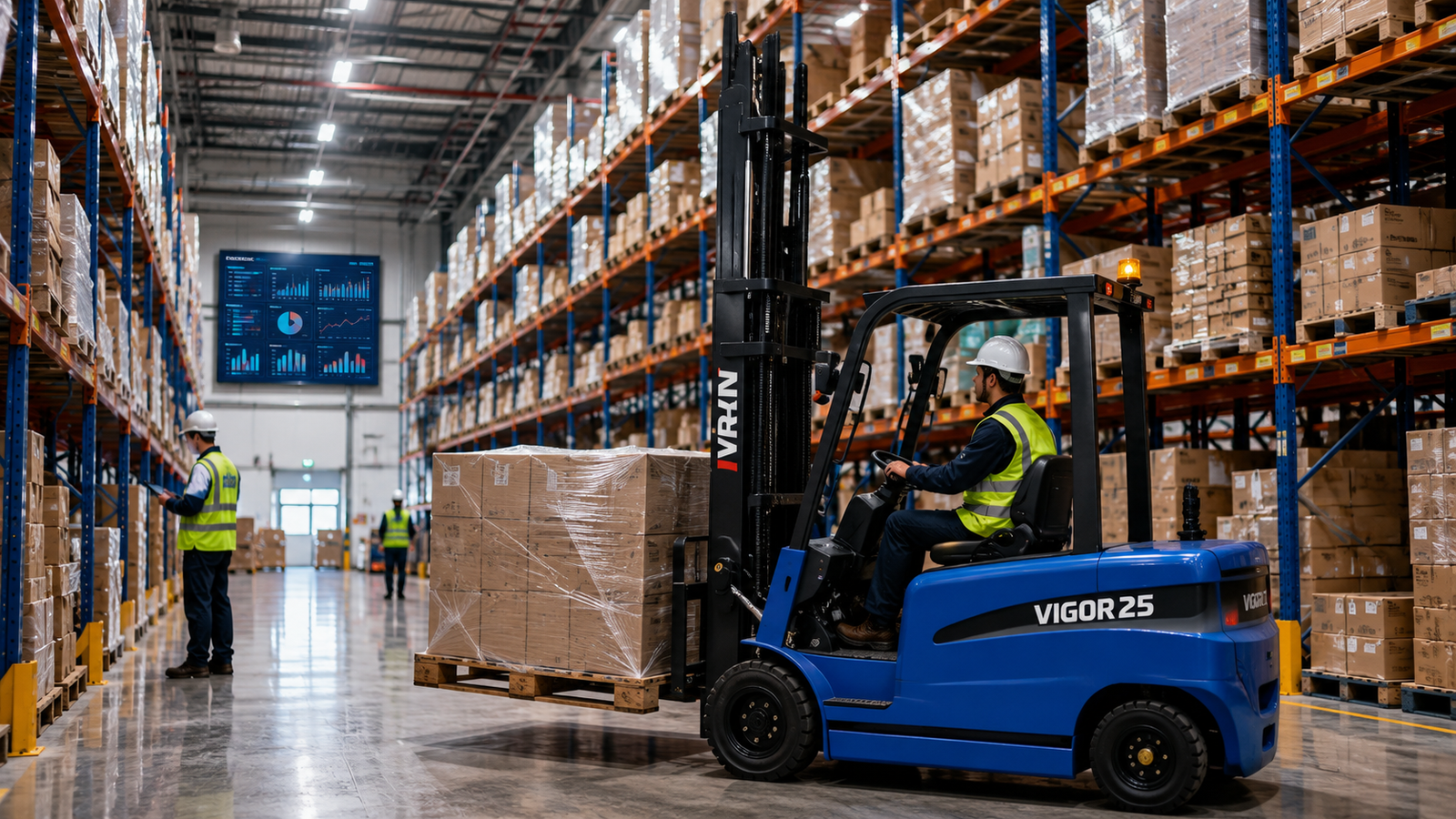
Equipment downtime is one of the most disruptive and expensive forces in any warehouse. A single forklift pulled out of service for repairs can throw off dock schedules, slow picking lanes, and force the rest of the fleet to absorb extra work. The frequency and severity of these interruptions are tied closely to how mechanically complex the equipment is and how much routine service it demands.
Internal combustion forklifts carry an inherently heavy maintenance burden. Engines require oil changes, filter replacements, spark plugs, belts, coolant service, and exhaust system attention, and each of these systems represents a potential point of failure. Every hour spent on this upkeep, and every unexpected engine problem, is time the machine spends off the floor rather than moving product. Over a year, these repeated interruptions accumulate into significant lost productivity and rising service costs.
Electric forklifts eliminate entire categories of this maintenance because they have far fewer moving parts. There is no combustion engine, no fuel system, and no exhaust to service. The electric drivetrain runs cleaner and experiences less mechanical wear, which translates into fewer breakdowns and fewer scheduled service interruptions. Maintenance still matters, of course, with attention required for batteries, tires, hydraulics, brakes, and mast components, but the overall service demand is substantially lighter and more predictable. This simplicity means machines spend more time in service and less time in the shop.
The productivity payoff here is considerable. Higher equipment availability means more pallets moved, fewer scheduling disruptions, and a fleet that supports the operation rather than constraining it. Lower maintenance costs free up budget and labor that can be redirected toward growth. Reduced downtime also protects the consistency your customers depend on, reinforcing the reliability that strengthens long-term relationships. Beyond mechanical advantages, electric machines reshape the working environment itself in ways that support better performance.
Quieter Operation That Sharpens Focus and Communication
The atmosphere inside a warehouse has a direct effect on how well people perform. Noise, in particular, is an underestimated drain on productivity. When the floor is filled with the constant roar of engines, communication suffers, fatigue sets in faster, and the cumulative strain on operators and nearby workers slowly degrades the quality and speed of their work over the course of a shift.
The limitation with louder equipment is that it forces teams to work around the noise. Operators struggle to hear instructions, spotters, or warning signals, which can slow coordinated tasks and create safety concerns at busy intersections. Constant engine noise also contributes to mental fatigue, and tired operators move more cautiously, make more errors, and recover more slowly between tasks. In facilities running multiple machines at once, the combined noise level becomes a genuine barrier to smooth operation.
Electric forklifts operate remarkably quietly. Without a combustion engine, the dominant sounds are simply the gentle hum of the electric motor and the movement of the load. This dramatically lower noise level transforms the working environment. Operators can hear verbal instructions, communicate clearly with ground workers, and remain aware of audible warning signals throughout the facility. The reduced acoustic strain helps operators stay alert and comfortable across long shifts, which keeps their pace and precision steady from start to finish.
The impact on productivity is both immediate and cumulative. Clearer communication speeds up coordinated tasks like loading trailers, staging orders, and managing congested dock areas. Reduced fatigue helps operators maintain consistent output rather than slowing as the day wears on. A calmer environment also supports better decision-making and fewer mistakes, which protects both throughput and product integrity. This focus on the human side of the operation leads naturally into another powerful productivity driver: operator ergonomics.
Ergonomic Handling That Maximizes Operator Efficiency
No matter how advanced a forklift becomes, productivity ultimately depends on the person operating it. Operators spend hours inside the machine, performing repetitive lifting, turning, reversing, and positioning tasks that demand constant attention and physical engagement. The degree to which the machine supports the operator’s comfort and control directly shapes how fast, accurately, and consistently they can work.
The challenge is that poorly designed equipment wears operators down. Awkward controls, stiff steering, limited visibility, harsh vibration, and uncomfortable seating all contribute to fatigue, and fatigue is the enemy of productivity. A tired operator hesitates more, misjudges approaches, repositions loads repeatedly, and gradually slows throughout the shift. Over time, this physical strain also contributes to higher turnover and lost expertise, which carries its own productivity cost.
Electric forklifts are frequently built with operator comfort at the center of their design. Smooth electric drive eliminates much of the vibration associated with engine-powered machines, and intuitive controls reduce the physical effort required for repetitive tasks. Adjustable seating, low-effort steering, clear instrument displays, and thoughtfully positioned controls help operators work with precision and ease. Easy entry and exit reduces strain during the many transitions on and off the machine throughout a shift. These features keep operators fresh, focused, and capable of sustaining a strong pace.
The business value of ergonomic design is substantial. Comfortable operators maintain higher output, handle loads more precisely, and make fewer costly mistakes. Reduced fatigue translates into steadier performance late in the shift, when productivity often declines on less comfortable equipment. Better working conditions also support stronger retention, protecting the skilled labor your operation depends on. To unlock the full value of these capable machines, however, your facility needs a smart approach to keeping them powered.
Smart Charging Strategy for Maximum Equipment Availability
Even the most capable electric forklift contributes nothing while it sits on a charger. This is why charging strategy, often overlooked during equipment decisions, plays such a decisive role in overall productivity. How and when your machines recharge determines how many hours they spend doing productive work versus waiting on the sidelines, and a poorly planned approach can quietly cap the output of an otherwise excellent fleet.
The problem many facilities face is treating charging as an afterthought rather than an integral part of workflow design. When charging is unplanned, machines may run low at peak times, sit idle waiting for full charge cycles, or compete for limited charging stations. These gaps in availability force operators to shuffle equipment and disrupt the steady flow that productivity depends on, especially in multi-shift operations where every machine hour counts.
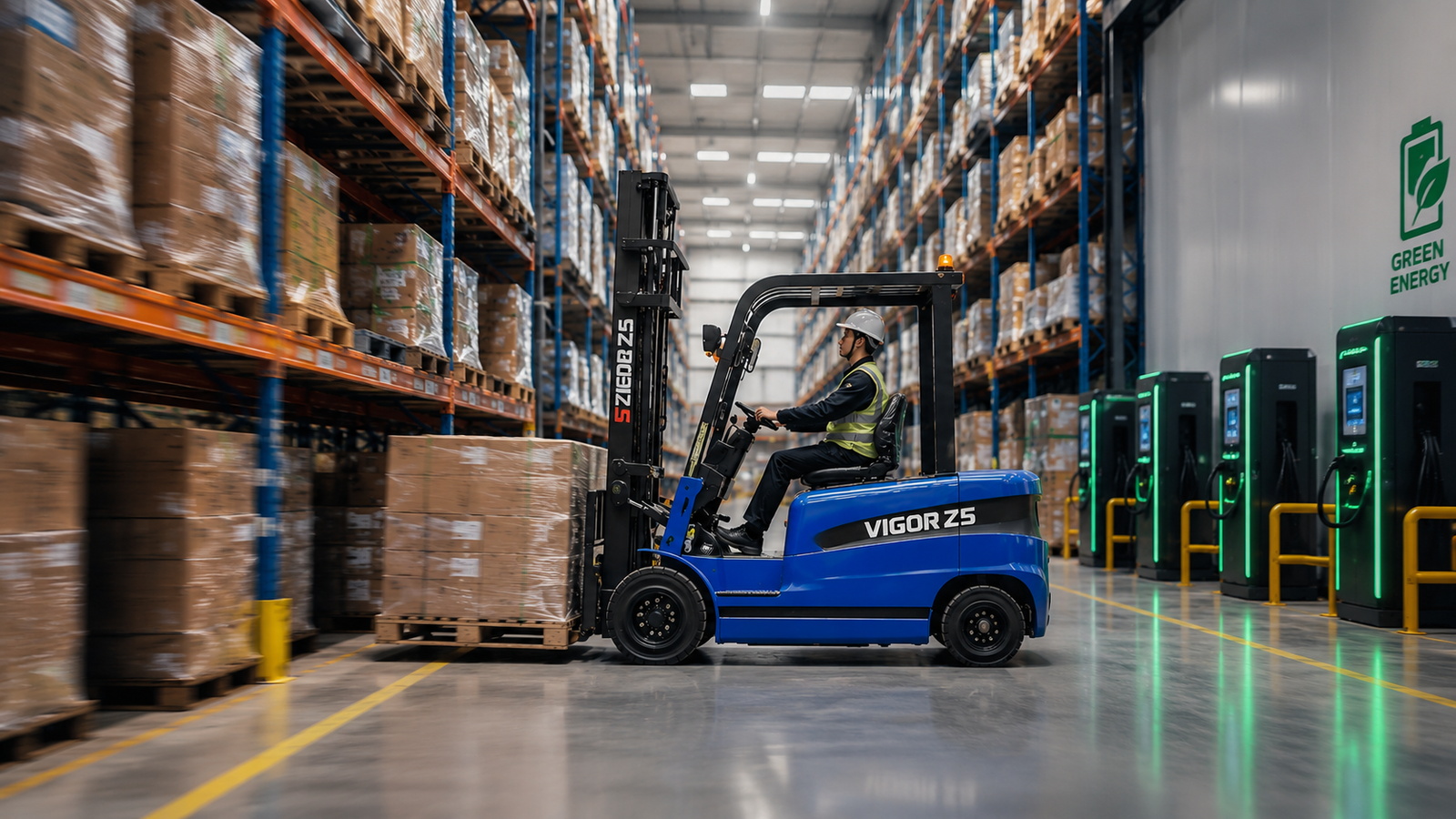
A thoughtful charging strategy aligns power management with the rhythm of your operation. For single-shift facilities, overnight charging may keep the fleet ready each morning with no daytime interruptions. For demanding multi-shift environments, lithium-ion batteries enable opportunity charging, allowing operators to top off during breaks and meal periods so machines stay available throughout the day. Strategically placed charging stations, clear charging protocols, and battery chemistry matched to your workload all ensure that power availability supports the schedule rather than dictating it. The goal is simple: keep machines ready when the operation needs them most.
The productivity gains from smart charging are direct and measurable. Maximized equipment availability means more working hours per machine, smoother shift transitions, and fewer disruptions during peak demand. Predictable power management makes labor planning easier and keeps throughput consistent. When charging is treated as a strategic asset rather than a necessary pause, the entire fleet delivers more value every single day. These individual advantages combine into a larger transformation of total operational output.
Stronger Total Operational Output Across the Facility
Individual improvements in maneuverability, power, maintenance, comfort, and charging are valuable on their own, but their true significance appears when they work together. Warehouse productivity is not the result of any single feature. It is the cumulative effect of countless small efficiencies repeated thousands of times across every shift, every aisle, and every dock door. Understanding this big-picture impact helps leaders evaluate equipment as a strategic investment rather than a simple purchase.
The limitation of focusing on one feature at a time is that it obscures how interconnected warehouse performance really is. A faster machine that constantly needs repairs delivers little gain. A reliable machine that fatigues operators slows down anyway. A comfortable machine that sits on a charger during peak hours contributes nothing when it matters. Productivity suffers whenever any link in this chain weakens, which is why a holistic approach is essential.
Electric forklifts deliver advantages across all of these dimensions simultaneously. The same machine that maneuvers efficiently through narrow aisles also runs reliably with minimal maintenance, operates quietly to support clear communication, keeps operators comfortable and alert, and stays available through smart charging. When these strengths reinforce one another, the result is a fleet that supports the entire operation rather than constraining any part of it. Each pallet moves a little faster, each shift runs a little smoother, and the gains compound across the year.
The long-term business impact is a warehouse that performs at a consistently higher level. Throughput rises, downtime falls, operating costs decline, and the facility gains the capacity to handle growth without proportional increases in equipment or labor. Energy-efficient operation also lowers long-term costs and supports sustainability goals that increasingly matter to customers and stakeholders. Most importantly, the reliability and consistency these machines provide build the kind of dependable performance that earns lasting customer trust.
Conclusion
Electric forklifts boost warehouse productivity not through a single dramatic feature, but through a combination of advantages that strengthen every part of your operation. Superior indoor maneuverability speeds material flow. Consistent battery power sustains output across the shift. Reduced maintenance keeps machines in service and budgets under control. Quieter operation sharpens communication and reduces fatigue. Ergonomic design maximizes operator efficiency, and smart charging keeps the fleet available when demand peaks. Together, these strengths transform total operational output and position your facility for stronger, more sustainable performance.
For warehouse managers, logistics leaders, operations teams, and equipment buyers, the decision to invest in electric forklifts is ultimately a decision to invest in productivity, reliability, and long-term value. Evaluate your facility’s layout, workload, shift patterns, and charging capacity, then choose equipment and a power strategy that align with how your operation truly runs. The right electric fleet does more than move pallets. It becomes a dependable engine of efficiency that helps your business meet demand, control costs, and deliver the consistent results your customers count on every day.