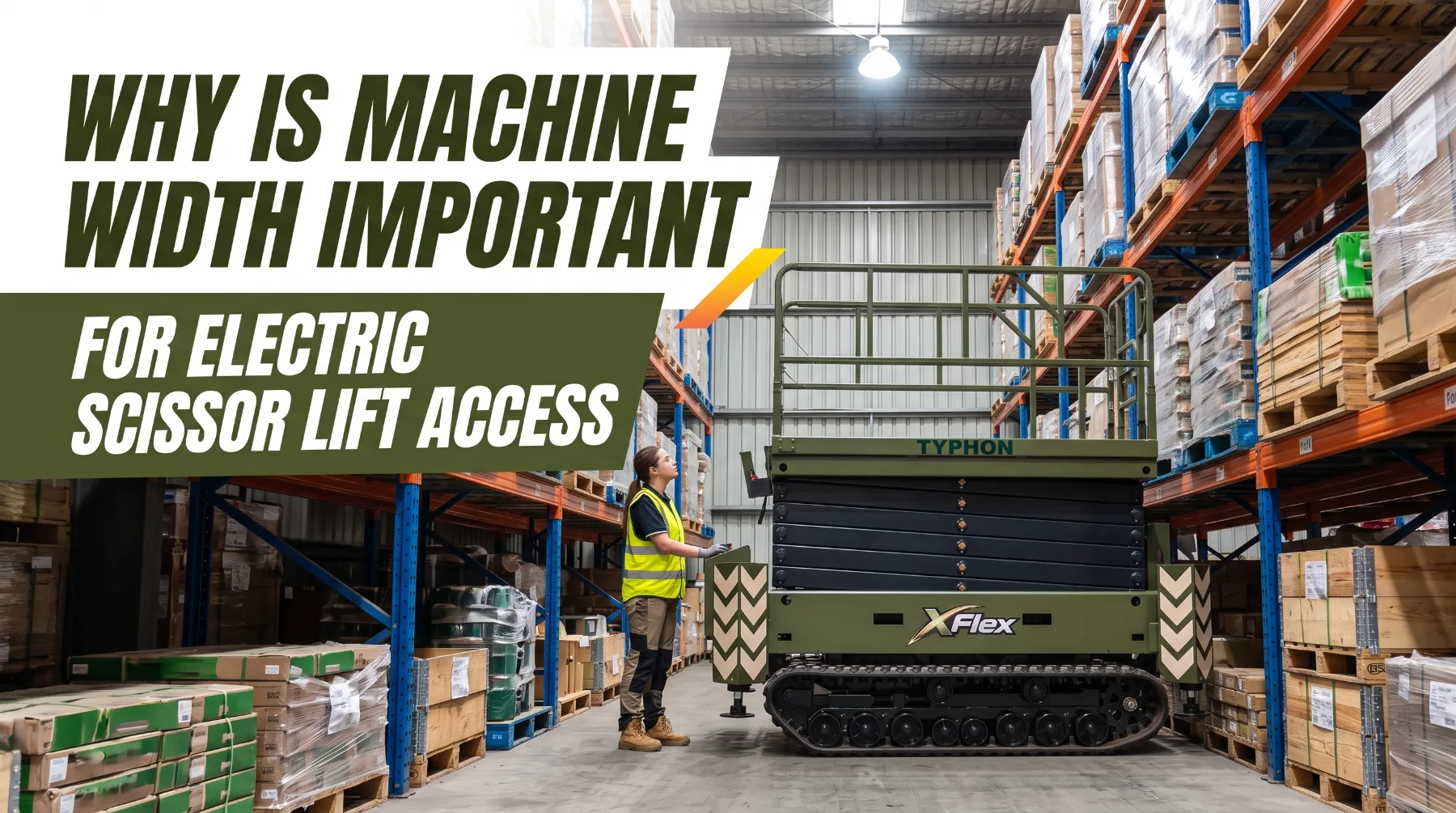
An electric scissor lift arrives at a commercial building where crews need elevated work completed inside narrow corridors and around fixed equipment. On paper, the task seems simple: raise the platform, reach the work zone, and complete the job. Before any lifting begins, however, the machine has to reach that location by passing through entrances, interior aisles, shelving, machinery, and tight corners. Each of these access points can depend heavily on one basic specification: overall machine width.
Width determines which routes an electric scissor lift can take and how easily the operator can position it near the work area. A machine that fits comfortably through the narrowest access points can move from the entrance to the job zone without unnecessary delays. One that exceeds the available clearance may stop the entire operation before the platform ever leaves the ground.
Inside busy commercial spaces, access planning becomes just as important as platform height or lifting capacity. Doorway dimensions, aisle clearance, fixed equipment, turning areas, and floor layout all need to be checked before the lift arrives. Measuring these points in advance helps match the machine’s width to the actual work environment and prevents avoidable access problems on site.
What Machine Width Determines
Overall machine width is the distance across the scissor lift’s body or chassis at its widest point. It’s a single number, but it carries a lot of weight, because it sets the minimum clearance the machine needs to pass through any opening or gap along its route. A narrower design gives you more options, making it easier to move through confined access points and slip between obstacles that would stop a wider machine.
Width doesn’t act alone, though. It should always be considered alongside the machine’s overall length, turning radius, platform dimensions, and operating height. A lift might be narrow enough for a doorway yet too long to turn into the passage beyond it, or short enough to maneuver but too tall for a low entrance. Reading width in the context of these other dimensions is what gives you an accurate picture of where the machine can actually go.
Key takeaway: Overall width is the machine’s widest point and sets minimum clearance, but it must be weighed alongside length, turning radius, platform size, and operating height.
Doorways and Building Entrances
Door openings are often the single biggest access limitation when bringing a scissor lift indoors. They’re fixed, unforgiving, and frequently narrower than people assume. A machine that clears the wide main entrance can still run into trouble deeper inside, where interior doors, fire doors, and connecting passages may be considerably tighter than the way in.
That’s why the main entrance is the wrong place to stop measuring. The smallest access point along the entire route is what actually governs whether the lift can reach the work zone, so measure that before delivery rather than after the machine is on a truck. Checking each doorway and passage between the entrance and the work area turns a costly surprise into a simple decision made in advance.
Key takeaway: Doorways are a primary access limit, and a machine that fits the main entrance may not clear narrower interior doors, so measure the smallest opening on the route before delivery.
Moving Through Narrow Aisles
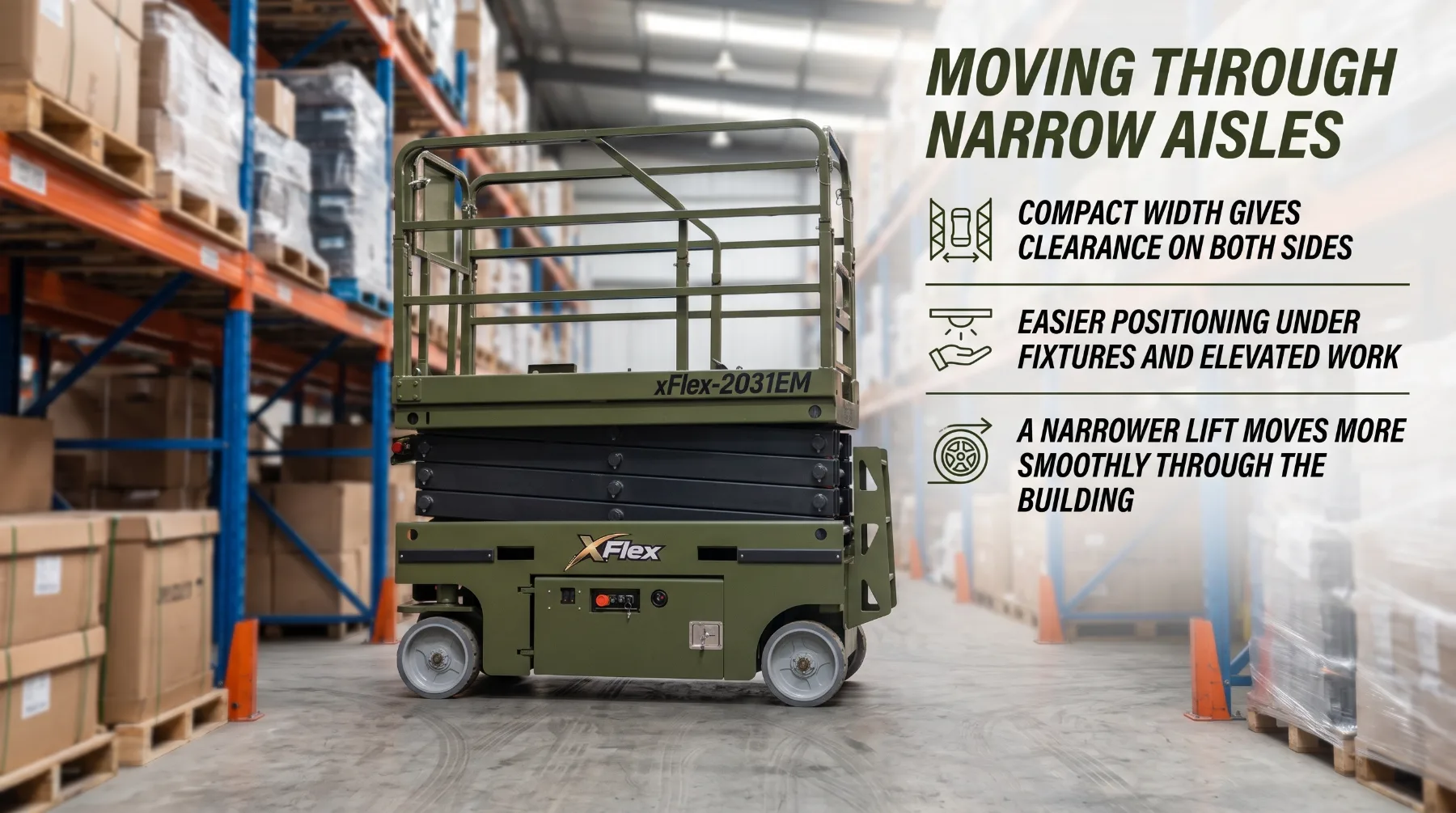
Warehouses, retail buildings, airports, and industrial facilities are full of narrow pathways hemmed in by shelving, walls, machinery, and stored equipment. These aisles rarely leave much room to spare, and a wide machine can quickly find itself with no safe clearance on either side. That’s where a compact width proves its value, giving the operator breathing room along both flanks during travel.
That extra clearance does more than prevent contact with racking or walls. It makes positioning far easier when the operator needs to approach a specific elevated work area, line up under a fixture, or maneuver in a busy space where obstacles keep changing. A narrower lift simply has more room to work with, which translates directly into smoother, safer travel through the building.
Key takeaway: Narrow aisles surrounded by shelving, walls, and equipment leave little room to spare, so a compact width provides the side clearance that makes travel and positioning easier.
Width and Turning Space
Fitting through a gap and maneuvering through a building are two different challenges, and width only answers the first. How the lift handles corners and transitions depends on chassis length, steering configuration, turning radius, and the floor space available to swing the machine around. A short, tight-turning lift navigates a cramped layout in ways a longer machine simply can’t, even if both share the same width.
The classic trap is a machine that slips cleanly through a doorway but then lacks the room to turn into the next passage. Clearing an opening means nothing if the lift can’t reposition itself on the other side. Evaluating turning radius against the actual floor space at each corner and junction is what confirms the machine can move through the route, not just squeeze into it.
Key takeaway: Width alone doesn’t determine maneuverability; chassis length, steering, turning radius, and available floor space all shape how the lift moves around corners.
Platform Size Versus Overall Width
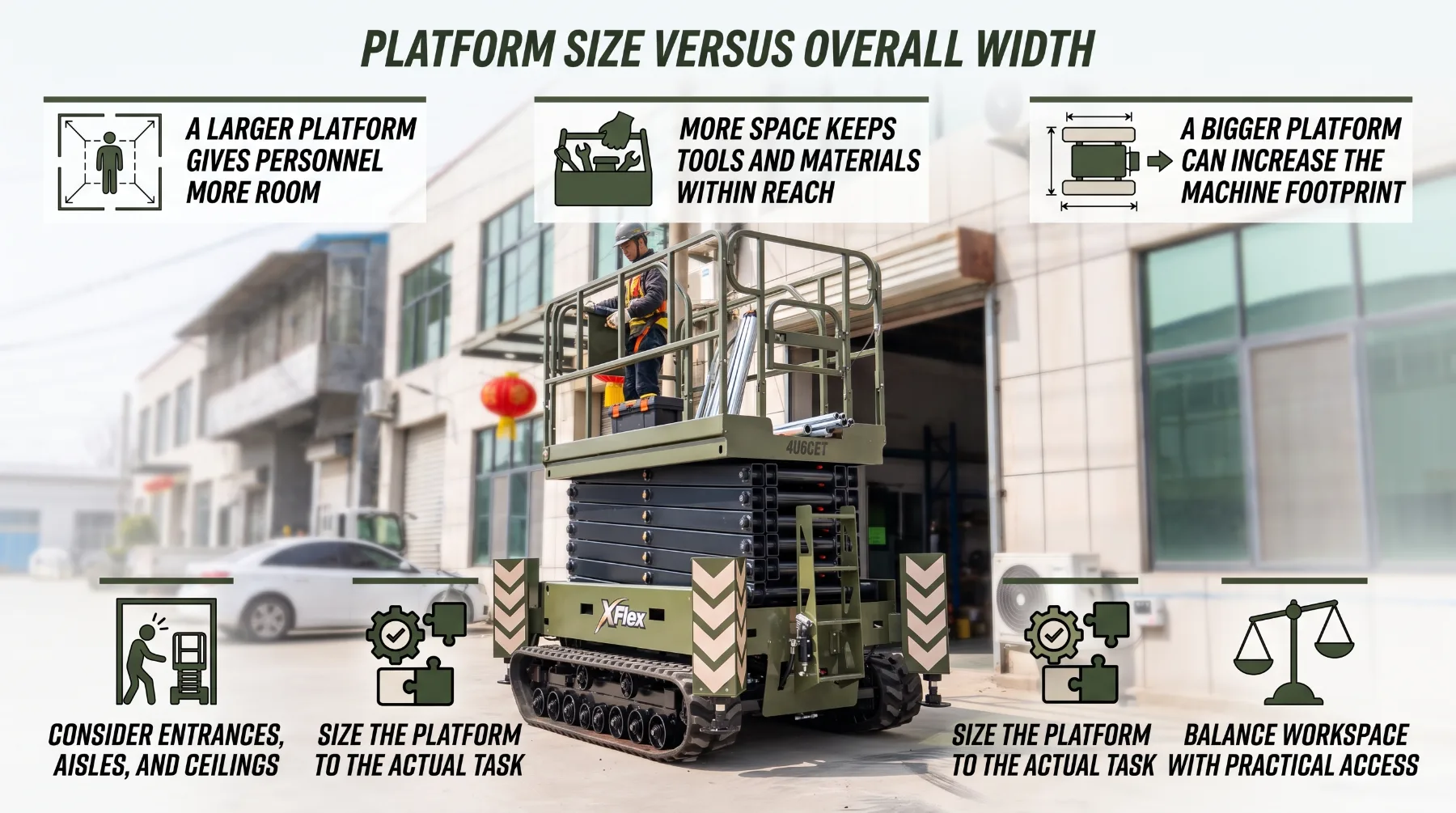
A larger work platform can provide more space for personnel, tools, and materials, making certain tasks more convenient and efficient. However, increasing platform size can also increase the machine’s overall footprint, which may create challenges when working inside buildings, through narrow entrances, or around restricted areas.
The goal is to match the platform to the actual working environment rather than simply choosing the largest option available. A properly sized platform provides the workspace needed for the job while still allowing the machine to access the areas where it is required.
- Working Space: Provides enough room for personnel to work comfortably and organize essential tools.
- Tool & Material Access: Additional platform space can make it easier to keep frequently used items within reach.
- Machine Footprint: A larger platform can increase the overall dimensions of the machine and affect accessibility.
- Building Access: Platform dimensions should account for entrances, aisles, ceilings, and other physical restrictions.
- Job Requirements: The platform should be sized according to the actual tasks and number of personnel involved.
- Access & Productivity: Balancing workspace with machine dimensions helps maintain practical access without sacrificing useful working space.
Key takeaway: A larger platform adds workspace but can increase overall dimensions, so balance the platform size you need against the building’s access limitations.
Surface Conditions and Clearance
Getting the machine through the openings is only part of the picture; the surface it travels and works on matters just as much. Indoor floors need enough strength and suitable conditions to support the lift’s operating weight safely, because a floor that can’t handle the load creates a serious hazard regardless of how well the machine fits the space.
Outdoor applications add their own complications. Uneven surfaces, slopes, curbs, and restricted pathways can all limit where the lift can travel and how it must be positioned. Width has to be evaluated together with these ground conditions and the complete travel route, not in isolation. A machine perfectly sized for the doorways still needs a safe, capable surface from the entrance all the way to the work zone.
Key takeaway: Indoor floors must support the lift’s operating weight and outdoor routes bring slopes, curbs, and uneven ground, so evaluate width together with surface conditions along the full route.
Conclusion
Electric scissor lift width directly affects whether the machine can pass through doorways, aisles, corridors, and other restricted areas, but overall access depends on the complete machine envelope and travel route. Overall width establishes the minimum lateral clearance, while machine length, turning radius, steering configuration, platform dimensions, and operating height also influence maneuverability around corners and within confined spaces. Every part of the route should be checked because the narrowest doorway, aisle, corner, or passage can become the limiting point even when the main entrance provides sufficient clearance. Platform size should provide enough working space without creating unnecessary dimensions that restrict access, while the floor surface must be capable of supporting the machine’s operating weight throughout the route. Before delivery or operation, measurements should include the smallest doorway, narrowest aisle, available turning areas, overhead clearances, and surface conditions between the entry point and work zone. Evaluating these dimensions together helps confirm that the electric scissor lift can reach the intended work area without access or maneuvering restrictions.
Frequently Asked Questions
Why does electric scissor lift width matter?
Width determines whether the lift can pass through doorways, aisles, corridors, and other restricted areas. A narrower machine can navigate tighter spaces between walls, shelving, and equipment, while a wider model may be blocked by limited clearance. Width should be checked alongside the lift’s other dimensions when planning access.
Should I measure doorways before using a scissor lift indoors?
Yes. Measure the entire travel route, not just the main entrance. Interior doors, corridors, fire doors, and turning areas may be narrower than the entrance. Identify the smallest opening and compare it with the lift’s overall dimensions before moving or delivering the machine.
Does platform size affect scissor lift access?
Yes. A larger platform provides more workspace for workers, tools, and materials but can also increase the machine’s overall footprint. In buildings with narrow doorways or limited turning space, a larger platform may restrict access. Balance the workspace needed with the dimensions of the available route.
Is machine width the only factor affecting access?
No. Length, turning radius, steering configuration, platform dimensions, operating weight, and surface conditions can also affect access. A lift may fit through a doorway but still struggle to turn into a narrow passage. Check the complete route and all relevant machine dimensions before operation.