Why Electric Forklifts Are the Key to Better Indoor Air Quality
Managing a modern warehouse or indoor construction site requires balancing heavy operational demands with strict safety standards. For decades, facility managers and equipment buyers relied on internal combustion machinery to move heavy loads, accepting the persistent hum and exhaust as an unavoidable part of the job. However, as facilities grow tighter and operational hours extend, the invisible threat of poor indoor air quality demands immediate attention. Every gallon of diesel or pound of propane burned indoors releases a complex mixture of harmful pollutants into the workspace, threatening workforce health and straining facility infrastructure.
Addressing this challenge requires a fundamental shift in how contractors and business owners approach their material handling fleets. Transitioning to electric machinery presents a permanent, highly effective solution to the persistent problem of indoor industrial pollution. This article explores the transformative impact of electric forklifts on indoor environments, detailing how removing tailpipe emissions protects your workers, slashes operational overhead, and ensures your facility runs smoothly and safely. We will examine the hidden costs of traditional equipment and demonstrate why modernizing your fleet is a strategic necessity for any forward-looking operation.
The Hidden Danger of Internal Combustion in Enclosed Spaces
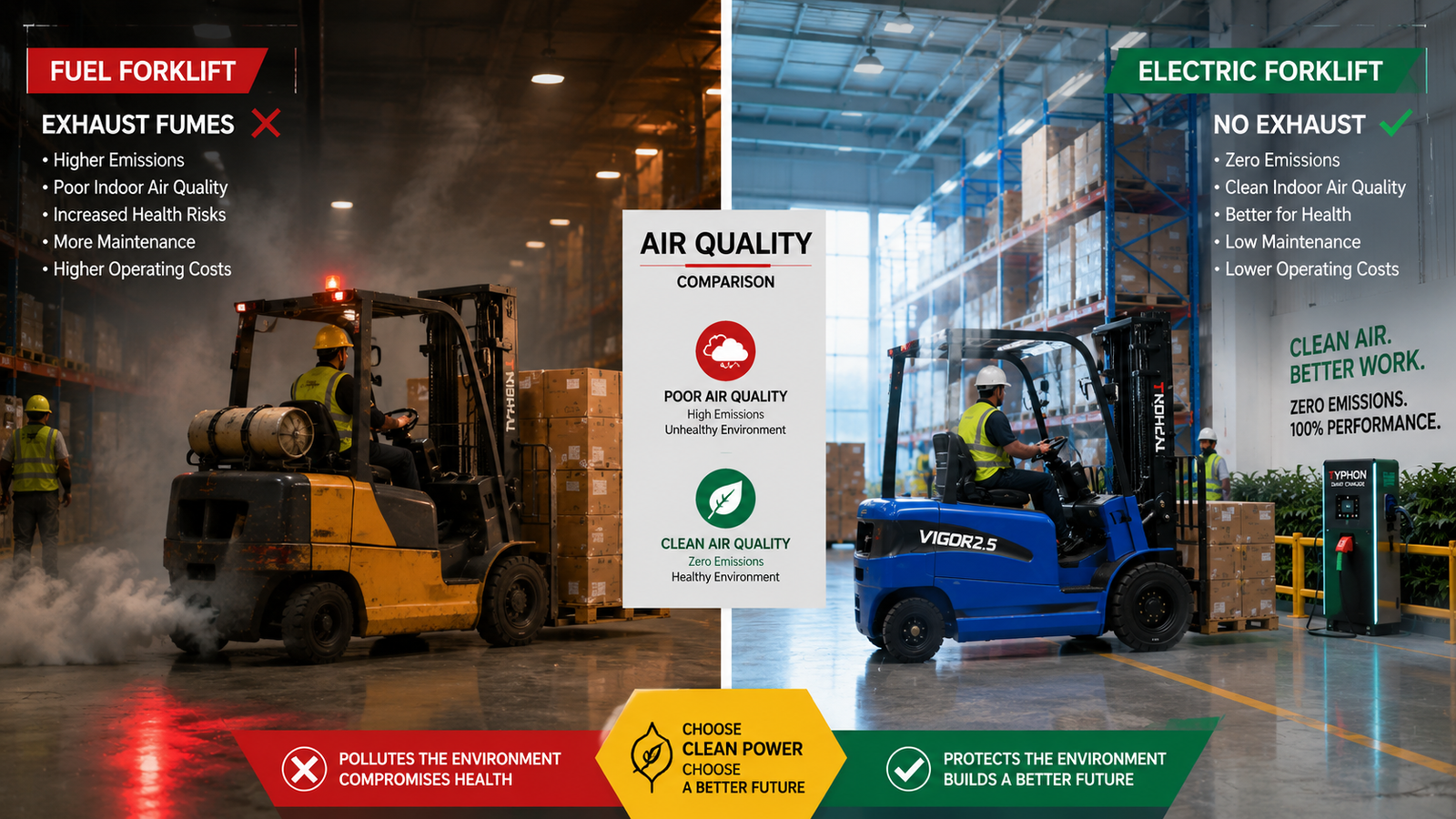
Industrial facilities and indoor construction sites naturally demand robust material handling equipment to keep production moving on schedule. Traditionally, contractors have favored internal combustion forklifts for their immediate power and familiar refueling processes. However, operating diesel or liquid propane gas forklifts inside enclosed spaces creates a severe and immediate environmental hazard. Every time an operator presses the accelerator, the engine releases carbon monoxide, nitrogen oxides, and fine particulate matter directly into the immediate breathing zone of everyone on the floor. These heavy gases do not easily dissipate, instead pooling in poorly ventilated corners, loading docks, and lower levels of the facility.
Electric forklifts completely neutralize this threat by replacing internal combustion engines with advanced battery power systems. By operating with zero tailpipe emissions, electric models entirely eliminate the introduction of raw toxic gases into the facility atmosphere. The core solution relies on replacing the chemical reaction of fuel combustion with pure electrical energy, allowing heavy lifting to occur without generating harmful byproducts.
The real-world business impact of this switch is profound and immediate. Facilities utilizing electric machinery experience drastically improved safety metrics, completely removing the risk of carbon monoxide poisoning among staff. Beyond human safety, businesses save heavily on liability and environmental compliance costs. Operators can run multiple electric lifts simultaneously in tight confines without triggering air quality alarms or requiring emergency evacuations. This foundational improvement in baseline air quality naturally leads to an evaluation of the massive mechanical systems historically required to clear exhaust fumes from the building.
Reducing the Heavy Financial Burden of Industrial Ventilation
Large-scale warehouses and manufacturing plants require constant airflow to maintain a habitable environment for workers and safe storage conditions for products. When an operation relies on internal combustion forklifts, facility managers must compensate for the continuous output of toxic fumes by running heavy-duty heating, ventilation, and air conditioning systems at maximum capacity. This creates an enormous financial drain, as exhaust fans and air exchange units must constantly pull climate-controlled air out of the building while pushing outside air inside. During peak winter or summer months, the energy cost required to reheat or recool this massive volume of replacement air can easily eclipse other facility utility expenses.
Deploying an electric forklift fleet removes the source of the pollution, entirely changing the mathematical equation of facility ventilation. Without the constant introduction of carbon monoxide and nitrogen dioxide, the demand on the building’s air exchange systems drops significantly. The facility only needs to ventilate for normal human occupancy and basic building health rather than desperately exhausting toxic industrial smog.
Contractors and business owners see this impact directly on their monthly utility statements. By reducing the required air exchange rate, facilities slash their heating and cooling costs while simultaneously extending the lifespan of their HVAC equipment through reduced wear and tear. Maintenance teams spend less time replacing expensive industrial air filters clogged with diesel soot, redirecting their labor toward more productive preventive maintenance tasks. While the financial relief of lowered energy bills is a massive advantage, the benefits of clean air extend directly to the most critical asset in any organization.
Protecting Workforce Health and Boosting Daily Productivity
Skilled labor remains the driving force behind any successful construction business or warehouse operation, making the health and safety of your team a primary operational priority. Unfortunately, long-term exposure to the fumes generated by traditional forklifts takes a severe toll on human physiology. Workers spending eight to twelve hours a shift inhaling low levels of carbon monoxide and fine particulate matter frequently suffer from chronic headaches, unexpected nausea, and persistent respiratory irritation. These physical symptoms quietly erode a team’s focus, slowing down operational pacing and leading to dangerous lapses in concentration around heavy machinery.
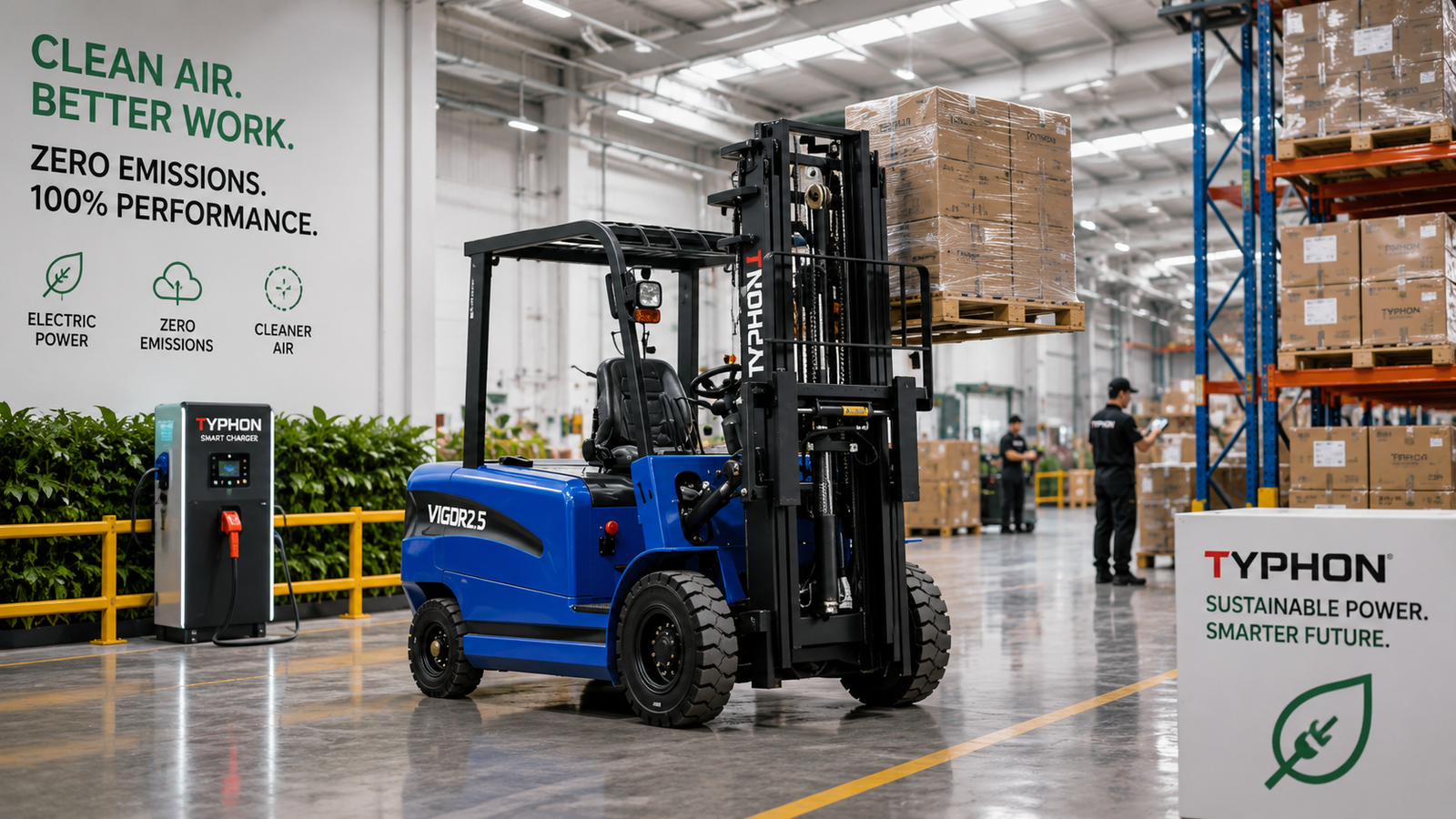
Transitioning to electric material handling equipment directly targets the root cause of these occupational health issues by providing a genuinely clean breathing environment. Electric forklifts operate silently and cleanly, allowing team members to perform their duties without the physical burden of oxygen displacement or chemical inhalation. The physical relief of working in a clear, odor-free environment allows operators and floor staff to maintain higher energy levels throughout their entire shift.
The business impact of prioritizing respiratory health manifests in measurable productivity gains and workforce stability. Companies operating electric fleets report noticeable decreases in sick days, late arrivals, and workers’ compensation claims related to respiratory distress. Furthermore, employee morale improves significantly when management invests in equipment that prioritizes their physical well-being. A healthier, more alert workforce processes orders faster, damages fewer goods, and maintains a safer operational tempo. This elevated standard of workplace safety also serves to protect the business from the increasingly watchful eyes of regulatory agencies.
Navigating Strict Environmental and Safety Regulations
The regulatory landscape governing indoor workspaces grows more stringent every year, with government agencies closely monitoring occupational exposure limits. Organizations like the Occupational Safety and Health Administration strictly enforce permissible exposure limits for carbon monoxide and nitrogen oxides. Facilities operating older internal combustion equipment constantly risk crossing these thresholds, particularly during peak operational seasons or inside buildings with aging ventilation infrastructure. Failing a surprise air quality inspection can result in devastating financial penalties, mandatory operational halts, and severe damage to a company’s professional reputation.
Electric forklifts provide an ironclad defense against air quality compliance violations. By fundamentally removing the capability to produce tailpipe emissions, electric material handling fleets ensure that a facility will never exceed permissible exposure limits for engine exhaust gases. Business owners no longer need to rely on complex, unreliable ventilation strategies to remain within the legal bounds of workplace safety.
This inherent regulatory compliance translates directly to operational peace of mind and financial security. Businesses avoid the heavy financial penalties associated with OSHA violations and bypass the expensive legal consultations required to contest them. Moreover, maintaining a pristine compliance record lowers liability insurance premiums and makes the company a more attractive partner for top-tier clients who demand strict environmental and safety standards from their vendors. Beyond the exhaust pipe, embracing electric machinery also resolves another major indoor hazard associated with traditional fuel sources.
Eliminating the Risks of Fuel Storage and Handling
Keeping an internal combustion fleet moving requires the continuous management of highly volatile fuel sources within the physical footprint of the facility. Warehouses relying on propane or diesel must dedicate significant indoor or adjacent outdoor space to store heavy liquid propane gas cylinders or massive diesel tanks. The simple act of transferring these fuels introduces a high risk of volatile organic compound emissions, accidental liquid spills, and dangerous gas leaks. These fugitive emissions degrade indoor air quality even when the forklifts are completely powered down, creating lingering odors and constant fire hazards.
Electric forklifts solve this infrastructural challenge by transitioning the fleet to clean battery charging stations. Whether utilizing traditional lead-acid batteries or modern, maintenance-free lithium-ion technology, the refueling process involves zero combustible liquids or explosive storage tanks. Modern charging infrastructure can be positioned strategically within the facility without requiring the heavy ventilation or blast-proof walls associated with indoor fuel storage rooms.
The elimination of liquid and gas fuels significantly alters a facility’s risk profile and operational efficiency. Without the need to store hazardous materials, businesses reclaim valuable square footage that can be repurposed for revenue-generating inventory storage or production lines. Facility managers eliminate the hazardous waste disposal fees associated with cleaning up oil and fuel spills, while safety managers sleep better knowing the risk of a catastrophic indoor fuel fire has been entirely neutralized. Removing these airborne chemicals and grimy residues ultimately leads to a cleaner physical environment for the building itself.
Preserving Facility Infrastructure and Inventory Quality
The physical building and the products stored within it represent a massive capital investment that requires constant protection from environmental degradation. Internal combustion engines do not just emit invisible gases; they constantly spew microscopic particulate matter, oily soot, and unburned hydrocarbons into the surrounding air. Over time, this airborne grime settles across every surface in the facility, coating pallet racking, sensitive inventory, light fixtures, and safety signage in a stubborn layer of industrial dirt. For businesses handling food, pharmaceuticals, or sensitive electronics, this settling soot can instantly ruin entire pallets of high-value goods.
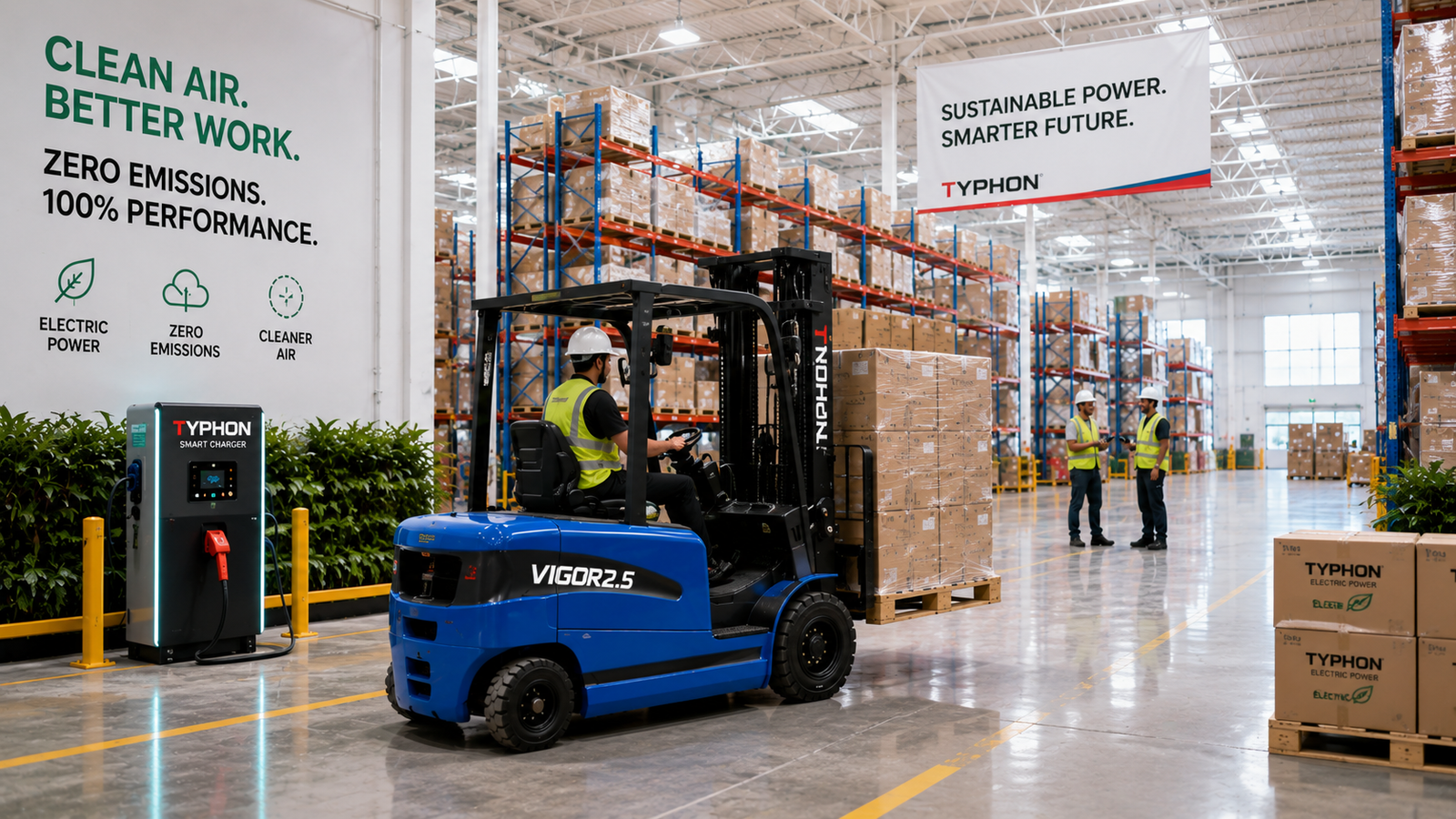
Operating a fully electric forklift fleet halts the generation of industrial soot at the source. Because there is no combustion process, there is no physical particulate matter forcefully expelled into the facility’s atmosphere. The electric motors operate cleanly, keeping the ambient air clear of the heavy, sticky residues that define traditional industrial workspaces.
The financial impact of a fundamentally cleaner environment touches every corner of the operational budget. Cleaning crews spend drastically less time scrubbing floors and wiping down inventory, allowing facility managers to reduce janitorial contracts and reallocate labor. Inventory shrinkage plummets because products no longer arrive at the customer’s location smelling of diesel exhaust or covered in dark dust. Furthermore, the building’s physical infrastructure, including sensitive automated sorting equipment and expensive high-bay lighting, lasts significantly longer when it is not constantly subjected to acidic exhaust residues.
Conclusion
The decision to transition from internal combustion to electric forklifts represents much more than a simple equipment upgrade; it is a strategic investment in the fundamental health and profitability of your entire operation. By eliminating toxic tailpipe emissions at the source, businesses immediately resolve the complex challenges of indoor air quality that have burdened the industrial sector for decades. The cascading benefits of this clean air environment positively impact every facet of the business, from drastically lowering heating and ventilation costs to protecting the long-term respiratory health of your most valuable workers.
As environmental regulations tighten and the cost of skilled labor rises, operating a clean, safe, and highly efficient facility is no longer optional. Electric material handling equipment provides the definitive solution to the hidden costs of industrial pollution, allowing contractors and facility owners to reclaim their indoor environments. Upgrading your fleet to electric power ensures your business remains competitive, compliant, and operationally resilient, setting a modern standard for excellence that benefits your bottom line just as much as it benefits the air you breathe.