A forklift is only as reliable as the floor it runs on. You can buy the strongest mast, the smartest controls, and the longest-lasting battery, but if the surface underneath is cracked, sloped, or slick, your machine will fight you every shift. Floor conditions quietly shape lift capacity, tire wear, operator safety, and how fast loads move from dock to rack.
Most warehouse managers focus on the truck and forget the surface. That’s a costly oversight. A worn or uneven floor doesn’t just slow you down, it accelerates maintenance, shortens tire life, and raises the risk of tip-overs. Get the floor right, and an average forklift performs like a premium one. Let’s break down the three floor conditions that matter most, and how to manage each so your equipment runs at full capacity.
Surface Flatness and Levelness
Flatness and levelness sound like the same thing, but they affect forklift performance in different ways. Flatness measures the bumps and dips across a short span, while levelness measures the overall slope of the floor from one point to another. Both play an important role in keeping loads stable, especially when they are lifted to greater heights.
A floor with poor flatness creates constant vibration as the forklift travels, making it harder for operators to maintain smooth control. Uneven surfaces also increase tire wear, reduce travel efficiency, and can cause loads to shift during transport.
Poor levelness introduces additional challenges by causing forklifts to lean when carrying elevated loads. Excessive slopes reduce stability, make precise load placement more difficult, and increase the risk of tipping. Maintaining proper flatness and levelness helps improve safety, protect stored goods, and ensure forklifts operate efficiently throughout the facility.
Why Small Slopes Create Big Problems
A forklift carries its weight high and forward, especially with a loaded mast. Even a slight slope shifts the machine’s center of gravity, and that shift grows worse the higher you lift. On a floor that looks flat to the eye but slopes a fraction of an inch per foot, a fully raised load can swing a pallet just enough to make the truck feel tippy.
This is where many near-misses happen. An operator lifts a load to a high rack, the machine sits on a subtle grade, and the mast leans toward the low side. The fix isn’t always a bigger counterweight. Often it’s identifying the slope and adjusting where you stage and lift heavy loads.
For new builds or renovations, ask about floor flatness (FF) and floor levelness (FL) numbers. Higher numbers mean a flatter, more level surface. In high-rack warehouses where forklifts lift 20 feet or more, tight tolerances aren’t a luxury. They’re the difference between smooth cycles and constant load corrections.
How Uneven Floors Wear Down Machines
Bumps and dips do more than rattle the operator. Every time a wheel drops into a low spot or climbs a high one, the chassis flexes and the mast jolts. Over thousands of cycles per week, that repeated shock loosens bolts, stresses welds, and wears bearings faster than spec sheets predict.
Tires take the hardest hit. Cushion and pneumatic tires both wear unevenly on a bumpy floor, which throws off ride height and traction. You’ll replace tires sooner and feel more vibration through the controls, which tires out operators over a long shift.
The practical move is a simple floor survey. Walk the main travel lanes, mark the dips and ridges, and grind or patch the worst offenders. A few hours of repair work often saves far more in tire and mast maintenance down the line.
Floor Material and Surface Texture
The material beneath your forklift’s tires has a direct impact on traction, travel speed, and tire performance. As OSHA’s guidance on walking-working surfaces emphasizes, maintaining safe, clean, and slip-resistant floors is essential for workplace safety. Polished concrete, sealed concrete, epoxy-coated floors, and unfinished concrete each provide different levels of grip and durability. Choosing the right tire for the floor surface, while keeping that surface clean and well maintained, helps ensure safe and efficient material handling.
Different flooring materials also influence braking distance, steering response, and overall operator control. Smooth surfaces can improve rolling efficiency but may become slippery when wet or contaminated, while rougher surfaces provide additional traction at the expense of increased tire wear.
Understanding how floor material and surface texture affect forklift performance allows you to select the appropriate tires and establish proper maintenance practices. A well-matched combination of flooring and tires improves safety, reduces equipment wear, and helps forklifts move loads with greater stability and confidence throughout the warehouse or jobsite.
Traction, Tires, and Surface Grip
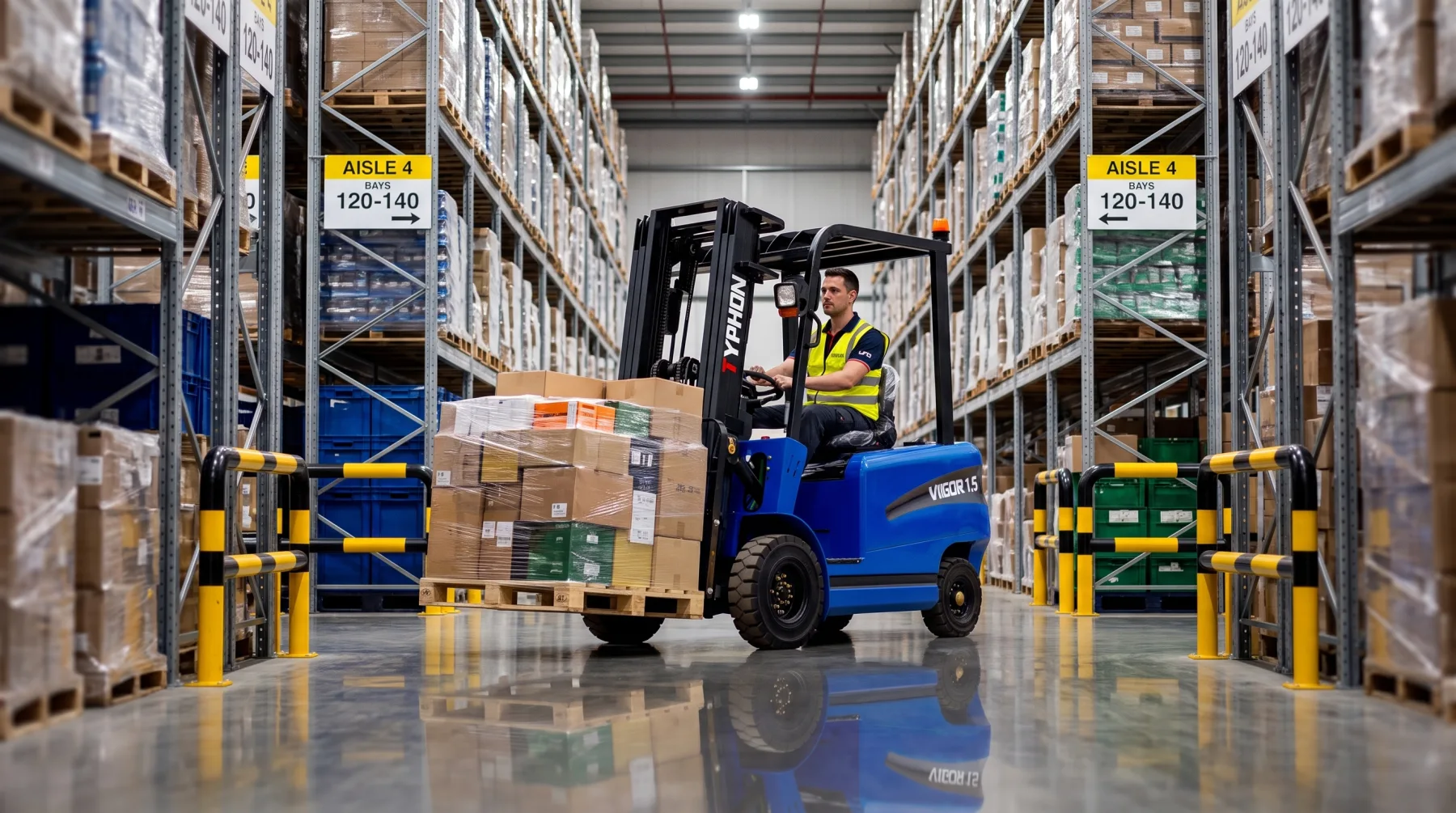
Smooth, polished floors look great and clean easily, but they offer less grip, especially when dust or moisture lands on them. A forklift braking hard or turning with a heavy load on a slick surface can slide, and a sliding load is a dangerous load. Textured or broom-finished concrete grips better, though it wears tires faster in exchange.
Tire selection has to match the floor. Cushion tires suit smooth indoor surfaces and tight aisles, while pneumatic tires handle rougher or mixed surfaces with more shock absorption. Run the wrong tire on the wrong floor and you sacrifice either grip or ride quality, sometimes both.
If your operation runs electric trucks across clean indoor floors, the right tire and surface pairing keeps cycles fast and predictable. For teams comparing equipment for smooth-floor warehouses, balancing tire type with surface finish is central to choosing the right electric forklift options for the space.
Contamination, Spills, and Daily Cleanliness
A good floor turns into a hazard the moment it gets dirty. Oil drips, shrink-wrap scraps, water from a leaking dock door, or fine dust all reduce traction in seconds. Operators may not notice until a wheel breaks loose mid-turn.
The fix is routine, not complicated. Schedule regular sweeping and scrubbing, fix leaks fast, and mark wet areas clearly. A clean floor restores the grip you designed for and keeps brake distances predictable.
Cleanliness also protects the machine. Debris pulled into wheels and bearings causes premature wear, and fine grit acts like sandpaper on tires and seals. A disciplined cleaning routine pays back in both safety and lower maintenance bills.
Load Capacity and Floor Damage
Every warehouse floor has a designed load capacity, and forklifts place that capacity under constant stress. The combined weight of the forklift, its load, and the concentrated pressure beneath each tire can exceed what a thin, damaged, or aging concrete slab was designed to support. When the floor begins to deteriorate, forklift performance and workplace safety suffer.
Cracked or weakened floors reduce stability, create uneven travel surfaces, and increase vibration throughout the machine. These conditions make it more difficult to transport heavy loads safely, accelerate tire and suspension wear, and raise the risk of product damage during handling.
Understanding your floor’s load rating and regularly inspecting it for signs of wear helps prevent costly repairs and unexpected downtime. Matching forklift capacity to floor strength protects both the facility and the equipment, ensuring smoother operation, longer floor life, and safer material handling every day.
When the Slab Can’t Handle the Load
Concrete slabs are rated for specific point loads. A heavy forklift with a max load concentrates enormous pressure on a small contact patch, and over time that pressure cracks, spalls, or pits a floor that wasn’t poured for the job. Once cracks form, they spread, and every crack becomes a new bump that jolts your equipment.
Joints and seams deserve special attention. The edges where slabs meet are the weakest points, and repeated forklift traffic chips them into rough lips. Those damaged joints slow operators, who instinctively ease off to protect the load and the truck.
Before adding heavier trucks or taller racking, confirm your slab can carry the new demand. Matching equipment weight to floor capacity protects both the machine and the multi-year investment in the building itself.
Your Floor Audit Checklist
Before you blame a sluggish forklift or rising maintenance costs on the machine, take a closer look at the floor beneath it. A quick inspection often reveals issues that directly affect traction, stability, and overall productivity. Performing a routine floor audit can help identify small problems before they develop into costly repairs or safety hazards.
Walk your main travel lanes and mark dips, ridges, cracks, damaged joints, or uneven sections.
Check that your forklift tires are matched to the floor surface and the type of traffic in your facility.
Confirm your floor’s load rating can safely support your heaviest loaded forklift.
Maintain a regular cleaning schedule to remove dust, debris, oil, and moisture that can reduce traction.
Inspect high-traffic areas regularly for signs of surface wear that could affect forklift performance.
expensive problems. Flatness, surface texture, cleanliness, and load capacity all work together to support safe and efficient forklift operation. Keeping each area in good condition improves productivity, reduces equipment wear, and helps create a safer workplace for both operators and pedestrians.
Conclusion
A forklift performs only as well as the floor it operates on. Maintaining proper floor flatness, selecting the right surface and tire combination, and ensuring the floor can safely support the combined weight of the forklift and its load all contribute to safer operation, improved productivity, and lower maintenance costs. Investing in the floor is often just as important as investing in the equipment itself.
By understanding how floor conditions affect traction, stability, load handling, and equipment wear, you can create a safer and more efficient working environment. Regular floor inspections, timely repairs, and proper maintenance help minimize downtime, extend forklift service life, and improve overall warehouse performance.
When it’s time to add or replace equipment, choose a forklift that matches your facility’s floor conditions, load requirements, and daily operating demands. Compare lift capacities, tire options, traction features, and other key specifications to find a machine that delivers reliable performance, maximizes productivity, and keeps your operation running smoothly for years to come.