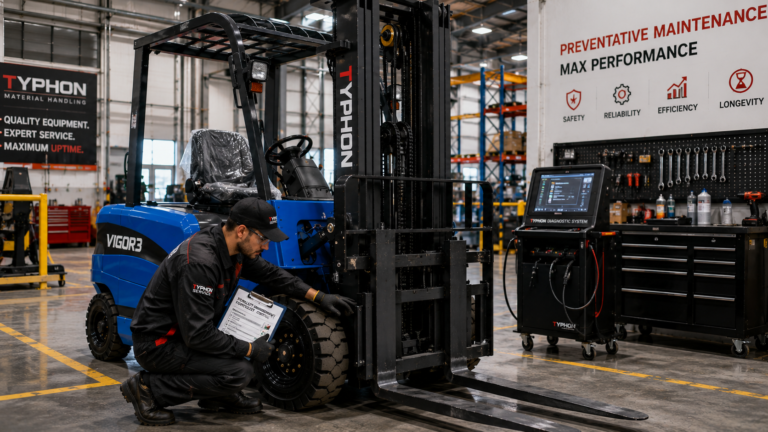
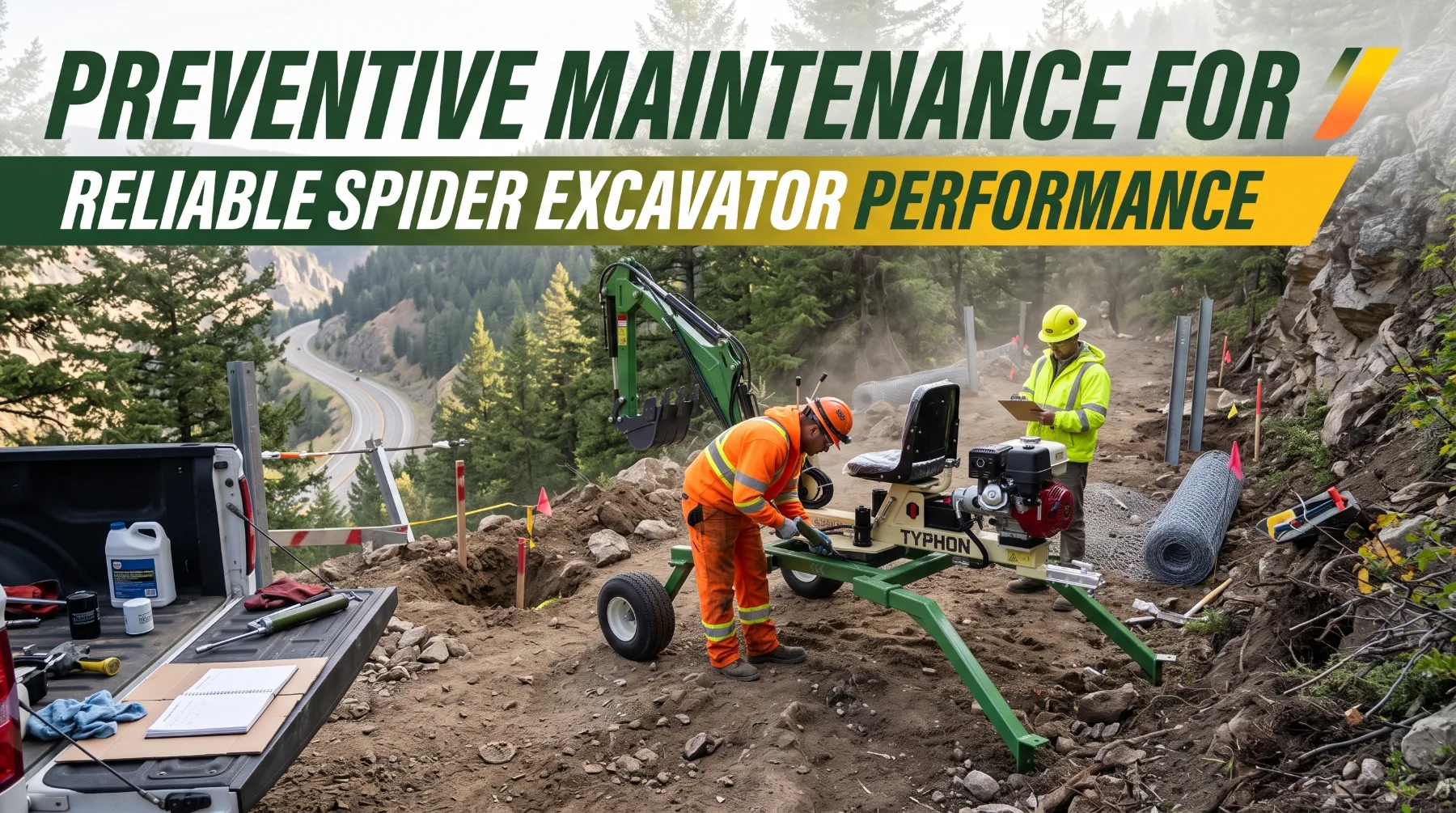
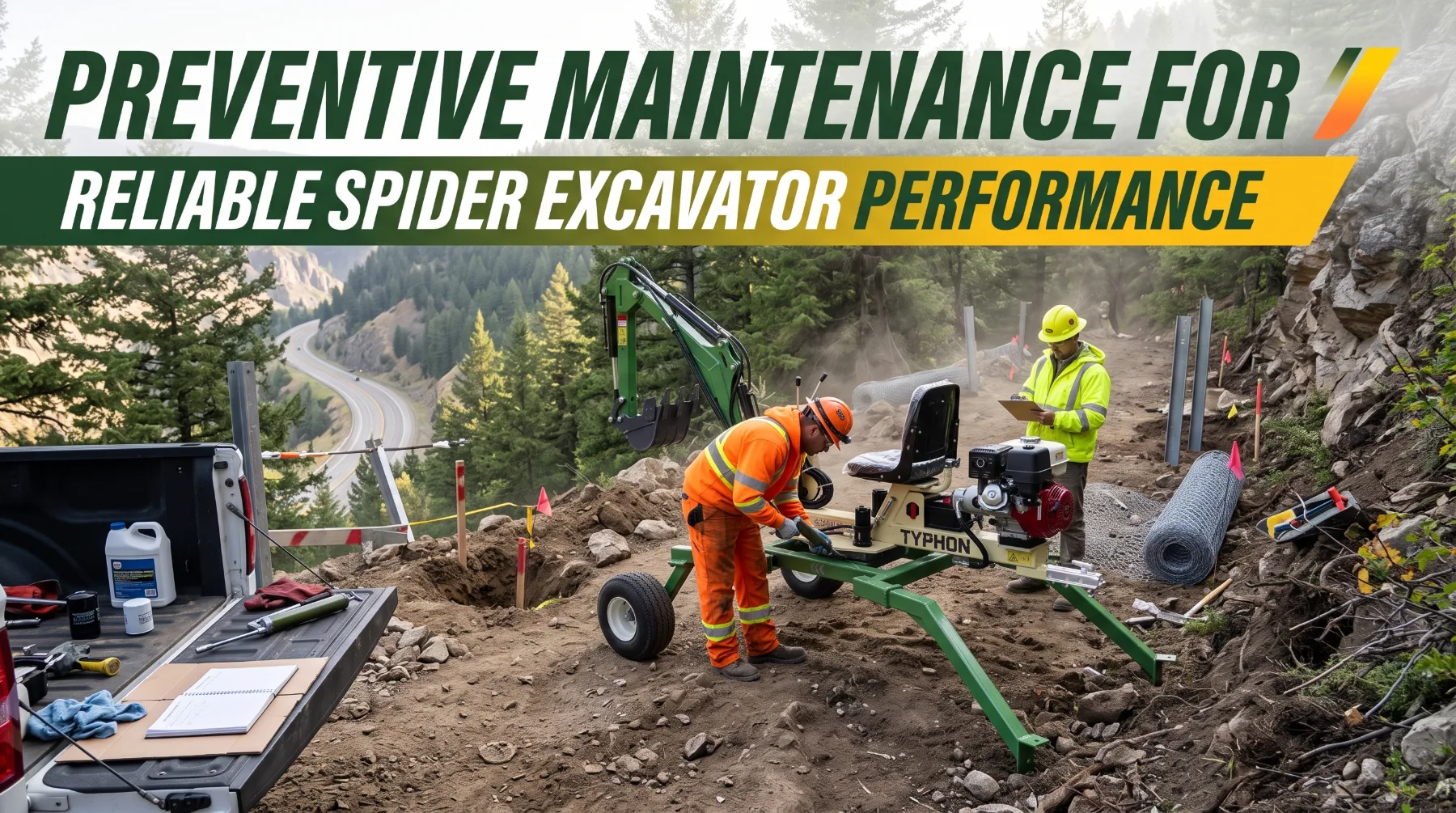
Spider excavators frequently operate on steep slopes, uneven ground, and confined sites where equipment access and repair can be difficult. Mud, grass, dust, and other debris can accumulate around cooling components, moving joints, and undercarriage parts, while continuous digging places repeated loads on the hydraulic system and structural components. Preventive maintenance helps detect developing faults early, reduce unexpected downtime, and preserve reliable performance in demanding working conditions.
Engine condition, coolant levels, air filtration, and hydraulic fluid quality all influence dependable operation. Operators should inspect hoses, fittings, cylinders, boom pivots, bucket pins, bushings, tracks, wheels, and support legs for leaks, excessive play, damage, or abnormal wear. Keeping the radiator and oil cooler clear of debris, lubricating joints according to the service schedule, and maintaining the specified track tension help protect essential systems from overheating and premature wear.
A consistent service routine should combine pre-shift inspections, post-operation cleaning, scheduled lubrication, and maintenance based on operating hours and manufacturer recommendations. Recording completed work and assigning responsibility for servicing prevents important tasks from being overlooked when equipment is shared between operators. Promptly repairing damaged hoses, replacing worn pins and bushings, and checking support components before working on slopes help keep the machine dependable and ready for the next excavation task.
Engine and Fluid Maintenance
The engine supplies power for every function on a spider excavator. On most models, it drives the hydraulic pump that operates the boom, arm, bucket, legs, tracks, and swing. When the engine loses power or overheats, all these functions can suffer. Clean fluids, effective filtration, and correct fluid levels help the engine deliver consistent power throughout long excavation shifts.
Begin each inspection with the machine parked on firm, level ground. Lower the bucket flat to the ground, position the legs as specified in the manufacturer’s service instructions, shut off the engine, and remove the key. Fluid checks may require the machine to sit level in a particular configuration, so follow the operator’s manual. Never work beneath a raised boom, arm, or leg supported only by hydraulic pressure.
Check engine oil level and condition before every shift. Milky oil may indicate coolant contamination, while unusually dark or gritty oil can signal overdue servicing or a filtration problem. Change the oil and oil filter at the intervals specified by the manufacturer, and check whether shorter intervals are recommended for dusty environments or heavy-duty applications.
Inspect the coolant level at the overflow reservoir only when the engine is cool. Opening a hot radiator cap can release pressurized coolant and cause severe burns. Use the recommended coolant type and mixture, and investigate repeated drops in coolant level because they may indicate a leak.
Use clean fuel from clean containers, and keep dirt away from the fuel cap and filling area. Drain water separators and replace fuel filters according to the maintenance schedule. Contaminated fuel can cause rough running, reduced power, and damage to injection components. Before refueling on a slope or remote jobsite, shut down the engine, keep ignition sources away, and clean up spills promptly.
Spider excavators frequently operate in dusty soil, dry vegetation, and other conditions that can restrict engine airflow. Check the air filter restriction indicator daily, and service or replace the filter according to the manufacturer’s instructions. Inspect intake hoses and clamps for cracks or looseness, since damaged connections can allow unfiltered air to enter the engine and accelerate internal wear.
Inspect drive belts for cracks, fraying, glazing, and incorrect tension. Check battery terminals for corrosion and confirm that cables are secure and undamaged. Throughout the shift, monitor gauges and warning indicators for changes in engine temperature, operating sound, or power. Rising temperatures, warning lights, or sudden power loss require investigation before work continues.
Key Takeaway: Check engine oil, coolant, fuel, belts, and other required components according to the manufacturer’s maintenance schedule. Clean filters and correct fluid levels help preserve engine performance, cooling efficiency, and reliability during extended excavation work.
Hydraulic System Inspection
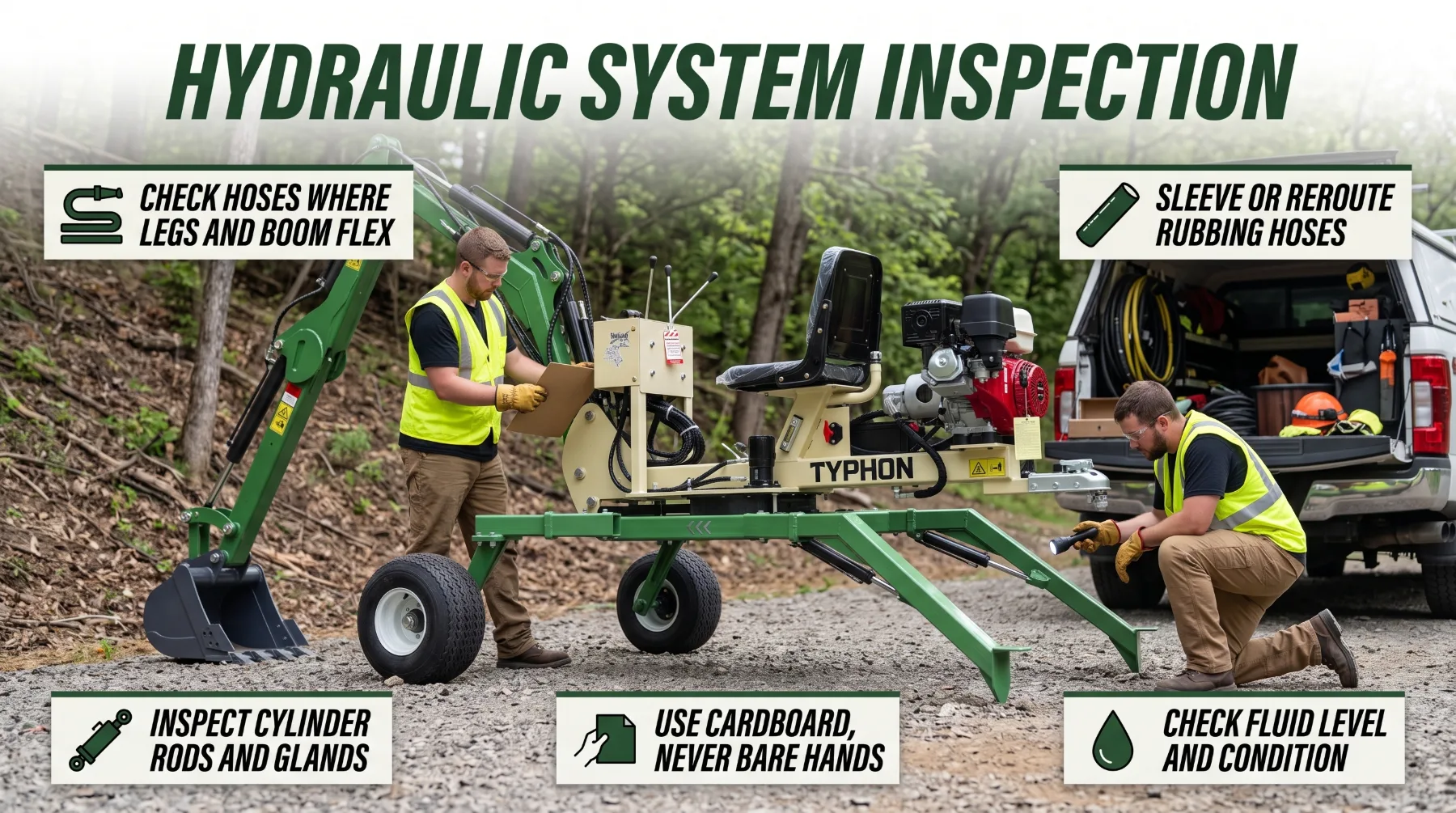
The hydraulic system performs most of the work on a spider excavator. It powers boom movement, arm operation, bucket control, swing, travel, and, on most models, independent adjustment of the support legs. Because these components move through wide ranges of motion, hydraulic hoses often flex repeatedly and pass close to brackets, joints, and pivots. Regular inspection helps identify wear and leaks before they affect performance or safety.
Check hydraulic fluid at the sight glass or dipstick with the machine positioned as specified in the manufacturer’s instructions. The boom, arm, and legs may need to be placed in a particular configuration for an accurate reading. Examine the fluid’s condition as well as its level. Cloudy or foamy fluid may indicate water or air contamination, while dark fluid with a burnt odor can suggest overheating. Use only the recommended hydraulic fluid, and keep storage containers clean and sealed.
Inspect visible hydraulic hoses for cracks, abrasion, bulges, kinks, and exposed reinforcement. Pay particular attention to hoses routed along the legs, across the boom swing area, and around pivot points, where repeated movement increases the risk of rubbing. If hoses contact brackets or other hoses, correct the routing or install protective sleeves according to the manufacturer’s guidance. Replace damaged hoses with components rated for the system’s pressure and operating conditions.
Examine fittings and connections for dampness, oily residue, and signs of loosening. Inspect auxiliary circuit quick couplers for damage and worn seals. Clean couplers before connecting attachments, and keep dust caps installed whenever the connections are not in use.
The hydraulic system controls important machine functions, including boom movement, bucket operation, and leg positioning. Regular inspections help identify leaks, damaged components, and performance issues before they lead to costly repairs or unsafe operating conditions.
• Cylinder Rods and Seals: Inspect boom, arm, bucket, and leg cylinder rods for scratches, rust, pitting, or bends. Look for oil around cylinder glands, which may indicate damaged seals or hydraulic leaks.
• Hydraulic Performance: Watch for unexpected boom, arm, or leg drift when controls are in neutral. Investigate unusual movement before operating on slopes or demanding terrain.
• Motors and Valves: Check travel motors, the swing motor, control valves, seals, and fittings for leaks or damage. During a slow, unloaded test, listen for unusual whining or knocking.
• Safe Leak Detection: Never use your hands to search for hydraulic leaks. Use cardboard or wood to locate suspected leaks and wear suitable eye protection and gloves. Lower attachments, secure the legs, and relieve system pressure before disconnecting hydraulic components.
• Preventive Maintenance: Replace hydraulic filters according to the manufacturer’s schedule and repair damaged hoses or leaking fittings promptly. Early maintenance helps prevent component wear, unexpected failures, and safety risks during operation.
Key Takeaway: Inspect hydraulic hoses, fittings, cylinders, and connections for leaks, abrasion, and damage. Maintain clean fluid at the correct level, and use cardboard or wood rather than bare hands when checking for leaks.
Boom, Arm, and Bucket Maintenance
The boom, arm, and bucket absorb the forces generated during digging, lifting, and material handling. Breaking through compacted soil, prying rock, lifting spoil, and swinging loads place repeated stress on these components, including their pins and bushings. Spider excavators may experience these loads at unusual angles while working on uneven ground, concentrating stress in areas that require regular inspection.
Before inspecting the digging assembly, lower the bucket to the ground, secure the legs, shut off the engine, and remove the key. Never place any part of your body beneath a raised boom or arm, and avoid positions where a component could move if hydraulic pressure is released.
Examine the boom, arm, and mounting brackets for cracks, bends, and damaged welds. Pay particular attention to high-stress areas around pin bosses, cylinder mounts, and the boom foot. Cracks may first appear as fine marks in the paint or narrow rust lines. Clean suspect areas when necessary so dirt does not conceal structural damage.
Inspect pins and bushings that allow the boom, arm, and bucket to pivot. Confirm that each pin is fully seated and that retaining bolts, collars, and keepers are present and secure. During a slow, unloaded test cycle, watch for excessive movement and listen for clunking or squealing as joints change direction. Excessive play reduces digging accuracy and accelerates wear on pins, bushings, and mounting bores. Replace worn components before the bores become elongated, since repairing damaged mounting points can be considerably more expensive.
Inspect cylinder mounting bolts, linkage hardware, and attachment fasteners for looseness. Repeated vibration and impact can gradually loosen connections, allowing minor problems to develop into damaged components. Pay attention to changes in operation, including bucket clunking, uneven cutting, and creaking joints, because these symptoms may indicate wear that needs attention.
Key Takeaway: Inspect the boom, arm, bucket, pins, and bushings for cracks, excessive movement, loose connections, and abnormal wear. Lubricate all required pivot points according to the manufacturer’s instructions to help prevent premature component failure.
Tracks and Ground Support Components
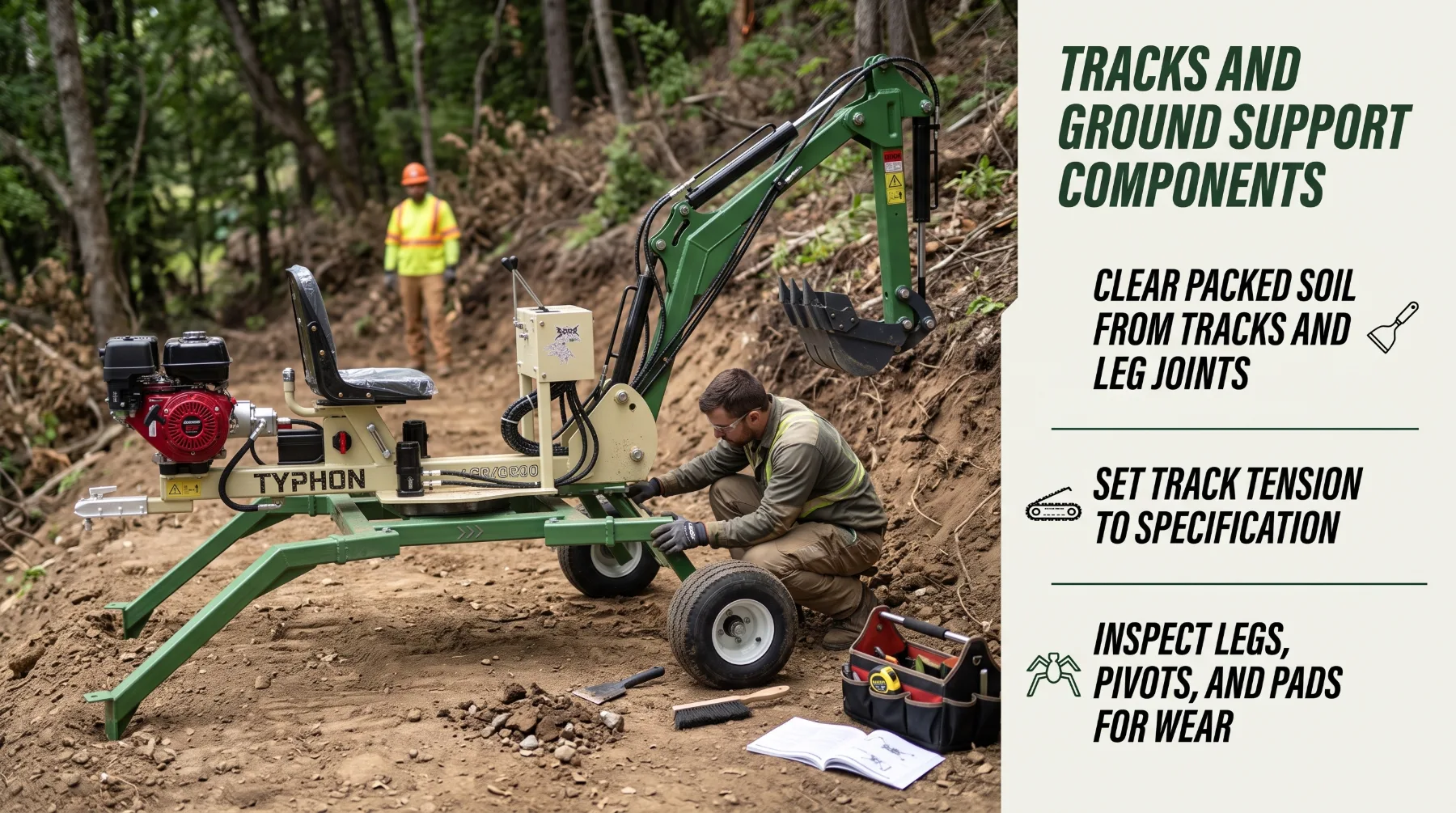
A spider excavator’s ground support system distinguishes it from many conventional excavators. Depending on the design, it may travel on tracks, wheels, or a combination of both, while independently adjustable legs fitted with pads, claws, or wheels help position the machine on uneven terrain. These components contribute to traction, leveling, and stability during excavation. Wear, damage, or loose connections can compromise positioning and safe operation.
Inspect ground support components with the machine on firm, level ground, the bucket lowered, the engine off, and the key removed. Follow the manufacturer’s procedure for positioning or raising the legs during inspection, and use approved supports wherever required. Never work beneath a leg or chassis supported only by hydraulic pressure.
Inspect each support leg for cracks, bends, and damaged welds, especially around pivots and cylinder mounts. Check leg pivots for excessive play, missing retainers, and dry grease fittings. Examine leg cylinders and hoses for leaks, abrasion, and signs of rubbing. A leg that drifts or settles while the controls are in neutral requires investigation before the machine operates on uneven terrain.
Check foot pads, claws, and stabilizer feet for cracks, wear, and loose hardware. Worn pads may provide less grip, while damaged claws can slip on rock or hard surfaces. Remove packed mud, clay, roots, and stones from tracks, rollers, wheel areas, leg joints, and pads. Buildup adds weight, can affect track tension, conceals damage, and may push a track away from its guides. Use a scraper or suitable tool rather than your hands, and clean only after the machine has been shut down and secured.
Even well-maintained ground support components must operate within the manufacturer’s limits. Follow the specified slope restrictions, leg positions, and operating procedures for the machine. Maintenance helps preserve the intended capabilities but does not extend those limits.
Key Takeaway: Remove accumulated soil and inspect tracks, wheels, support legs, pads, and related components for wear, damage, and loose hardware. Proper maintenance helps preserve traction, positioning, and stability on uneven ground.
Cooling System and Debris Removal
Spider excavators frequently operate in conditions that expose cooling systems to dust, leaves, twigs, grass, and other debris. Wooded slopes collect vegetation around the machine, wetlands leave grass and seed heads on exposed surfaces, and dry jobsites generate fine dust. Because compact excavators have limited space around cooling components, even a modest layer of debris can restrict airflow.
Inspect radiator and oil cooler fins for dirt, mud, grass, and seed buildup. Clean them according to the manufacturer’s instructions, commonly using compressed air or low-pressure water directed from the clean side outward to remove debris rather than force it deeper into the fins. Avoid using high-pressure water at close range because it can bend the fins and reduce airflow. Check for bent fins, leaks, and damaged hoses.
Clear intake grilles and screens so the engine and cooling system can draw air freely. Inspect the intake pre-cleaner where fitted, and check accessible cooling fan blades for cracks, chips, and secure mounting. Examine the fan shroud for damage because a cracked or missing shroud can reduce airflow through the radiator.
Remove leaves, twigs, grass, and other debris from the engine compartment, belly pan, and areas around the exhaust and turbocharger. Look for oil or fuel residue that attracts dust and may contribute to a fire. Clean around the hydraulic tank, battery box, and electrical components according to the manufacturer’s guidance, keeping water away from electrical connections and sensitive parts.
Wear eye protection when using compressed air, and keep other people clear of the cleaning area. In dusty or vegetated conditions, clean the machine at the end of each shift and inspect the cooling package during operation if temperature readings begin to rise. Monitor coolant and hydraulic temperature gauges during demanding work, and pause operations to let the machine cool if readings approach the warning range.
Cleaning also makes other maintenance problems easier to detect. Once accumulated debris is removed, cracked fittings, leaking hoses, and damaged fan blades become easier to identify during inspection.
Key Takeaway: Remove dust, soil, vegetation, and other debris from cooling components and machine compartments according to the manufacturer’s instructions. Inspect radiators, air intakes, and cooling fans regularly to reduce overheating and fire risks.
Conclusion
Preventive maintenance is what keeps a spider excavator ready to deliver on the steep slopes, confined sites, and demanding projects where it earns its value, and the contractors who build it into every shift spend far more time digging and far less time waiting on repairs. Clean fluids, fresh filters, and correct levels keep the engine supplying steady power, while careful hydraulic inspection catches scuffed hoses, weeping fittings, and drifting cylinders before they become failures. Regular attention to the boom, arm, bucket, pins, and bushings, backed by consistent lubrication, preserves digging accuracy and prevents costly structural repairs. Well-maintained tracks, wheels, legs, and pads keep the machine planted and level on uneven ground, and routine cleaning of cooling components and compartments prevents overheating and reduces fire risk. Scheduled servicing and accurate maintenance records tie it all together, making sure every task happens on time and recurring problems are caught early. When you treat maintenance as part of the job rather than an interruption to it, you protect your equipment investment, keep crews productive, and meet the schedules your customers depend on. Before your next project, clean and inspect the machine, grease every pivot, check fluids and filters against the hour meter, inspect the tracks, legs, and hoses, and record the work in your maintenance log so your spider excavator arrives ready for a full day of dependable work.
Frequently Asked Questions
How often should a spider excavator receive maintenance?
Complete a pre-operation inspection before every shift, and follow the manufacturer’s recommended service intervals for fluid changes, lubrication, filter replacement, and component servicing. Daily checks should include fluid levels, visible leaks, loose hardware, and damage to critical parts. Dusty, muddy, wet, or heavy-duty working conditions may require more frequent attention where the manual allows. Keeping a maintenance log helps operators track completed services, identify recurring issues, and schedule upcoming work before minor problems affect machine availability.
Why is hydraulic maintenance important?
Hydraulic systems power essential digging, leg positioning, and travel functions, so leaks, contaminated fluid, or damaged components can reduce performance and affect safe operation. Inspect hoses, fittings, and connections, especially where lines flex or move along the legs and boom. Check hydraulic fluid levels and follow the recommended fluid and filter replacement schedule to help protect pumps, valves, and cylinders from premature wear. If a leak is suspected, never use bare hands to locate it. Use cardboard or another suitable method, and have damaged components repaired before returning the machine to work.
Which components should be checked for wear?
Inspect the boom, arm, bucket, pins, bushings, tracks or wheels, support legs, ground pads, rollers, sprockets, and hydraulic connections. Look for cracks, excessive movement at joints, fluid leaks, loose fasteners, damaged hoses, and unusual wear patterns. Pay particular attention to the legs and stabilizing components because they help support the machine on uneven terrain. Check the attachment mounting points and bucket teeth as well, since wear in these areas can affect digging accuracy and operating efficiency. Follow the manufacturer’s inspection guidance and replace worn parts when required.
Can preventive maintenance reduce downtime?
Yes. Identifying wear and developing faults early can help prevent unexpected breakdowns, reduce repair costs, and limit delays caused by unavailable equipment. Regular inspections also make it easier to plan replacement parts and arrange servicing before a component fails during a job. Planning maintenance around project schedules is especially valuable for spider excavators, which often work on remote, steep, or hard-to-reach sites where repairs and equipment transport may be more difficult. Consistent records of inspections, repairs, and service dates help teams monitor machine condition and prepare for future maintenance needs.